



Blog

2026 Best Home Elevators for Global Buyers?

Choosing the best Home Elevators in 2026 requires more than comparing glossy finishes and advertised speed. Global buyers must examine safety systems, cabin size, energy use, maintenance access, warranty coverage, and local installation expertise. A quiet elevator may suit a luxury villa, while a compact platform lift may better serve a narrow townhouse. These choices are practical, not merely visual.

Dr. Edward Steinfeld, a respected accessibility and universal design expert, wrote, “The goal of universal design is to create products and environments that are usable by all people, to the greatest extent possible, without the need for adaptation or specialized design.” This principle matters when evaluating Home Elevators for older adults, wheelchair users, families, and future mobility needs. A well-designed lift should feel dependable at three levels: inside the cabin, during daily operation, and years after installation.

This guide compares leading elevator types, manufacturers, and buying factors for international customers. It considers climate, building structure, electrical supply, service availability, and regional compliance requirements. Local verification remains essential. A product that performs well in Germany may need different support in Brazil, India, or the United Arab Emirates. That detail is easy to overlook.

The ranking is not perfect. Market data changes, and installation quality can outweigh brand reputation. Buyers should inspect real projects, request maintenance schedules, and ask who responds when the elevator stops unexpectedly. Look beyond the showroom. The best Home Elevators are not always the most expensive; they are the ones that remain safe, accessible, serviceable, and suitable for the home.
2026 Best Home Elevators for Global Buyers?

What Is a Home Elevator and How Does It Work?

2026 Best Home Elevators for Global Buyers?

What Is a Home Elevator and How Does It Work?

A home elevator is a compact lifting system designed for private residences. It moves people between floors inside a guided cabin. Unlike a commercial elevator, it usually serves fewer passengers and needs less space. Some systems use a shaft, while others use a self-supporting structure. The lifting method may involve hydraulic pressure, traction cables, or a screw-driven mechanism. Each design affects noise, speed, energy use, and installation needs.

When a user presses a floor button, sensors check the doors and cabin position. The control system then activates the lifting unit. Safety brakes, emergency lowering, door locks, and backup power help protect passengers during faults. In real homes, floor strength and ceiling height matter greatly. A beautiful cabin cannot solve weak structural support. Local inspection rules also vary, so a licensed professional should verify the design before installation. It is easy to underestimate this step.

Tips: Measure every floor opening carefully. Ask for a written load rating and maintenance schedule. Check how the elevator lowers during a power failure. Visit an installed system if possible. A quiet ride is useful, but it does not always prove long-term reliability. Buyers should compare service access, replacement parts, warranty terms, and local technical support. Some choices look efficient on paper, yet feel inconvenient after daily use.

Key Types of Home Elevators for Different Residential Needs

Home elevators now serve more than luxury houses. They support aging residents, wheelchair users, and families carrying laundry between floors. Fortune Business Insights estimated the global home elevator market at about USD 1.3 billion in 2023. Yet market growth does not make every lift suitable.

Hydraulic elevators suit larger homes with space for equipment and a vertical shaft. They offer strong lifting performance but may require more construction work. Traction elevators use counterweights and often provide smoother, efficient travel. They fit multi-level homes where frequent trips matter. For small renovations, shaftless platform lifts can reduce structural changes. Travel distance is limited, though. That limitation is easy to underestimate.

Vacuum elevators use air pressure and usually need less structural preparation. Their compact form appeals to existing homes, but cabin size and noise require careful review. A 2024 International Energy Agency report highlights rising attention to building energy performance, making standby power worth checking. Safety design must also match local rules, including EN 81-20/50 or ASME A17.1 requirements. ISO 8100 guidance can help global buyers compare technical expectations. In practice, door width, emergency lowering, weather exposure, and maintenance access matter more than glossy specifications. I would not choose a lift before measuring the hallway. Small errors become expensive.

2026 Best Home Elevators for Global Buyers? - Key Types of Home Elevators for Different Residential Needs

Elevator Type Best Residential Use Typical Capacity Typical Speed Typical Travel Range Pit / Overhead Needs Main Advantages Important Limitations
Hydraulic Home Elevator Large detached homes, new construction, and projects requiring higher lifting capacity Approximately 225–450 kg; some residential systems are rated higher About 0.15–0.30 m/s Commonly 3–6 m in private residences Usually requires a pit; overhead space depends on the selected design Smooth ride, strong load capacity, mature technology, and good suitability for multiple floors Hydraulic equipment requires space for a power unit; installation may involve more structural work and periodic fluid maintenance
Traction Home Elevator Multi-story homes seeking efficient vertical transportation and frequent daily use Approximately 250–450 kg About 0.15–0.40 m/s Commonly 3–12 m, depending on the number of floors May require a pit and overhead clearance; some designs reduce these requirements Energy-efficient operation, reliable multi-floor performance, and no hydraulic oil in the lifting system Often requires accurate shaft dimensions, counterweight space, and more detailed planning during construction
Machine-Room-Less Traction Elevator Modern homes with limited utility space or projects prioritizing compact equipment layouts Approximately 250–450 kg About 0.15–0.40 m/s Commonly 3–12 m Typically uses an integrated machine arrangement; pit and overhead requirements vary by system Saves separate machine-room space, supports efficient operation, and works well in compact residential layouts The shaft, controller, and access requirements must be coordinated carefully; service access can be more specialized
Screw-Drive Home Elevator Low-rise homes, accessibility upgrades, and houses where a compact self-supporting structure is useful Approximately 250–400 kg About 0.10–0.15 m/s Commonly 3–6 m Often available with reduced pit and overhead requirements, subject to local regulations Compact layout, straightforward mechanical principle, and suitability for two- or three-level homes Slower travel, screw and nut components require inspection, and the system may be less suitable for heavy daily traffic
Vacuum Pneumatic Elevator Existing homes needing a lightweight retrofit with minimal conventional shaft construction Approximately 159–238 kg, depending on cabin configuration About 0.15–0.30 m/s Commonly 3–9 m Usually does not require a traditional pit or separate machine room; floor openings and top clearance remain necessary Lightweight structure, relatively limited building work, and a distinctive transparent or semi-transparent design option Lower capacity, audible air-pump operation, limited cabin size, and stricter suitability constraints for some users
Wheelchair Platform Lift Accessibility between split levels, porches, garages, and short vertical routes Approximately 225–340 kg About 0.05–0.15 m/s Commonly 1–4 m; some systems can serve greater heights Often requires less construction than a full elevator; platform clearance and landing access are essential Direct wheelchair access, simple controls, and suitability for short-rise accessibility projects Open platform design offers less weather and privacy protection; slower speed and limited use beyond accessibility needs
Stairlift Homes where the primary need is seated mobility assistance on an existing staircase Usually one seated passenger; commonly around 100–125 kg, subject to model specification About 0.10–0.15 m/s Follows the existing staircase between one or more levels No elevator pit or shaft; requires suitable stair width, landing clearance, and secure rail installation Usually has lower installation disruption and cost than a full elevator; suitable for many straight or curved stair layouts Does not transport wheelchairs without transfer; occupies part of the staircase and serves only the stair route
Selection note: Actual capacity, speed, travel height, pit depth, overhead clearance, power requirements, emergency lowering, fire protection, and accessibility features vary by configuration and jurisdiction. Final specifications should be confirmed with a qualified local elevator professional and the applicable national or regional safety code.

Safety Standards and Accessibility Features for Global Buyers

2026 Best Home Elevators for Global Buyers?

Safety and accessibility should guide every home elevator decision. The World Health Organization reports that 1.3 billion people, or 16% of the global population, experience significant disability. The United Nations also expects one in six people worldwide to be over 65 by 2050. These figures make accessible vertical transport a daily need, not a luxury.

Global buyers should request compliance with standards used in their market. ISO 8100-1 and ISO 8100-2 provide an international safety framework, while EN 81-20 and ASME A17.1/CSA B44 may apply regionally. Local authorities still control approval. Ask for independent testing records, emergency procedures, and maintenance documentation. A certificate alone is not enough.

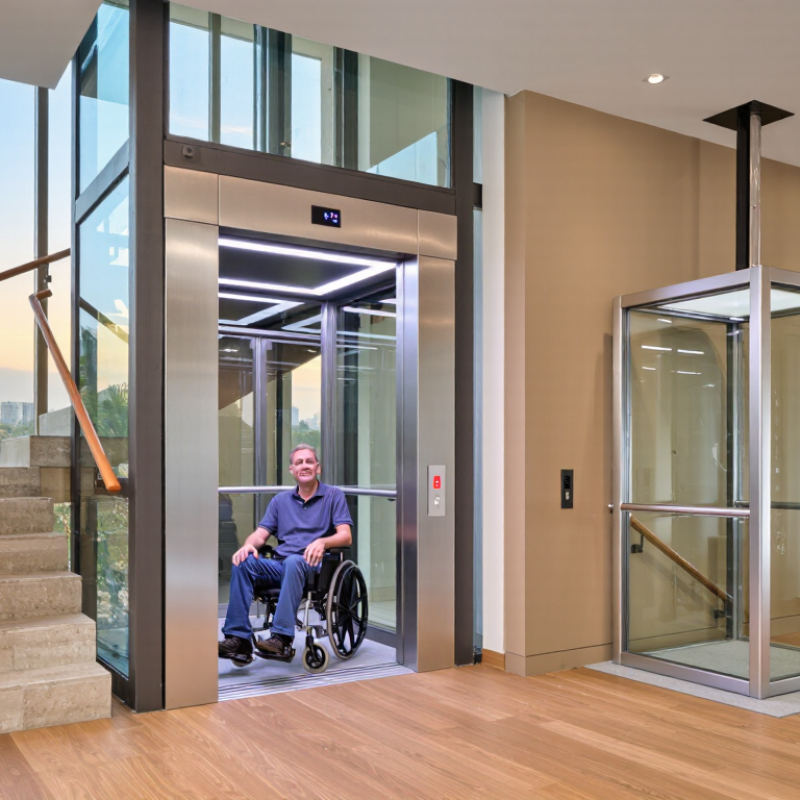
Look for level entry, wide automatic doors, tactile controls, Braille markings, clear voice announcements, and visible floor indicators. Non-slip flooring, handrails, obstruction sensors, emergency lighting, battery lowering, and two-way communication add practical protection. Keep controls reachable from a wheelchair. Leave enough interior space for turning and assistance.

I would test the lift in person.

Door closing speed matters. So does the alarm volume.

Some buyers focus too heavily on cabin appearance. That is understandable, but poor lighting or a complicated control panel can reduce independence. Specifications vary by country, so a qualified local inspector should verify the final installation against current rules and the user’s actual mobility needs. Sources: WHO, Global Report on Health Equity for Persons with Disabilities, 2022; UN DESA, World Social Report 2023.

2026 Home Elevator Accessibility Benchmark for Global Buyers

Reference minimum clear landing-door widths from widely used accessibility standards

For accessible home-elevator planning, a clear door opening of approximately 800–900 mm is a common baseline, while wider 1,100 mm openings can better accommodate larger wheelchairs and assisted access. Actual requirements depend on the country, building type, elevator category, cabin size, fire rules, emergency communication, backup power, and local inspection authority.

Reference sources: 2010 ADA Standards for Accessible Design, Section 404.2.3; EN 81-70 accessibility categories for passenger lifts. Values are clear opening widths, not nominal door-leaf widths.

How to Compare Capacity, Speed, Space, and Energy Use

For global buyers, the best home elevator is not always the fastest model. Capacity, shaft size, travel distance, and local electrical supply matter more. A practical residential range is 250–450 kilograms, often serving two to four people. Speeds near 0.15–0.30 metres per second usually feel comfortable in private homes. Faster travel can increase noise, installation complexity, and maintenance demands.

Space is unforgiving. Measure twice. Compare the cabin width, door opening, pit depth, and overhead clearance, not only the advertised footprint. A compact lift may fit beside a staircase, yet provide limited wheelchair turning space. ISO 25745-2:2015 offers a recognized method for measuring lift energy performance, including standby and running consumption. That distinction matters because a lightly used home elevator may spend most of its time waiting, not moving.

Energy deserves closer attention. The International Energy Agency’s Buildings 2023 report states that buildings account for about 30% of global final energy consumption. An efficient drive, LED lighting, automatic sleep controls, and regenerative operation can reduce unnecessary use. However, published savings are not always comparable. Test conditions differ. Ask for standby watts, energy per trip, rated load, and annual assumptions. CIBSE Guide D also emphasizes matching lift design with traffic demand. For a private house, that means avoiding oversized equipment. I would still inspect service access, emergency lowering, and regional standards before choosing. A cheaper installation can become expensive when replacement parts or trained technicians are difficult to find.

Installation, Maintenance, Costs, and International Buying Factors

2026 Best Home Elevators for Global Buyers?

Installation, maintenance, and local compliance matter more than a glossy specification sheet. Fortune Business Insights valued the global elevator and escalator market at about USD 96.56 billion in 2023. Its 2024 report projects continued growth through 2032. That expansion does not make every imported home elevator suitable. Shaft dimensions, pit depth, ceiling height, voltage, climate, and emergency access can change the installation plan. Ask a licensed local engineer to review drawings before placing an international order.

Costs include more than the equipment. Buyers should budget for structural work, shipping, customs charges, electrical upgrades, inspection fees, and commissioning. A compact lift may need less space, but unusual construction can erase that advantage. The U.S. Department of Energy reports that elevators and escalators may represent 2% to 10% of commercial building energy use. Residential figures vary, yet standby lighting, controls, and travel frequency still affect operating costs. Small details matter.

Maintenance deserves a written schedule, not a verbal promise. ISO 8100-20 and ISO 8100-30 provide internationally recognized safety principles for lift design and installation. ISO 25745 also supports energy-performance assessment. Confirm spare-parts availability, remote fault support, rescue procedures, and technician response times. A five-year service estimate is more useful than a low purchase price. The uncomfortable truth is that local service quality can be harder to verify than product specifications. Get references from comparable homes. Leave room for surprises.