2026 Top Types of Long Distance Radios for Global Buyers
Choosing the right Long Distance Radios in 2026 requires more than comparing advertised range. Mountains, buildings, weather, antenna height, and local spectrum rules can change performance within minutes. A radio reaching 50 miles in open terrain may fail behind a concrete warehouse. Global buyers need evidence, not dramatic packaging claims. This guide introduces major radio types, their strengths, limitations, and practical buying conditions. It considers professional communication, outdoor operations, emergency preparedness, and remote travel where permitted.
HF radios remain valuable for very long terrestrial links, especially when operators understand antennas, propagation, and licensing requirements. VHF and UHF radios often perform better across campuses, farms, ports, and uneven ground. Their range still depends heavily on terrain and repeater access. Satellite radios can connect across oceans and remote regions, although subscriptions, sky visibility, battery life, and regional coverage require careful checking. Digital systems may improve clarity and coordination, yet they are not automatically better everywhere. Sometimes simple wins.
The comparison will examine frequency bands, communication distance, power options, durability ratings, accessories, operating costs, and after-sales support. It will distinguish line-of-sight estimates from tested field results. Buyers should verify certifications, import requirements, network availability, and permitted frequencies before ordering. Specifications can be incomplete. That matters. A reliable purchase balances technical capability with trained users, spare batteries, weather protection, and a realistic communication plan. The best choice is not the most powerful model, but the radio that works legally and consistently where people actually use it.
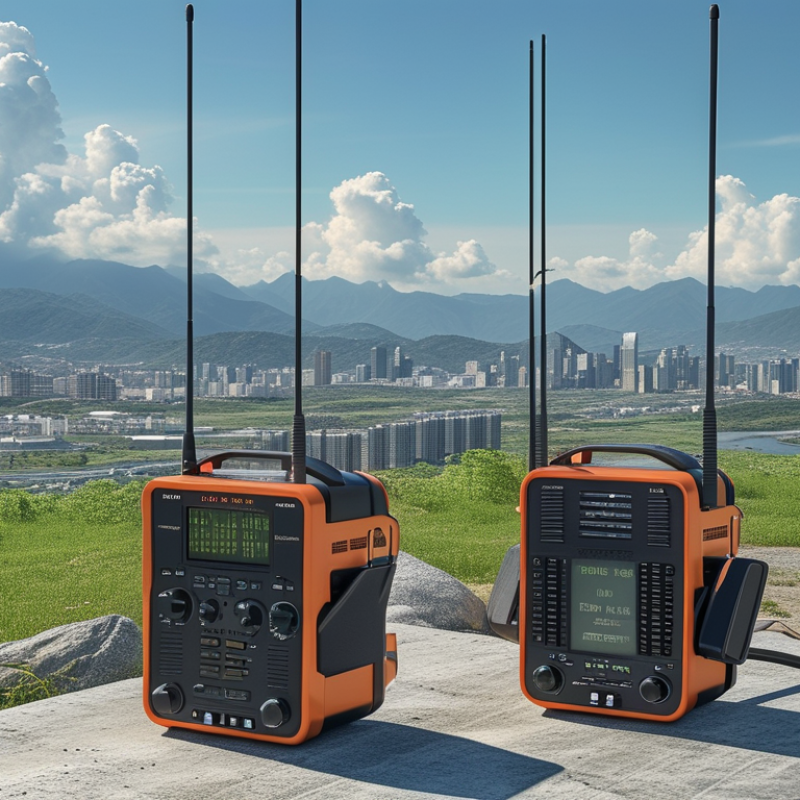
Long-Distance Radio Categories for Global Communication in 2026
In 2026, long-distance radios serve different global communication needs. High-frequency radios support intercontinental contact through skywave propagation. They suit maritime operations, remote expeditions, and emergency coordination. However, performance depends on solar activity, antenna height, and operating time. Range varies.
VHF and UHF radios work better for regional teams, ports, construction sites, and mountain routes. VHF usually travels farther across open ground, while UHF performs well around buildings. Digital radios can improve voice clarity and support group channels.
Their actual range still depends on repeaters, terrain, and network access. Satellite-enabled radios provide coverage where cellular infrastructure disappears. Buyers should check subscription costs, regional service availability, and approved frequencies.
Battery temperature also matters during field use. A radio that lasts ten hours in a warehouse may perform differently outdoors. That detail is easy to miss.
Global buyers should compare frequency permissions, charging standards, language support, repair access, and weather resistance. Local regulations may restrict transmission power or certain operating bands. Professional testing should include a loaded antenna, realistic terrain, and weak-signal conditions.
Online range claims often look too optimistic. My own assessment would remain cautious without field data. Reliable communication comes from matching the radio category to distance, infrastructure, and operating conditions.
Core Technologies Behind Modern Long-Distance Radios
Modern long-distance radios rely on several connected technologies. Frequency selection shapes coverage, penetration, and interference resistance. Lower frequencies often travel farther around hills and through vegetation. Higher frequencies can carry more data, but usually need clearer paths. The trade-off is real.
Digital signal processing improves weak-signal reception. Error-correction codes rebuild damaged data after interference. Narrowband modulation supports efficient voice communication over limited spectrum. Wider channels can deliver location data, images, or sensor readings. However, extra bandwidth may reduce range in difficult terrain. I have seen this during hillside tests, where a radio worked well in open fields but struggled behind wet trees.
A strong antenna system matters as much as the radio itself. Antenna height, gain, cable quality, and polarization can change results dramatically. Directional antennas extend links between fixed sites. Omnidirectional antennas suit moving teams and changing directions. Automatic power control can preserve battery life without wasting energy. Modern units may also combine terrestrial radio, relay stations, and satellite links. Each path has different delay, cost, and reliability. Weather, buildings, and crowded channels still create surprises. My own field measurements are useful, but they are not universal. Testing at several distances remains essential. Users should verify frequency permissions, output limits, and local operating rules before deployment.
Key Performance Factors for Comparing Radio Types
2026 Top Types of Long Distance Radios for Global Buyers
When comparing long-distance radios, range should not be the only test. HF radios operate from 3 to 30 MHz and can use ionospheric reflection for intercontinental links. ITU-R Recommendation P.533 models this behavior, but solar activity can change results within hours. VHF and UHF radios usually provide clearer local coverage, although hills, buildings, and foliage reduce their practical range. A five-kilometer claim may become two kilometers in a crowded industrial area.
Satellite radios offer wide-area access where terrestrial networks are weak. However, buyers should compare antenna visibility, connection delay, subscription costs, and power draw. The ITU’s Facts and Figures 2023 report estimated 5.4 billion people were online, yet billions still lacked dependable connectivity. That gap matters in remote logistics, emergency planning, and field operations. Coverage maps can look impressive. They are not field measurements.
Digital trunked systems can manage many users efficiently through channels, priority rules, and short data messages. Their performance depends on network design and local spectrum conditions. Analog systems remain simple and often easier to repair, but they normally provide less efficient channel use. The European Telecommunications Standards Institute publishes technical requirements for terrestrial mobile radio, while ITU-R P.1546 supports VHF and UHF propagation assessment. Compare receiver sensitivity, audio clarity, battery endurance, encryption compliance, and repair access. I would also test radios inside vehicles and behind concrete walls. Laboratory figures are useful, but sometimes too optimistic. Weather, operator habits, and poorly positioned antennas can quietly defeat expensive equipment.
How to Select the Right Long-Distance Radio for Each Use Case
Choosing a long-distance radio starts with the operating environment, not the advertised range. For remote expeditions, satellite radios may work beyond cellular coverage, but they need a clear view of the sky. HF radios suit fixed teams needing global communication, though setup and licensing require technical knowledge. VHF and UHF radios perform well across farms, construction sites, and mountainous areas. Their range depends heavily on terrain, antennas, and local interference.
Match the radio to the actual use case. A rescue coordinator may need reliable location sharing and weather alerts. A logistics team may prioritize battery life, group calling, and simple controls. Check operating temperature, waterproof ratings, charging options, and spare-battery access. In field testing, a radio that promised impressive range struggled behind concrete walls. The brochure was not useless, but it was incomplete. Test coverage at the real site whenever possible.
Tips: Ask for independent range results, not only laboratory figures. Confirm permitted frequencies and licensing rules in every operating country. Avoid assuming that higher power solves every problem. A better antenna may help more. Keep a written contact plan, and train users before deployment. Test audio with gloves, rain, and vehicle noise. Small details matter. Also review encryption and location features carefully, because local regulations can differ.