





Blog
What Are the 7 Best Garment Labels for Clothing Brands?
Garment Labels do more than identify a clothing brand. They tell shoppers who made a piece, how to care for it, and what details make it memorable. A soft woven label inside a collar feels different from a smooth satin care label or a printed neck label. Small detail. Big signal.
There is no single best choice for every clothing brand. A children’s T-shirt, a heavyweight denim jacket, and a delicate blouse place different demands on label materials, placement, and comfort. This guide explores seven useful options, including woven, printed, satin, cotton, heat-transfer, care, and hang labels. Each has practical strengths and trade-offs. Woven labels can preserve fine logos through repeated washing, while heat transfers avoid a sewn edge against the skin. Yet a label that looks excellent on a sample may feel scratchy or fade after real use. That deserves a closer look.
When comparing suppliers, brands should review sample construction, fiber content, print clarity, color consistency, and washing performance. Check dimensions and attachment methods, too; a small label can bunch at a seam or distort a narrow neckline. Ask for specifications and test samples on the actual fabric before ordering in volume. These steps help teams make decisions based on use, not appearance alone. The best label is the one that suits the garment, supports the brand’s identity, and stays legible without distracting the wearer. Some choices still involve compromise. That is part of designing well.
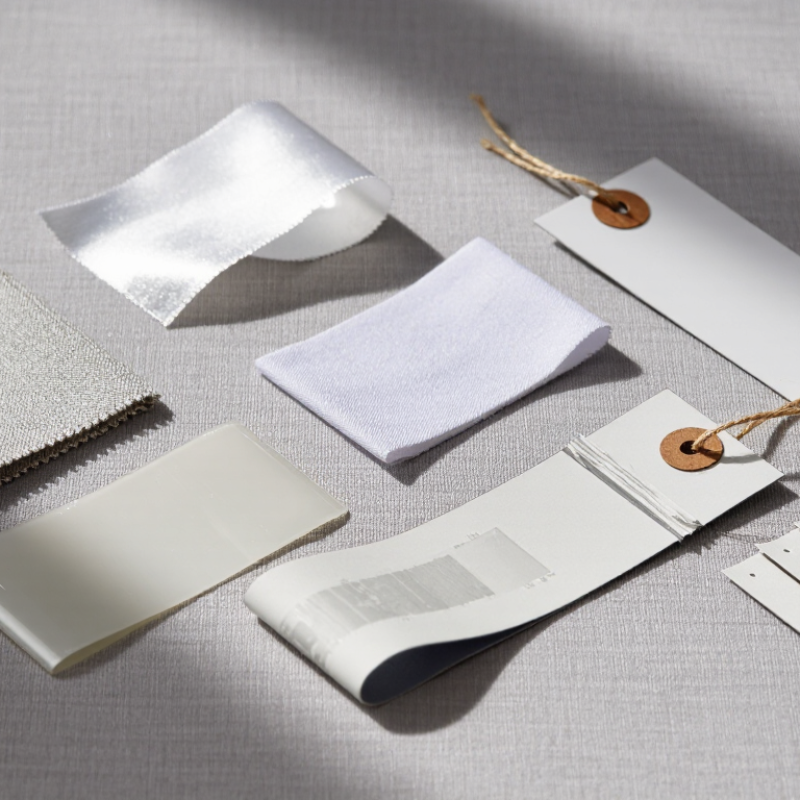
What Garment Labels Are and How Clothing Brands Use Them
Garment labels are small components attached to clothing, but they carry practical information long after a purchase. A woven or printed main label can identify a collection and show the size. Care labels explain washing, drying, and ironing needs. Fiber-content labels describe the materials in the garment, while small size tabs can make sorting easier in a busy stockroom.
Clothing brands use labels at several points in a product’s life. During development, designers choose a material, placement, and attachment method that suit the fabric. A soft printed label may feel better against a T-shirt’s neck, while a woven label can offer a more textured finish. Sewn-in labels are durable, but poorly placed edges may scratch. Heat-transfer labels avoid that seam, though their comfort and durability depend on application and fabric.
Labels help shoppers compare garments and care for them correctly. They also help teams distinguish sizes and styles during packing, storage, and returns. Keep the text legible, the attachment secure, and the information consistent with the finished garment. Small details matter. A label can look polished in a sample and still feel irritating after several hours of wear. Test it on the actual fabric, not just on a design screen.
Criteria for Evaluating Garment Labels
A useful garment label should survive the life of the garment, not just look polished on a sample. Check the material against the fabric: a stiff edge can scratch the neck, while a soft label may curl after washing. Run a thumb along the cut edges. Then wear a sample for a full day. Small discomfort adds up.
Readability matters just as much. Care details, size, and fiber information should remain clear at the label’s actual printed size. Examine letters under ordinary indoor light, not only on a bright computer screen. Rub the print with a dry cloth, then wash the sample several times. Fading, fraying, and loose stitching can reveal problems that a first inspection misses. These checks are simple, but easy to skip when deadlines tighten.
Also assess attachment, placement, and consistency across sizes. A label sewn into a side seam may feel fine on one sample and awkward on another. Compare samples after washing, and ask whether production can repeat the same color, dimensions, and stitch quality. Keep a written record of what passed. One trade-off remains: the softest option is not always the most durable. And a neat-looking label can still be uncomfortable. I would revisit the choice after real wear, because a sample can hide what daily use exposes.
Seven Types of Garment Labels and Their Best Uses
Woven labels suit a brand name or emblem that needs crisp detail and repeated washing. Their textured threads feel substantial, but dense edges can irritate sensitive skin. Printed fabric labels work well for fine text or changing designs, especially when a soft, low-profile finish matters. Satin labels have a smooth surface and are often comfortable at the neckline. They can snag or crease, though. Feel the edge.
Heat-transfer labels are useful for activewear and close-fitting garments because they avoid a sewn-in tag. Test them on the actual fabric first; stretch and repeated washing can affect adhesion. Care labels carry fiber and washing information, so choose a print that stays readable after laundering.
Size labels are simple, but placement matters: a label that twists inside a side seam can be hard to find. Flag labels extend from a seam and work for a small exterior detail or quick garment identification.
There is no universal best choice. A cotton shirt may suit a woven neck label, while a lightweight blouse may feel better with a printed one. Check samples against the garment, then wash and wear-test them before ordering a large run. I have seen teams focus on appearance and overlook scratchiness. That is an easy mistake to make.
How the Seven Label Types Compare in Comfort, Durability, and Cost
A label can feel minor on a sample table and scratchy after eight hours of wear. Woven labels hold up well through washing, but their edges can irritate a bare neck. Printed satin is smoother and often economical for larger runs; printed cotton feels softer, though its ink may fade sooner. Heat-transfer labels remove seams and suit close-fitting garments, but application quality matters. A peeling corner is hard to ignore.
Silicone labels are flexible and durable, yet can feel warm or bulky against skin. Leather labels last well on outerwear, but they are usually among the costlier choices. Paper hangtags cost little and carry detailed information, but they are not a substitute for a sewn-in label. Textile Exchange’s Materials Market Report 2024 estimates global fiber production reached 124 million tonnes in 2023, with polyester representing about 57 percent. That figure reflects broad material supply, not label prices; actual costs depend on order size, finishing, and setup. For wear testing, AATCC Test Method 61 evaluates colorfastness to laundering, while hand-feel still needs real garment trials. There is no perfect type. Check the label after repeated washing, and ask whether its texture suits the actual wearer.
How to Choose the Right Garment Labels for a Clothing Brand
Choosing garment labels starts with the clothing itself. A soft cotton T-shirt may suit a smooth printed label, while a structured jacket can carry a woven label without feeling bulky. Check how the label feels against skin, especially at the neck and side seam. Small details matter. A label that looks crisp on a desk may scratch after several hours of wear. Ask for a sample and test it on the actual fabric before ordering a full batch.
Consider what customers need to know and how the garment will be used. Care labels should stay readable after repeated washing, so run a few wash tests and inspect the print, edges, and stitching. Woven labels usually offer a textured finish; printed labels can fit smaller text or detailed care instructions. Heat-transfer labels avoid sewn edges, but comfort and durability can vary by fabric. There is no single best option. I would compare samples, though it is easy to overfocus on appearance and miss how a label behaves in daily wear. Check the information required for your sales markets, then choose a material, placement, and size that fit the garment and production budget.
What Are the 7 Best Garment Labels for Clothing Brands? — How to Choose the Right Garment Labels for a Clothing Brand
| Label type | Best suited for | Typical information or use | Key advantages | Things to consider |
|---|---|---|---|---|
| Woven label | Neck labels, cuffs, hems, and other visible or frequently handled areas | A design or text woven into the label fabric | Durable; suitable for fine text and detailed designs; available in different folds and finishes | Edges and construction affect comfort; very small text may be difficult to read |
| Printed fabric label | Care instructions, fiber content, and detailed text | Text or graphics printed on a textile substrate such as satin or cotton | Can accommodate small type and detailed instructions; often feels flexible against the skin | Print legibility and durability depend on the material, ink, and laundering conditions |
| Heat-transfer label | Activewear, underwear, and garments where a sewn label may irritate | Information or a design transferred directly onto the garment with heat and pressure | No sewn label edge; low-profile finish; can include size or care details | Requires fabric and application testing; performance depends on transfer materials and care conditions |
| Care and content label | Most garments that require fiber, care, origin, or other consumer information | May state fiber composition, care instructions, and other details required in the markets where the garment is sold | Keeps practical garment information together and helps customers care for the item | Requirements differ by country and product; verify current local labeling rules before production |
| Size pip or size tab | Neck labels, waistbands, and size-segregated retail displays | A compact size indicator, often attached beside or incorporated into another label | Makes size easy to spot without adding a large label; can simplify sorting and stock handling | Check that the size system is clear for the intended market and consistent across the range |
| Embroidered or appliqué patch | Jackets, denim, uniforms, and garments designed for a raised or textured detail | Stitched embroidery or a fabric patch attached to the garment | Adds texture and visual prominence; can be made in a range of shapes and sizes | Can feel heavier than a flat label; placement and stitching should suit the garment fabric |
| Hangtag | Retail presentation, product details, and removable information | A separate card or tag attached with a fastener; may include price, materials, or product details | Offers room for additional information and can be removed before wear | Not a substitute for required permanent garment information; consider attachment security and packaging waste |


