What Is a Banner Stand and Which Type Is Best?
A banner stand is a portable display system that presents printed graphics in busy public spaces. Most models use a retractable roller, telescopic frame, or lightweight tension structure. Banner Stands can support trade show graphics, retail promotions, reception signage, and event announcements. Their value comes from practical visibility, not decoration alone.
The right choice depends on your venue, graphic size, transport needs, and expected usage. A retractable stand may suit a company that attends frequent exhibitions. It packs into a compact case and sets up within minutes. A telescopic model offers adjustable height and width. It can support different campaign layouts, but may require more careful alignment. Wider displays create stronger visual impact. They also need more floor space and stable support. Think about lighting, walking distance, and viewing height. Small details matter.
There is no universally best banner stand. Not every display needs the largest graphic. An inexpensive model may work for a short indoor event, yet fail under repeated handling. Experienced exhibitors inspect the base, cassette, connectors, print tension, and carrying case before buying. They also check replacement graphic options and warranty terms. These checks reduce unpleasant surprises. Still, even careful planning can miss a venue restriction or uneven floor. This guide explains the main types, their strengths, and their limitations. It will help you compare appearance, durability, setup time, and long-term value with greater confidence.
What Is a Banner Stand? Definition, Purpose, and Core Components
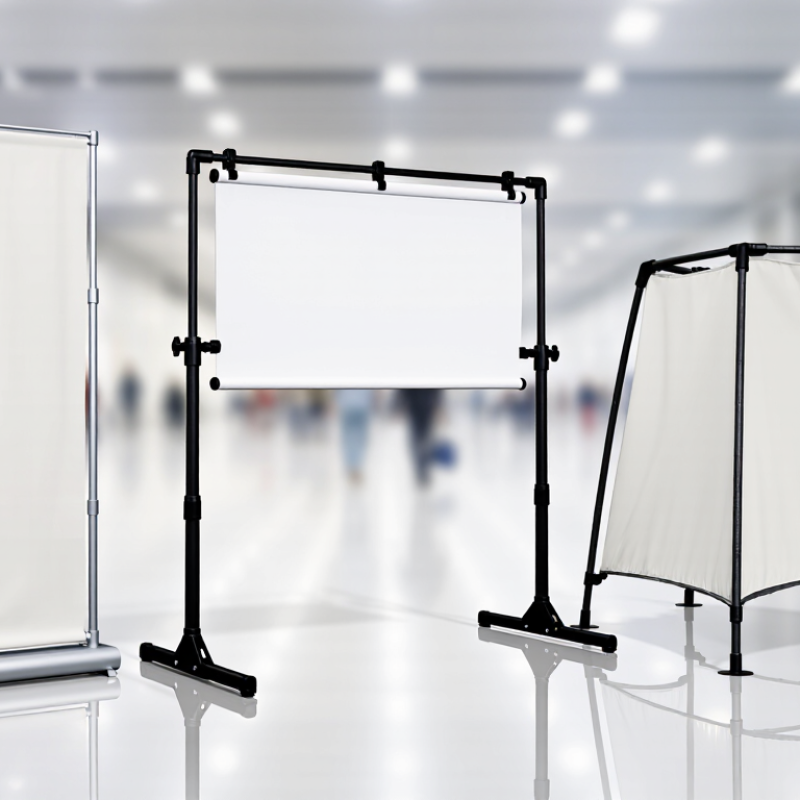
A banner stand is a portable display system that supports a printed graphic in an upright position. It usually appears at exhibitions, retail entrances, conferences, and reception areas. Its purpose is to present information clearly without requiring permanent fixtures. A well-positioned stand can guide visitors, introduce a service, or reinforce an event message within seconds. It also creates a defined visual space in busy environments.
The core components include a base, support pole, graphic panel, and protective carry bag. Some bases use a retractable roller mechanism, while others support the graphic with visible rails. The base should remain stable on the expected floor surface. The pole must hold the graphic straight without bending. The printed panel needs accurate dimensions, strong color contrast, and a surface that resists wrinkles. Small defects matter. A loose edge can make a polished display look temporary.
Choosing the right type depends on location, transport needs, and how often the display will be reused. A retractable stand suits frequent setup because it packs quickly and protects the graphic inside its base. A telescopic or tension-style stand can offer broader size flexibility. However, larger displays often require more careful assembly. In practice, teams sometimes focus too heavily on appearance and overlook weight, lighting, or uneven flooring. That is a useful mistake to examine. A professional setup should be checked from several viewing distances before visitors arrive.
Banner Stand Dimensions: Common 24–60 in Widths and 33–96 in Heights
A banner stand is a portable display system for trade shows, receptions, retail counters, and presentations. Its size affects visibility, transport, and setup time. Common widths range from 24 to 60 inches, while heights usually fall between 33 and 96 inches.
A 24-inch-wide stand suits narrow aisles, small booths, and directional messages. A 33- to 48-inch height works well on tables or beside registration areas. For stronger eye-level visibility, many exhibitors choose 33 to 60 inches wide and 80 to 96 inches high. The taller format creates a clearer visual block, but it needs a stable base and more storage space. The Center for Exhibition Industry Research reports that 81% of trade show attendees have buying authority, so readable messaging deserves careful planning.
Use the 60-inch width when distance and brand storytelling matter. Use a smaller stand when staff must carry it between rooms or venues. Freeman’s 2024 Trends Report also stresses purposeful, easy-to-navigate event experiences, which supports avoiding oversized displays in crowded spaces. Keep the headline near eye level. Leave generous margins around logos and product images. Small text disappears quickly.
I have found that maximum height is not always best. It can look impressive. It can also block sightlines or feel awkward in a compact booth. Measure the venue ceiling, aisle width, and transport case before ordering. A practical layout often uses one tall 33- to 48-inch stand with a shorter companion display. That choice is less dramatic, but usually more usable.
Retractable, X-Frame, and Fabric Stands: Key Type Differences
A banner stand is a portable display system for trade shows, receptions, retail spaces, and presentations. Its purpose is simple: hold printed graphics at eye level and keep the message visible. The best type depends on setup time, transport, appearance, and venue conditions.
Retractable stands are popular because the graphic rolls into a protective base. They usually open within minutes and fit easily beside a table or inside a vehicle. I have found them useful for repeated events, although the roll mechanism can become stiff after heavy use. Check that the base feels stable and that the graphic rises evenly. Very practical.
An X-frame stand uses lightweight rods that stretch through graphic pockets. It costs less, weighs little, and suits short-term indoor displays. However, the rods may show through thin material, and uneven floors can make the frame look careless. Fabric stands create a softer, more polished appearance, especially with dye-sublimated graphics and silicone edges. They resist small wrinkles better than many vinyl graphics, but fabric can collect dust and may need careful storage. Think about lighting, viewing distance, and installation skill. A crowded booth may punish a complicated setup. Before purchasing, confirm graphic dimensions, material specifications, fire-safety documentation, and replacement-part availability. My own preference has changed over time: retractable hardware saves effort, while fabric often delivers the stronger visual finish. Neither choice is perfect.
What Is a Banner Stand and Which Type Is Best?
Banner stands are portable display systems used to present printed graphics at exhibitions, retail locations, events, and presentations. Retractable stands are usually the fastest to deploy, X-frame stands are lightweight and economical, while fabric stands generally require more assembly but provide a seamless visual surface.
The chart compares typical setup times for common single-banner configurations: approximately 1 minute for a retractable stand, 2 minutes for an X-frame stand, and 8 minutes for a fabric stand. Actual setup time varies with banner size, frame design, and whether the graphic is pre-assembled.