






Blog
Top Cool Mist Humidifiers for Wholesale Buyers
Choosing the right cool mist humidifiers for wholesale distribution requires more than comparing tank size and retail price. Buyers need dependable performance across homes, offices, nurseries, and wellness spaces. A quiet motor, stable mist output, easy refilling, and washable components can strongly influence customer satisfaction. Packaging matters too. A damaged carton or unclear cleaning guide can create avoidable returns.
Dr. David Hill, a pulmonologist and medical adviser, has stated, “A humidifier is only helpful when it is used correctly and kept clean.” That reminder should guide every purchasing decision. Wholesale buyers should examine water-tank access, antimicrobial claims, filter availability, automatic shutoff, and noise levels. They should also request test samples before placing large orders. A unit may look excellent in a catalog, yet feel fragile after repeated refilling. Small details matter.
Reliable sourcing includes more than a competitive quotation. Supplier communication, production consistency, warranty terms, replacement parts, and inspection records deserve equal attention. Buyers should check whether each model produces a comfortable room-level mist without leaving damp patches on nearby furniture. Energy use also affects long-term value. Sometimes, the lowest factory price becomes the most expensive option after returns and support requests. That is an uncomfortable lesson, but a useful one. This guide compares leading cool mist humidifiers through practical wholesale criteria, including usability, maintenance, safety features, and supply reliability. Not every model will suit every market. That is precisely why careful evaluation matters.
What Cool Mist Humidifiers Are and How They Work
Cool Mist Humidifiers for Wholesale Buyers
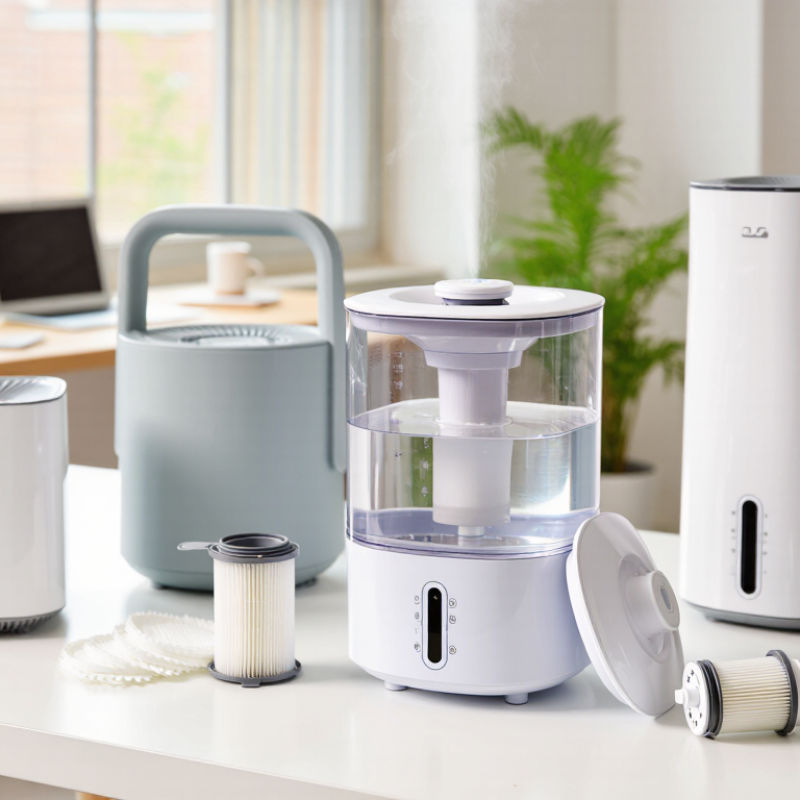
Cool mist humidifiers release room-temperature moisture without boiling water. Two common systems dominate the category: evaporative and ultrasonic models. Evaporative units use a wick and fan. Air passes through the wet filter, then carries invisible moisture into the room. Ultrasonic units use a vibrating plate to create a fine mist. They are often quieter, but water quality matters more.
The U.S. Environmental Protection Agency recommends keeping indoor relative humidity between 30% and 50%. This range helps limit excessive dampness and mold growth. Wholesale buyers should compare output rates, tank capacity, noise levels, and automatic shutoff performance. A larger tank is not always better. It may also mean heavier handling and slower cleaning.
Mineral-rich tap water can leave white dust around ultrasonic units. Distilled water may reduce that problem, but it increases operating cost. AHAM humidifier performance guidance also highlights measurable output and safety considerations. Ask suppliers for test conditions, not only attractive numbers. Real rooms vary. A model rated for a large space may struggle near open doors or strong ventilation. Maintenance remains the weak point. Filters, reservoirs, and mist outlets need clear cleaning instructions. A beautiful specification sheet cannot replace daily usability.
Top Cool Mist Humidifiers for Wholesale Buyers - What Cool Mist Humidifiers Are and How They Work
| Cool Mist Humidifier Type | How It Works | Typical Water Output | Typical Noise Level | Typical Power Use | Main Advantages | Key Limitations | Suitable Wholesale Applications | Important Buying Considerations |
|---|---|---|---|---|---|---|---|---|
| Ultrasonic Cool Mist | A piezoelectric transducer vibrates at ultrasonic frequency and breaks water into very fine droplets, which are released as a visible cool mist by a fan. | Approximately 100–500 mL/h, depending on the unit size and operating setting. | About 20–35 dB for many compact and medium-size models. | Approximately 15–40 W. |
|
Minerals in untreated hard water may become airborne as white dust. Regular cleaning and suitable water quality are important. | Bedrooms, offices, nurseries, personal-care retail, hospitality rooms, and small residential spaces. | Check mist-adjustment range, automatic shut-off, water-tank accessibility, filter or demineralization options, and cleaning instructions. |
| Evaporative Cool Mist | A fan draws dry air through a wet wick or evaporative filter. Water evaporates naturally into the airflow, while larger droplets and many minerals remain in the wick. | Approximately 150–700 mL/h, depending on fan speed, room conditions, and filter size. | About 25–55 dB, with fan speed affecting the sound level. | Approximately 5–35 W. |
|
Replacement wicks or filters are consumable parts. Fan noise can be higher than that of ultrasonic models. | Living rooms, classrooms, offices, healthcare-related noncritical areas, and larger household spaces. | Review replacement-filter availability, filter service life, airflow volume, tank capacity, and access for cleaning the water reservoir. |
| Impeller Cool Mist | A rotating disk or impeller breaks water into fine droplets. A diffuser or fan disperses the droplets into the room as a cool mist. | Approximately 150–400 mL/h, depending on impeller design and operating speed. | About 25–45 dB. | Approximately 15–35 W. |
|
Like ultrasonic units, it may disperse minerals when hard water is used. The rotating assembly requires routine cleaning. | General home use, value-focused retail products, seasonal household goods, and entry-level humidifier ranges. | Evaluate impeller durability, splash control, mist distribution, water-level visibility, and spare-part availability. |
| Top-Fill Ultrasonic | Uses ultrasonic vibration to produce mist, with water added through an opening on the top of the unit rather than by removing the tank. | Approximately 150–500 mL/h. | About 20–35 dB. | Approximately 15–40 W. |
|
The top opening and internal channels must be designed to prevent water spills and should remain accessible for cleaning. | Direct-to-consumer products, home-appliance retailers, online marketplaces, offices, and bedrooms. | Confirm spill-resistant filling, lid sealing, tank capacity, water-level protection, surface stability, and cleaning access. |
| Portable USB Cool Mist | Usually uses a small ultrasonic transducer powered through a USB connection to produce a limited stream of cool mist. | Approximately 20–80 mL/h. | About 25–40 dB. | Approximately 2–5 W. |
|
Small tanks require frequent refilling and do not provide sufficient output for large rooms. | Office accessories, travel products, gift channels, dormitories, vehicle-compatible applications, and personal workspaces. | Check USB voltage compatibility, spill protection, continuous-operation time, water-container material, and electrical safety documentation. |
| Large-Room Cool Mist | Uses a larger ultrasonic or evaporative system with higher airflow or mist output to distribute moisture across a wider area. | Approximately 300–700 mL/h. | About 25–55 dB. | Approximately 20–60 W. |
|
Larger dimensions increase storage and shipping requirements. High output can cause condensation if the room becomes over-humidified. | Large homes, open-plan offices, studios, retail spaces, and hospitality environments. | Assess rated room coverage, tank capacity, caster or handle design, humidity sensor accuracy, drainage convenience, and packaging strength. |
| Smart Cool Mist | Combines an ultrasonic or evaporative humidification system with sensors, digital controls, timers, and sometimes wireless application control. | Approximately 150–600 mL/h. | About 20–45 dB. | Approximately 15–50 W. |
|
Higher component count may increase cost, software-support requirements, and after-sales service needs. | Connected-home channels, premium home appliances, offices, hospitality, and technology-focused retail. | Verify sensor calibration, application compatibility, firmware support, data-security practices, warranty process, and offline operation. |
Related Posts
-

Emerging Trends in HEPA Air Filters for Home Use at the 138th Canton Fair 2025
-
2026 Best Air Cleaners for Your Home and Office Needs?
-
2025's Top 5 Small Warm Mist Humidifiers for Ultimate Comfort
-
How Air Mist Humidifiers Improve Indoor Air Quality: Insights and Key Benefits
-
Discover the Excellence of Chinese Manufacturing with the Best Cool Humidifier on the Global Stage
-

What Is the Best HEPA Air Filter Supplier in China?