



Blog
Top 10 Best Foldable Tables for Every Need
A Foldable Table can turn a crowded room, patio, or work area into useful space in minutes. The right choice depends on where it will go and what it needs to hold. A lightweight table may suit occasional picnics, while a sturdy, larger model can better serve family meals, craft projects, or extra guests. Small details matter.
This guide to the Top 10 Best Foldable Tables for Every Need compares options by practical features, including size, weight, materials, stability, portability, and storage. Check each product’s stated dimensions and weight capacity before buying; these can vary by model and setup. A smooth surface is easier to wipe clean, while locking legs and secure hinges can make setup feel more reassuring. Still, no single table fits every home. I would not choose by price or appearance alone.
Think about the space available when the table is open and where it will be stored afterward. A table that looks compact online may feel bulky in a narrow closet. For outdoor use, consider weather exposure and follow the manufacturer’s care instructions. For frequent moving, handle design and overall weight can make a noticeable difference. These recommendations are intended to help you compare everyday trade-offs, not promise a perfect match. Sometimes the simplest option is enough. Read on to find a table suited to your space, routine, and budget.
What Defines a Foldable Table and How It Works
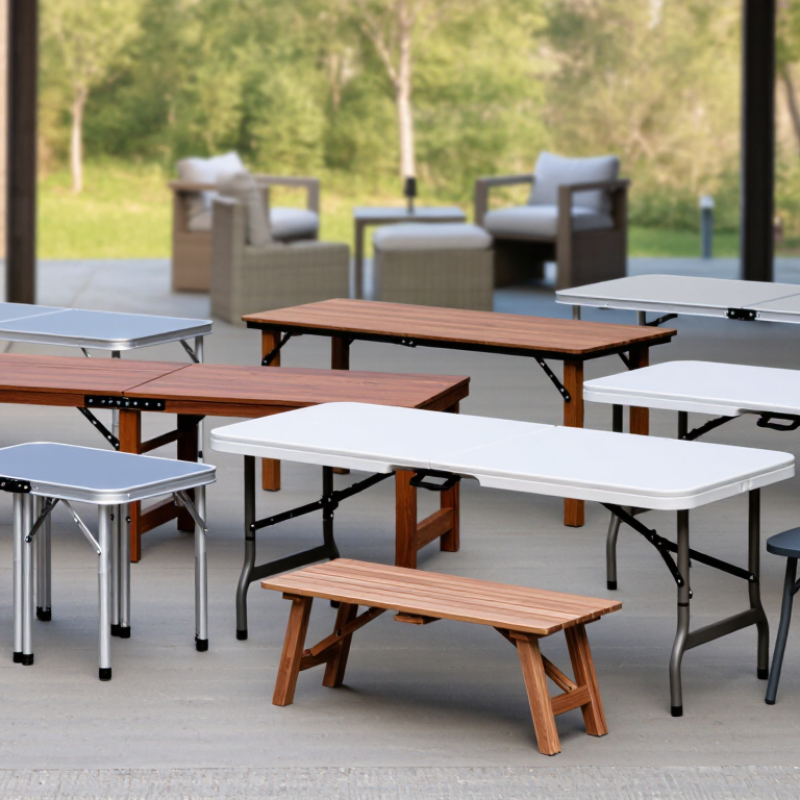
A foldable table is a table whose legs or frame collapse so the top can be stored or carried more easily. Most use hinged legs, pivot joints, and locking braces. When opened, the braces help resist sideways movement and transfer weight from the tabletop to the floor. That hinge matters.
The mechanism is simple, but stability depends on how its parts work together. A loose latch can let a leg shift; an uneven floor can make a sound table wobble. Before use, check that every leg is fully extended and each lock is engaged. Keep heavy items near the center, where the frame can support them more evenly. I still find “portable” a little misleading: some tables fold quickly but remain awkward to lift.
For context, Grand View Research estimated the global furniture market at US$729.1 billion in 2023 and forecast a 5.4% compound annual growth rate from 2024 to 2030. That broad market figure is not specific to folding tables, but it shows the scale of furniture demand. For construction benchmarks, ANSI/BIFMA X5.5-2021 covers strength, stability, and durability tests for desk and table products. It is not a universal rating for every folding table. Check the maker’s stated load limit, then consider whether it applies to evenly distributed weight or a concentrated load, such as a heavy planter.
Common Types of Foldable Tables and Their Uses
Foldable tables serve very different jobs, from weekend picnics to busy community halls. Grand View Research estimated the global folding furniture market at about $3.6 billion in 2022, with projected growth through 2030. That market figure signals demand, but it cannot tell you which table suits your room. The details matter.
Banquet tables, often long rectangles, work well for shared meals, craft projects, and event registration. Their broad tops hold serving dishes or paperwork, while folding legs make storage easier. Card tables are smaller and lighter, suited to games, extra dining seats, or a temporary laptop spot. Small, but useful. For compact homes, drop-leaf and folding dining tables can stay narrow against a wall, then open when guests arrive. Measure the chair space too; the tabletop is not the whole footprint.
Adjustable-height tables can shift between seated work and standing tasks, while outdoor camping tables prioritize low weight and quick setup. Look for locking hinges, stable feet, and a stated load capacity. A thin top may flex under a heavy appliance, even when the frame looks sturdy. On patios, uneven stones can make a lightweight table wobble. That trade-off is easy to underestimate. Check the manufacturer’s instructions and test stability on the surface where you plan to use it.
Key Factors for Comparing Foldable Tables
When comparing foldable tables, start with the space they need to serve. Measure the open area, then check the table’s listed dimensions rather than judging from photos. A table that fits four plates may still feel cramped when people need room for elbows. Check its folded size, too. A narrow closet or car trunk can quickly rule out an otherwise suitable option.
Stability matters more than a high weight rating alone. Look for locking legs, cross-bracing, and feet that sit evenly on the floor. On tile or concrete, a slight wobble is easy to notice; on grass, uneven ground can make it worse. Compare the stated load capacity with what you plan to place on the surface, such as serving dishes or tools. Weight ratings vary in how they are tested, so treat them as guidance, not a guarantee. I once focused too much on capacity and overlooked how awkward a heavy table would be to carry.
Materials affect cleaning, durability, and handling. Plastic tops are usually easy to wipe, while metal surfaces can feel sturdier but may show scratches. Check the hinges and folding joints for smooth movement and secure locks. Try opening and closing the table if possible. It should not pinch fingers or require a struggle. A few extra seconds in the store can reveal more than a polished product photo.
Top 10 Best Foldable Tables for Every Need — Key Factors for Comparing Foldable Tables
Compare common foldable-table styles by typical size, portability, and practical use. Dimensions are approximate examples; measurements and features vary by model.
| Table Type | Typical Top Size | Typical Height | Common Construction | Portability | Best For | Key Trade-Off |
|---|---|---|---|---|---|---|
| Compact card table | About 34–36 in. square | About 28–30 in. | Plastic or padded top with folding metal legs | Good; legs fold underneath, though the top does not usually fold | Card games, puzzles, and occasional indoor seating | Compact surface limits space for serving dishes or larger projects |
| Four-foot utility table | About 48 × 24–30 in. | About 28–30 in.; some models adjust | Resin, plastic, or wood top with metal legs | Good; many models fold flat for storage | Crafts, small gatherings, laundry, and general household tasks | Less seating and work surface than longer banquet tables |
| Six-foot banquet table | About 72 × 30 in. | About 28–30 in. | Commonly a molded plastic or resin top with a steel frame | Moderate; folds flat but can be long and awkward to carry | Buffets, events, temporary workspaces, and group seating | Requires substantial storage and transport space |
| Eight-foot banquet table | About 96 × 30 in. | About 28–30 in. | Commonly a plastic or resin top with a folding metal frame | Limited to moderate; long folded length can make handling difficult | Large events, long buffet lines, and shared work areas | May be difficult to move through narrow doors or store in small spaces |
| Round folding table | Common diameters are about 48 or 60 in. | About 28–30 in. | Plastic, resin, or wood top with folding legs | Moderate; the wide top can be cumbersome even when the legs fold | Dining, group activities, and face-to-face conversation | Round tops can be less space-efficient than rectangular tables against a wall |
| Adjustable-height utility table | Often about 48–72 × 24–30 in. | Multiple settings, commonly spanning roughly 22–36 in. | Plastic or resin top with telescoping or repositionable legs | Moderate; adjustment hardware can add weight or setup steps | Mixed-age activities, craft work, and tasks needing different working heights | Height adjustment may take longer than setting up a fixed-height table |
| Folding camping table | Commonly about 24–48 in. long, with a narrower top than a banquet table | Often low or adjustable; varies by design | Typically a lightweight metal frame with a slatted or fabric surface | Very good; many designs collapse into a compact carry size | Camping, picnics, and outdoor cooking setups | Lightweight construction and smaller tops may be less suited to heavy loads |
| Folding workbench | Often about 24–36 in. wide and 24–48 in. long | Varies; some models adjust | Rigid work surface with a reinforced folding frame; some include clamps | Good; folds for storage, but sturdier designs can be heavy | DIY projects, repairs, and temporary workshop tasks | Clamping features and a durable frame can increase weight and cost |
| Folding serving or side table | Often about 18–30 in. across or long | Varies by design; generally lower than dining-table height | Wood, metal, or plastic top with folding legs | Very good; small footprint makes it easy to store | Drinks, snacks, bedside use, and extra surface space | Limited surface area is unsuitable for larger meals or group work |
| Folding wall-mounted table | Varies widely; compact models may be about 24–48 in. wide | Set by installation height | Fixed wall brackets support a top that folds down when not in use | Excellent for saving floor space; not portable after installation | Small kitchens, laundry rooms, and compact work areas | Requires secure installation into suitable wall structure |
Before buying, check the specific table’s open and folded dimensions, rated load capacity, weight, locking mechanism, and care instructions. Load ratings and safe-use guidance differ between models.
Top 10 Foldable Tables for Different Needs
Foldable tables solve different problems, so compare use, not just size. The U.S. Census Bureau’s 2023 Characteristics of New Housing report lists the median floor area of newly sold single-family homes at 2,286 square feet. Even with that space, a table that folds flat can free a crowded dining corner. Measure the open footprint, folded thickness, and doorway width. Measure twice.
For everyday dining, choose a steady surface with room for plates; card games need elbow space, while buffet service benefits from a longer top. A children’s table should be low and easy to wipe. Camping and tailgating call for lighter frames, but wind can make them unstable. Craft work needs a cleanable surface; workshops need stronger support for tools. Banquet tables suit larger gatherings, and narrow utility tables fit beside a sofa or laundry area. Grand View Research valued the global furniture market at 677.09 billion U.S. dollars in 2022, reflecting the breadth of furniture needs—not foldable tables alone. Check stated load limits and locking hinges. A low price can hide a wobbly frame, and I would not assume lighter always means easier.
Top 10 Foldable Tables for Different Needs
Approximate seating capacities for common table sizes and shapes. Actual capacity varies with chair width, table design, and how much space each person needs.
How to Choose a Foldable Table for Your Space and Routine
Choosing a foldable table starts with the space it must serve, not its folded dimensions. Measure the open area, including room for chairs and people to walk past. A table that fits against a wall may still block a doorway when fully set up. Measure twice.
Think about your routine. A desk for a laptop needs a steady surface and enough depth for your hands to rest comfortably. For shared meals or crafts, consider how many people will sit around it and whether the legs leave enough knee room. If you move the table often, check its weight and how easily it folds. Small details matter.
Materials affect both care and comfort. A smooth top wipes clean quickly, while a textured one may hide small scratches better. Look for secure locks and feet that sit evenly on your floor; a slight wobble gets irritating fast. Check the folded thickness, too, and picture where it will actually go: behind a sofa, in a closet, or beside a washing machine. That can be awkward. If possible, test the folding mechanism in person. A table can look sturdy in a photo and feel different under a stack of books.


