What Is the Best Golf Towel in 2026?
A Golf Towel can seem like a minor accessory until rain softens your grip or sunscreen smears across a clubface. On a windy tee, a damp, heavy towel can swing against your leg. Small details matter. Yet “best” depends on where you play, what you carry, and how often you clean your clubs.
The National Golf Foundation’s 2024 Golf Industry Report counted 26.6 million Americans who played on a golf course in 2023. That figure describes participation, not towel sales or product quality. It does, however, show why practical gear matters to millions of players with different routines. A beginner walking nine holes may value a light towel with a sturdy clip. A frequent player might prefer a larger, textured weave that reaches into club grooves. Conditions matter, too. A towel that works well on a dry summer course may disappoint in steady drizzle.
This guide compares Golf Towel options by absorbency, texture, size, attachment, durability, and care. We’ll consider the awkward trade-offs: thicker fabric can hold more moisture, but may take longer to dry. Manufacturer claims are useful, but they are not independent test results. No towel suits every bag or weather forecast. The right choice should feel easy to reach, stay secure, and clean your clubs without fuss. Still, personal use can reveal flaws a specification sheet misses.
What a Golf Towel Does and Why It Matters
A golf towel has a simple job: keep hands, grips, and clubfaces clean enough to perform consistently. During a round, sweat can make a grip feel slick, while damp grass and soil can fill the grooves on an iron. A quick wipe helps restore a more dependable feel. Small difference, noticeable.
Use separate sections of the towel for different tasks. A lightly damp area can lift dirt from a clubface; a dry corner is better for hands and grips. Avoid rubbing grit across the finish, since trapped sand can leave fine marks. I’ve found that wiping a club before the dirt dries is easier than scraping at it later. Not always, though—mud can take more than one pass.
A towel also helps you notice when equipment needs attention. If a grip stays slippery after drying, the problem may be wear or residue, not moisture alone. Keep the towel within easy reach, but secure it so it does not drag through wet grass. After the round, wash it and let it dry fully. A forgotten damp towel gets unpleasant fast.
Which Materials and Designs Suit Different Golfing Needs
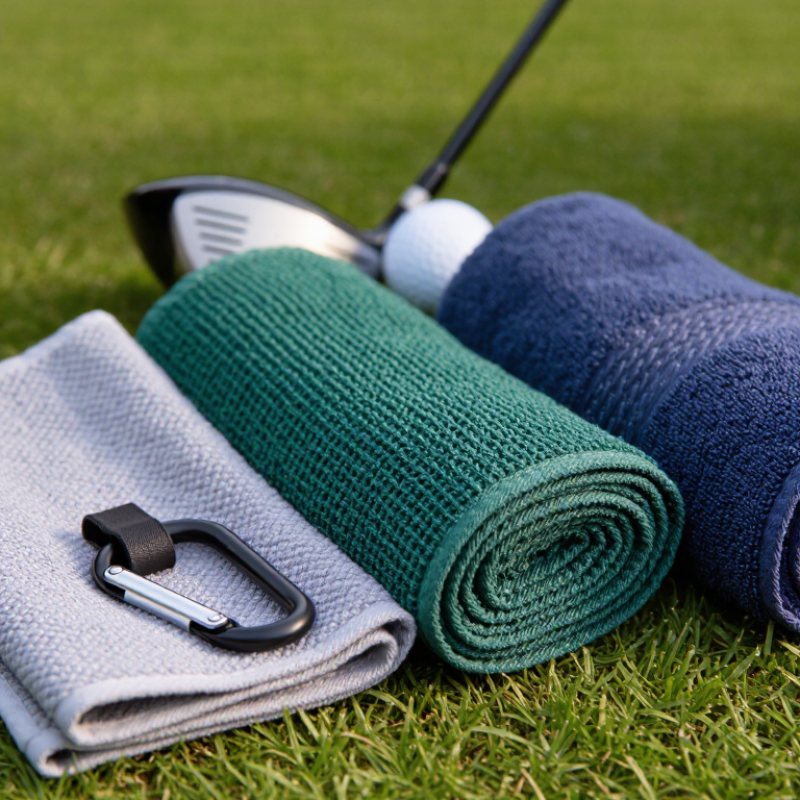
A golf towel should match the mess you expect, not just look tidy on a bag. Cotton feels soft and absorbs sweat well, but a soaked towel can become heavy. Microfiber is usually lighter and dries faster, making it practical for humid rounds or rainy walks. Its fine fibers can also hold sunscreen and oily residue, so wash it regularly. Waffle-weave surfaces offer small grooves that help lift grit from club faces. They are useful, though not magic; stubborn dirt still needs a brush.
The National Golf Foundation’s 2024 Golf Industry Report counted 26.6 million U.S. on-course golfers in 2023. That broad range of playing conditions helps explain why one towel design cannot suit everyone. For a dry course, a compact microfiber towel may be enough. On a wet morning, choose a larger towel with a secure clip and a separate damp section for cleaning clubs. Keep the grip-drying area away from muddy fabric. Small detail. A dark towel can hide stains, but it also makes it harder to spot grime before it transfers back to a club. I may be giving color too much weight; weave and washing habits matter more.
What Is the Best Golf Towel in 2026?
Material suitability for different on-course needs
Ratings are practical comparative estimates on a 1–5 scale, based on common material characteristics—not results from a standardized test. Cotton terry is a strong pick for absorbency and softness; microfiber terry dries quickly; waffle-weave microfiber is well suited to cleaning club grooves. A clip or loop helps keep any towel accessible during play.
How to Compare Golf Towels by Absorbency, Grip, and Durability
A golf towel should clean clubs and hands without becoming a soggy burden by the turn. Absorbency is more than how much water the fabric holds. Check how quickly it draws moisture from a wet clubface, then how easily it dries between shots. A compact microfiber weave often dries faster, while a thicker cotton towel may feel softer but stay damp longer. That trade-off matters.
Grip depends on texture, not just softness. Rub a towel across a gloved hand, then try wiping a dusty iron. A slightly raised weave can lift grit more effectively than a slick surface. Look for a secure clip or loop, too; a towel that slips from a bag is frustrating. Small detail, real difference. Avoid fabrics that leave lint around grooves.
Durability shows up after repeated washing and rough use against club edges. Check stitching at the corners and attachment point, where stress tends to gather. Follow care instructions, and avoid fabric softeners if they reduce absorbency. I tend to overrate plushness on a store shelf; it says little about performance after several rounds. Compare towels while damp, if possible, and consider how much space they take on your bag. A towel that suits your routine may not be the thickest one.
What Features to Look for in a Golf Towel in 2026
What Is the Best Golf Towel in 2026?
What Features to Look for in a Golf Towel in 2026
A useful golf towel should clean clubs, dry hands, and stay easy to reach during a round. Start with the fabric. Microfiber absorbs moisture quickly and lifts grass or sand from club grooves, while cotton often feels softer but can stay damp longer. Check the weave, too: a textured section can remove dirt more effectively than a smooth surface. Size matters. A towel should cover a clubhead without dragging on the ground when clipped to a bag. A secure attachment keeps it nearby through a bumpy cart ride. Simple, but important.
Tips: Look for a clip or loop that opens easily with one hand. Choose a contrasting color so the towel is easier to spot beside dark clubs. Rinse grit out after play; trapped particles can scratch club finishes. Avoid assuming thicker always means better. Some bulky towels take ages to dry.
Consider care and durability before buying. A machine-washable towel is practical, especially after wet rounds or dusty range sessions. Inspect the stitching and attachment point, since those areas take repeated pulling. One detail is easy to overlook: a towel that holds too much water may feel heavy by the back nine. There is no perfect choice for every golfer. Match the fabric and size to your weather, bag setup, and how often you clean clubs during play.
How to Choose and Care for the Right Golf Towel
A useful golf towel should match the conditions you play in, not just look good on a bag. Microfiber is lightweight and absorbs well, making it handy for wiping a damp club face or muddy ball. Cotton feels softer and can handle heavier moisture, though it may take longer to dry. Check the towel’s size, texture, and attachment loop. A towel that drags on the ground is more nuisance than help. Small details matter.
Think about how you actually play. On a hot, dry course, a compact towel may be enough for hands and grips. After rain, a larger towel gives you a clean, dry section for each task. I used to assume thicker always meant better; it didn’t. A bulky towel can stay damp in a packed golf bag. That’s worth reconsidering.
Care is simple, but easy to neglect. Shake off grit before washing, and follow the care label. Use mild detergent, skip fabric softener, and let the towel dry fully before storing it. Softener can reduce absorbency, while lingering dampness may leave an unpleasant smell. Check the clip and stitching now and then. Replace a towel when it no longer cleans reliably, even if it still looks fine.