



Blog
What Is the Best Hard Wood Flooring from China?
Choosing the best Hard Wood Flooring from China requires more than comparing attractive photographs and low quotations. The right choice depends on timber species, moisture control, surface treatment, manufacturing consistency, and the room’s climate. Oak may offer dependable hardness and visible grain, while walnut brings deeper color and a warmer visual character. Ash can create a lighter, more open appearance. Each option has limits.
Look closely at the details. A reliable supplier should explain the wood’s origin, kiln-drying process, grade, thickness, tongue-and-groove accuracy, and finish composition. Request samples, not only digital images. Run your hand across the surface. Check for uneven coating, open knots, edge damage, and color differences between boards. A strong factory should provide clear inspection records and relevant sustainability or quality documentation where available.
Installation conditions matter just as much. Flooring should acclimate inside the project space before fitting. Subfloor moisture must be measured, not guessed. Poor preparation can cause gaps, cupping, or noisy boards, even when the flooring itself is well made. That part is often overlooked.
There is no universal winner.
Based on practical evaluation, the best Chinese hardwood flooring is usually the product that matches the building, budget, maintenance plan, and local standards. Some buyers focus too heavily on price. I understand why, but that decision can become expensive later. A careful comparison of samples, test data, supplier communication, and after-sales support gives a more trustworthy answer than a simple species ranking.
Chinese Hardwood Flooring: Species, Characteristics, and Common Uses
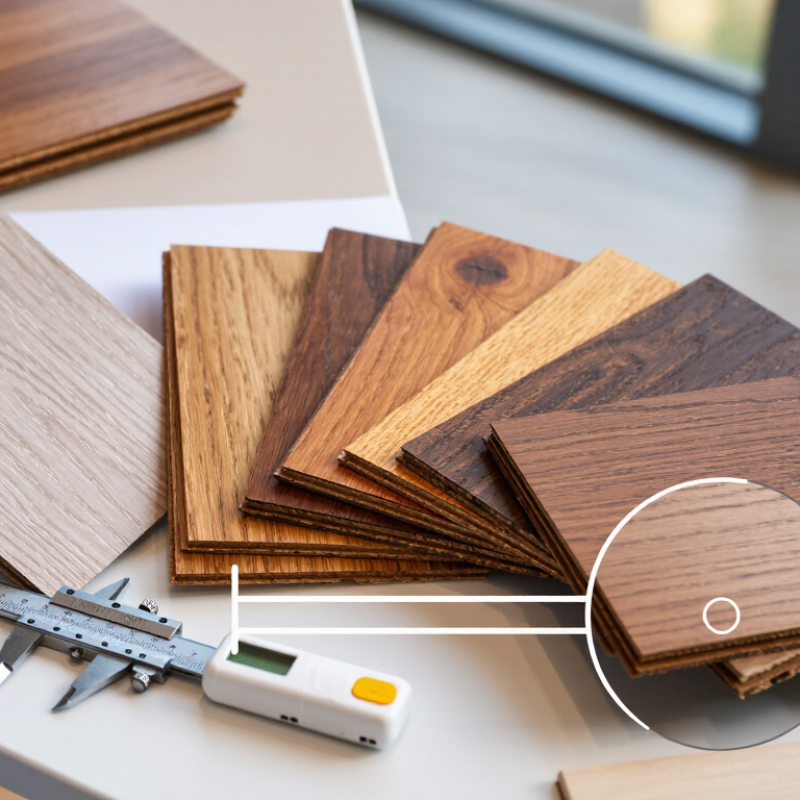
Chinese hardwood flooring usually refers to flooring made in China, not one single timber species. Local manufacturers commonly work with oak, ash, maple, acacia, and imported teak. Oak offers visible grain, steady performance, and broad color options. Ash has a lively texture and a lighter appearance. Maple looks clean and smooth, but scratches can show more clearly. Acacia provides strong contrast and a warmer tone. Teak resists moisture well, although its higher oil content can affect finishing and bonding.
The best choice depends on room conditions and daily use. Oak suits living rooms, bedrooms, and busy family areas. Maple works well in modern interiors with controlled humidity. Acacia adds character to dining rooms and entrance spaces. Teak is practical for humid locations, but it still needs proper installation. Engineered hardwood may perform better than solid boards over concrete or in changing climates. Check the product’s moisture content, wear layer, finish, and formaldehyde documentation. A beautiful sample is not enough.
Tips: Bring samples home. View them in daylight. Keep indoor humidity reasonably stable, and leave expansion space around walls. Ask for installation guidance and maintenance instructions. Do not choose only by hardness; grain movement, surface finish, and repairability matter too. No species wins every room. Even experienced buyers can overlook subfloor moisture, which may cause later movement or gaps.
How to Evaluate the Quality of Hardwood Flooring from China
What Is the Best Hard Wood Flooring from China?
Evaluating hardwood flooring from China requires more than checking a glossy catalog photo. Ask for the wood species, origin, grade, and construction details. Oak, walnut, and ash should show consistent grain and natural color variation. Excessive uniformity may indicate heavy staining or surface correction. Check the board edges carefully. Clean milling creates tight joints without chipped corners. The tongue and groove should fit smoothly, not require force.
Moisture content is a critical quality signal. For indoor flooring, suppliers should provide readings suited to the destination climate. Request recent test records, not only a factory promise. A reliable supplier can explain drying methods, core materials, coating layers, and formaldehyde test results. Look for independent laboratory reports with clear dates and product specifications. Vague paperwork weakens confidence. So does unexplained pricing.
Order several samples from different production batches. A single perfect board can mislead you. Place samples near a window and inspect them under daylight. Look for bubbling finish, open knots, uneven bevels, and color changes. Tap the boards gently and compare their sound and weight. I would also test a small installation area before approving a large order. It may feel slower, but it reveals movement, gaps, and finish wear. Some evaluations still miss seasonal expansion. That deserves honest attention.
What Is the Best Hardwood Flooring from China?
Janka hardness is a useful first indicator when evaluating hardwood flooring. Higher values generally indicate better resistance to dents, while moisture control, drying, milling accuracy, finish quality, and formaldehyde compliance must also be checked before purchase.
Janka hardness values are representative species averages in lbf, based on published wood-property data from the USDA Forest Products Laboratory. Actual flooring performance varies with grade, construction, moisture content, and manufacturing quality.
Manufacturing Standards, Finishes, and Environmental Certifications
The best hardwood flooring from China is not chosen by appearance alone. Manufacturing controls matter more. Reliable factories should document species, moisture content, dimensional stability, and batch inspections. For engineered flooring, ask whether production follows GB/T 18103 and whether testing covers bonding strength and formaldehyde emissions. Independent laboratory results are more useful than factory claims. The National Wood Flooring Association also emphasizes acclimation, moisture testing, and installation-site control in its technical guidance. These steps prevent cupping, gaps, and noisy boards.
Finishes deserve equal attention. UV-cured coatings can provide consistent gloss and abrasion resistance, but thicker finish does not automatically mean better performance. Ask for abrasion results, repair instructions, and the exact number of coating layers. Environmental evidence should include FSC or PEFC chain-of-custody documentation and an independently verified EPD under ISO 14025. FSC Facts & Figures 2024 reports more than 50,000 active chain-of-custody certificates worldwide, showing how widely traceability is used. Still, a certificate does not prove every plank came from the same controlled batch.
Tips: Request recent test reports, not blank templates. Match moisture targets to the installation climate. Check whether the certificate holder matches the exporter. Review the EPD’s declared unit and system boundary; comparisons can become misleading. Product samples can also hide production variation. Inspect several cartons, including unfinished edges and tongue profiles. I have seen attractive samples fail because packaging protection was weak. That detail is easy to overlook.
Comparing Chinese Hardwood Flooring with Global Alternatives
What Is the Best Hard Wood Flooring from China?
Chinese hardwood flooring deserves comparison, not automatic approval or rejection. Grand View Research estimated the global wood flooring market at about USD 7.5 billion in 2023, with steady growth expected through 2030. China serves this expanding market with large-scale processing, precise machining, and many engineered-flooring options. Oak, ash, acacia, and walnut are common choices. European oak often offers stable grading and familiar colour variation. North American maple provides a cleaner, harder surface. Chinese flooring may deliver better value, but specifications can vary more between factories.
The data needs context. The FAO Global Forest Resources Assessment 2020 recorded China’s forest area at approximately 220 million hectares. That figure does not prove every board is responsibly sourced. The USDA Foreign Agricultural Service’s China Wood Products Annual reports China as a major global wood-products manufacturer and consumer. Ask for species details, origin records, moisture readings, and formal test results. EN 14342, NWFA guidance, and documented emissions testing can support a more reliable comparison. In my project inspections, moisture control caused more failures than appearance. I once focused too heavily on price per square metre. That was a costly mistake.
Tips: Compare the complete floor system, not only the plank. Check core construction, wear-layer thickness, finish resistance, and acclimation requirements. Request random samples from different production batches. A beautiful sample can hide inconsistent grading. For humid rooms, engineered construction may outperform solid wood, although installation still decides much of the result.
How to Choose the Best Chinese Hardwood Floor for Your Project
Choosing the best Chinese hardwood floor starts with species, not price. Ask for the botanical name, growing region, grade, and cut direction. Oak, walnut, and acacia behave differently under seasonal humidity. The FAO Global Forest Resources Assessment 2020 recorded about 220 million hectares of forest in China. That figure shows scale, not automatic quality. Request traceable sourcing documents and verify whether the timber is legally harvested and properly documented.
Moisture control matters more than a glossy sample. The National Wood Flooring Association recommends installing wood near its expected in-service moisture condition, rather than relying on a fixed acclimation period. Ask for kiln-drying records and recent moisture readings from several bundles. A supplier should explain the target range for your climate, subfloor, and room use. I would reject vague answers. They create expensive surprises later. Check tongue-and-groove accuracy, board thickness, finish adhesion, and color variation under natural light. A small sample is not enough.
Formaldehyde emissions also deserve attention. Request a current laboratory test report against the destination market’s standard, such as EN 14342 or an applicable national requirement. Confirm test dates and product names. Do not accept a generic certificate for a different collection. The Forest Stewardship Council’s chain-of-custody documentation can strengthen sourcing confidence, but certification alone does not prove stable flooring performance. Compare technical data, warranty terms, packaging protection, and independent inspection results. The cheapest option may still be costly. Delays, warped boards, and mismatched batches can damage the project more than a higher purchase price.
What Is the Best Hard Wood Flooring from China? - How to Choose the Best Chinese Hardwood Floor for Your Project
| Wood Species | Approx. Janka Hardness | Appearance | Strengths | Best Project Use | Important Considerations |
|---|---|---|---|---|---|
| White Oak | Approximately 5,990 N | Light to medium brown with a prominent, open grain | Good wear resistance, stable appearance, and broad design compatibility | High-traffic homes, offices, hospitality, and contemporary interiors | Confirm the grade, moisture content, finish quality, and whether the product is solid or engineered |
| Red Oak | Approximately 5,730 N | Pinkish to reddish brown with a strong grain pattern | Good hardness, recognizable grain, and generally easy to refinish | Residential flooring and projects requiring a traditional wood look | Color can vary between boards; request a representative sample before approval |
| Hard Maple | Approximately 6,450 N | Creamy white to pale brown with a fine, subtle grain | High hardness and a clean, bright appearance | Modern interiors, sports-related spaces, and areas exposed to frequent foot traffic | The light color can show dirt and scratches; expansion gaps are still required |
| American Walnut | Approximately 3,800 N | Rich brown to chocolate tones with a flowing grain | Premium visual character and naturally dark color | Bedrooms, living rooms, executive interiors, and lower-abrasion areas | Softer than oak or maple and may show dents more easily; color may lighten with sunlight |
| European Beech | Approximately 6,070 N | Pale cream to warm tan with a relatively uniform texture | Hard surface and smooth, consistent appearance | Interior residential and commercial spaces with controlled humidity | More sensitive to humidity changes than some alternatives; careful acclimation is essential |
| Acacia | Varies significantly by species; verify the exact species and test value | Strong variation in brown, gold, and reddish tones with contrasting grain | Distinctive appearance and, in many species, good hardness | Decorative residential floors and feature areas | “Acacia” covers multiple species; require botanical identification, moisture data, and a physical sample |
| Teak | Approximately 4,740 N | Golden brown with darker streaks and a naturally oily feel | Good dimensional stability and natural resistance to moisture-related movement | Premium interiors and projects where stability is important | Confirm legal sourcing and chain-of-custody documentation; availability and cost can vary |
Key Buying Criteria for Chinese Hardwood Flooring
| Evaluation Dimension | Recommended Requirement | Why It Matters |
|---|---|---|
| Product Construction | Choose solid or engineered flooring according to subfloor, climate, and installation method | Engineered flooring generally offers better dimensional stability over concrete and in changing indoor climates |
| Moisture Content | Request documented moisture readings and compare them with the destination climate | Incorrect moisture levels can cause gaps, cupping, crowning, or other installation problems |
| Finish Performance | Review abrasion resistance, coating type, gloss level, and repair requirements | The finish often determines stain resistance, scratch visibility, and maintenance frequency |
| Dimensional Tolerance | Specify thickness, width, length range, squareness, and allowable tolerances in writing | Consistent dimensions improve installation speed and reduce visible joints or alignment issues |
| Emissions and Compliance | Request applicable formaldehyde, VOC, safety, and market-specific compliance documents | Documentation helps confirm suitability for the destination country and indoor-use requirements |
| Sample Approval | Approve a production-representative sample before placing the full order | Natural wood varies in color, grain, knots, and shade; a sample reduces specification disputes |
| Packaging and Inspection | Use moisture-protective packaging and arrange pre-shipment inspection when appropriate | Proper packaging and inspection help protect the floor during transport and verify order conformity |
Note: Janka hardness values are approximate reference figures and may vary by species, growing region, moisture content, and testing method. “Made in China” describes manufacturing origin and does not necessarily indicate the geographic origin of the timber.


