





Blog

7 Best Lavatory Drains for Bathroom Sinks

A bathroom sink drain is easy to overlook until water pools around the stopper or a slow leak marks the cabinet below. The right Lavatory Drain can improve everyday use, simplify cleaning, and help protect the space beneath your sink. But “best” depends on your sink, plumbing, and habits—not just appearance.

A well-chosen drain should fit the sink opening and connect properly to the existing tailpiece. It should also match how you prefer to control water: with a lift rod, push button, or simple open design. Materials and finish matter, too. A polished surface may look sharp beside a chrome faucet, while brushed metal can make fingerprints less noticeable. Small details count.

Not glamorous, but important.

This guide to the 7 Best Lavatory Drains for Bathroom Sinks compares practical features, common installation needs, and the trade-offs shoppers may miss. We consider compatibility, stopper style, durability, ease of cleaning, and value. Product specifications can change, and sink designs are not all identical, so check dimensions before buying. Some installations are straightforward; older or unusual plumbing may need extra parts or a qualified plumber. There is no perfect drain for every bathroom. A model that suits a guest bath may frustrate someone who uses the sink all day. Use these recommendations as a starting point, then confirm the measurements and connections for your own setup.
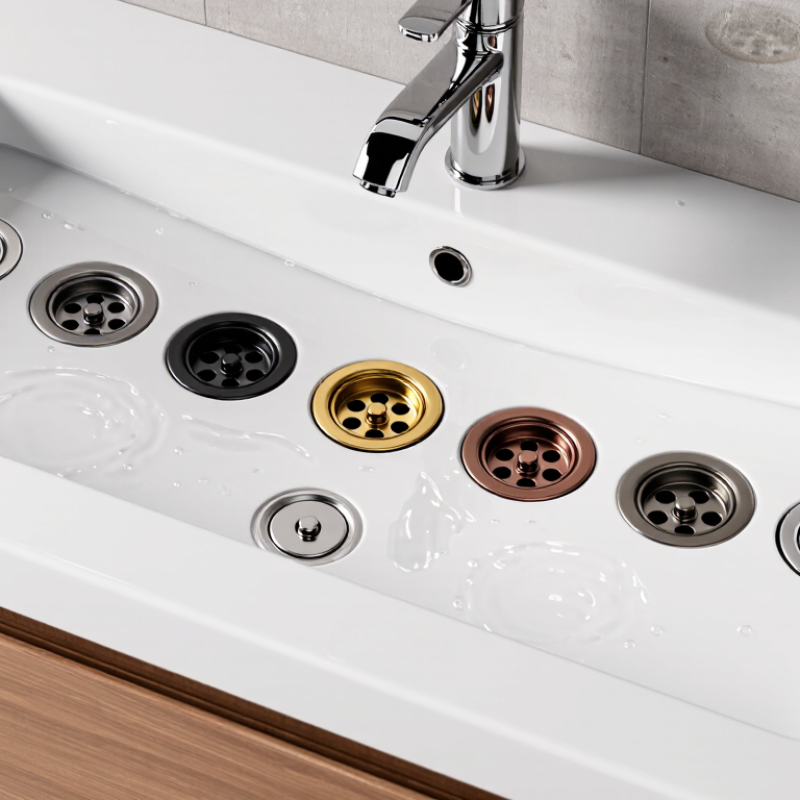
7 Best Lavatory Drains for Bathroom Sinks

How Bathroom Sink Drains Work

How Bathroom Sink Drains Work

A bathroom sink drain does more than carry water away. Its visible opening connects to a drain body beneath the basin, where a stopper controls flow. Pressing or lifting the stopper opens or closes the passage. In many sinks, a small rod behind the faucet moves a linkage under the basin. That linkage raises or lowers the stopper.

Simple in theory. The parts can feel awkward to adjust.

Once water passes the drain body, it flows through a curved pipe called a P-trap. The trap holds a small amount of water, creating a barrier that helps keep sewer odors from entering the room. From there, wastewater continues into the household drain line.

Some sinks also have an overflow opening near the rim. It channels excess water into the drain body, but it is not a substitute for watching a filling basin. Designs vary, so inspect the parts before removing anything.

A loose connection may drip slowly, even when the sink appears dry. After cleaning or repairs, run water and check beneath the basin with a dry cloth. It is easy to miss one small leak.

Common Types of Lavatory Drains

Common Types of Lavatory Drains

Lavatory drains differ mainly in how they open and control water. A pop-up drain uses a small lift rod behind the faucet. Pressing or pulling the rod raises a stopper, letting water flow into the drain. It is convenient, though the hidden linkage can collect hair and soap residue. Cleaning may take more patience than expected.

A push-button drain opens when you press its stopper and closes with another press. Its simple operation suits many everyday sinks. A lift-and-turn drain works similarly, but you turn the stopper by hand. Grid drains have open slots and do not hold water, making them useful when a separate basin plug is preferred. Small detail, big difference.

Before choosing, check whether the sink has an overflow opening near the rim. The drain assembly must match that design; otherwise, water may not drain as intended. Also measure the drain opening and consider the sink’s material and thickness. A metal stopper can feel sturdy, while a plastic linkage may be easier to install but less durable. Fit matters more than appearance alone. And instructions are sometimes unclear, so confirm the parts align before tightening connections.

7 Best Lavatory Drains for Bathroom Sinks — Common Types of Lavatory Drains

Drain Type How It Works Best For Advantages Things to Consider
Rod-Operated Pop-Up A lift rod behind or beside the faucet moves a linkage that raises or lowers the stopper. Traditional sinks with a faucet designed for a lift rod. Allows the stopper to be operated without reaching into the basin; widely used in residential bathrooms. Requires compatible faucet hardware and space for the linkage. Hair and residue can collect around the stopper.
Push-Button Drain Pressing the stopper opens or closes the drain, typically using a spring-loaded mechanism. Bathrooms where a simple, faucet-independent stopper is preferred. Easy to operate and does not require a lift rod or rear faucet linkage. The mechanism may need cleaning or replacement if it becomes stiff or fails to hold water.
Lift-and-Turn Drain The stopper is raised or lowered by lifting and turning it by hand. Simple sink installations and users who prefer a manually operated stopper. Has few external moving parts and does not depend on faucet linkages. Requires direct access to the stopper, and the threaded mechanism can collect soap residue.
Toe-Touch Drain Pressing the stopper with a toe or hand alternates it between open and closed positions. Freestanding or wall-mounted faucets without a lift-rod control. Convenient to operate from the basin and generally has a compact, uncluttered appearance. Its spring mechanism may wear over time and can require cleaning or replacement.
Grid Strainer Drain A fixed perforated top lets water pass through while limiting the passage of larger debris; it does not seal the drain. Powder rooms, utility-style basins, or sinks that do not need to hold water. Simple design with no stopper mechanism to operate or adjust. Cannot retain water in the basin. Check that the drain style is permitted for the sink and installation.
Flip-Top Drain A small top plate pivots to open or cover the drain opening. Contemporary sinks where a visible, manually operated stopper is desired. Direct operation and a clean-looking top when closed. The plate and pivot area need periodic cleaning; confirm the design provides the desired water seal.
Open-Hole (No-Stopper) Drain An open drain fitting allows water to flow continuously without a closing stopper. Basins intended to drain freely, including some public or commercial washbasins. No stopper to operate, and water cannot be intentionally retained in the basin. Not suitable when you need to fill the sink. Verify the basin’s drain and overflow requirements before selecting a fitting.

Fit check: Match the drain fitting to the sink’s drain-hole size and overflow design. A sink with an overflow generally needs a drain assembly that connects to that overflow; a sink without an overflow needs a compatible non-overflow drain.

Key Features to Compare Before Choosing a Drain

Start with sink compatibility, not appearance. Measure the drain opening and check whether the basin has an overflow hole. Some drains are designed for overflow sinks and may not seal correctly in a basin without one. Small details matter. Compare the drain’s dimensions with the sink, and check the space beneath the bowl for the tailpiece and trap.

Material affects durability and maintenance. Metal bodies can feel sturdy, while quality polymer may resist corrosion and cost less; inspect the seals and threads either way. The finish should suit the faucet, but matching colors is not enough. A stopper that lifts with a rod may be familiar, while a push-button style can be simpler to operate. Both can collect hair and soap residue. Easy access for cleaning helps.

Check what the kit includes before buying. Some drains come with a tailpiece, gasket, and retaining nut; others may require separate parts. Confirm that the drain’s length suits the sink thickness and available plumbing. Measure twice. Installation details are easy to overlook, even for experienced DIYers. I would not choose by finish alone. A polished drain can look right in the showroom and still be awkward to fit or clean at home.

Seven Best Lavatory Drains for Bathroom Sinks

A good lavatory drain should match the sink, overflow opening, and daily routine. The seven useful options are a pop-up drain with lift rod, a push-button drain, a toe-touch drain, a lift-and-turn drain, a grid drain, a traditional stopper-and-chain drain, and a flat, open drain for vessel sinks. Pop-up and push-button styles are quick to operate. Grid drains resist dropped jewelry but do not seal for basin filling. Check the sink’s overflow before ordering: some drains are built for overflow sinks, while others are not.

Fit matters more than a polished finish. Measure the drain opening and countertop clearance, then check whether the drain includes a tailpiece and compatible gasket. A lift rod may be awkward with a wall-mounted faucet. A chain can rattle against the basin. Small details count. Choose a finish that suits the faucet, but inspect the underside too: corrosion-resistant materials and replaceable seals can make routine maintenance easier.

The U.S. Environmental Protection Agency reports that household leaks waste nearly 10,000 gallons of water per year on average. That figure covers many leak sources, not lavatory drains alone, but a loose drain connection can still damage a cabinet. After installation, fill the basin, release the stopper, and inspect every joint with a dry paper towel. If it comes away damp, tighten or reseat the connection before regular use.

Installation, Care, and Common Drain Problems

A bathroom sink drain should match the basin’s opening, overflow design, and tailpiece connection. Measure the opening before buying a replacement; drains that look alike may fit differently. For a sink with an overflow, choose a drain designed to accept water from that channel. Follow the drain maker’s instructions for sealing, since the right sealant can depend on the sink material. Tighten the connections by hand, then use a wrench gently. Too much force can damage threads or crack a ceramic basin. Small details matter.

Before connecting the P-trap, check that the drain tailpiece lines up without strain. Run water for a minute and inspect beneath the sink with a dry tissue. It reveals slow drips. Recheck after a day, because a small leak may appear only after the fittings settle. Clean the stopper and drain opening regularly with warm water and a soft brush. Hair and soap film collect around the linkage, especially in busy bathrooms. Harsh tools can scratch finishes.

A slow drain often points to buildup near the stopper or inside the trap. Remove visible debris first; avoid pushing it deeper. If water leaks around the flange, the seal may be uneven, or the drain may have shifted during tightening. That is easy to miss. Persistent odors can come from a dry trap, while recurring clogs or leaks may need a plumber’s inspection. Chemical cleaners are not a fix for every blockage and can harm some pipes or finishes, so check product directions before use.

Lavatory Drain Size in Context

Minimum fixture-trap sizes listed in the International Plumbing Code (IPC), Table 709.1.

The IPC lists a 1¼-inch minimum trap size for a lavatory. Other fixtures may require larger traps. Local codes and sink specifications can differ, so verify requirements before installation or replacement.

Article Source: