

Blog

Best Sink Toy Manufacturers in China for Global Buyers

A small bath-time toy can involve a surprisingly complex supply chain. Buyers must assess material quality, mold precision, drainage design, packaging, and supplier consistency. Grand View Research estimated the global toys market at USD 108.7 billion in 2023, with continued growth projected through 2030. Circana’s 2024 global toy-market review also reported a 2% sales increase across the markets it tracked. These figures describe the wider toy sector, not SINK TOY sales alone. That distinction matters.

China offers global buyers a broad supplier base, from factories making simple floating toys to manufacturers producing multi-piece bath sets. But a polished catalog is not proof of dependable production. Buyers should examine sample finish, edge smoothness, color consistency, packaging details, and the supplier’s records for quality checks. Ask how materials are documented and how production changes are communicated. Requirements can differ by destination market, so confirm applicable testing and documentation with qualified specialists before placing an order.

There is no perfect shortlist. Supplier claims can be difficult to compare, and public market data rarely isolates sink toys as a category. This guide focuses on practical checks: manufacturing capability, communication, quality control, customization, and export experience. A toy may look simple. Sourcing it well takes careful questions—and sometimes a second look at assumptions.
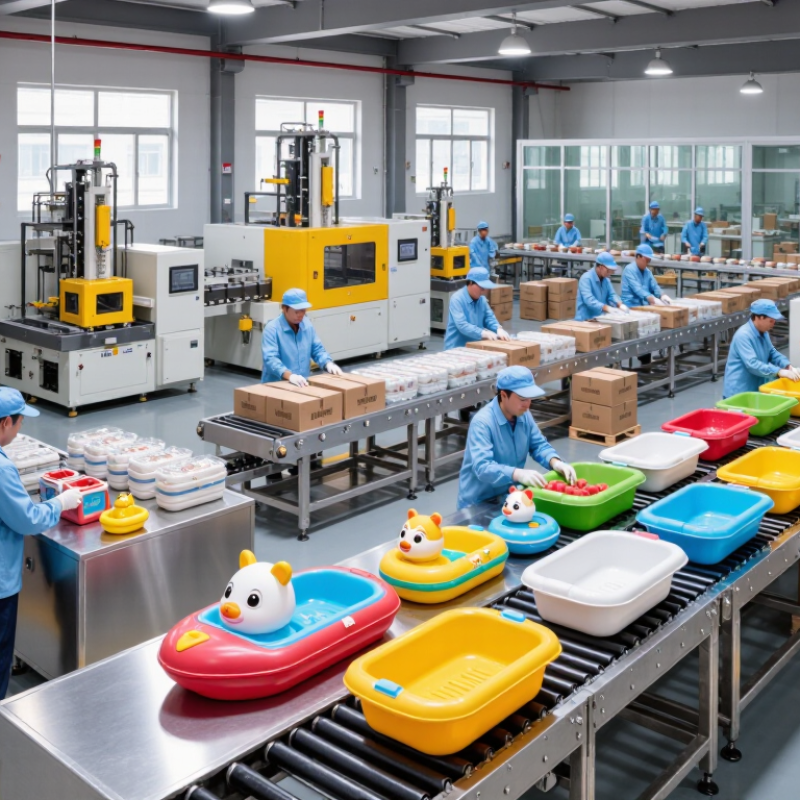
Best Sink Toy Manufacturers in China for Global Buyers

Understanding Sink Toys and Their Main Product Categories

Sink toys are play items designed for supervised use around a basin or shallow water. Common categories include floating animals, cups for pouring, suction-cup spinners, and water wheels. Each encourages a different kind of play: scooping, stacking, or watching water move. Simple designs can hold a child’s attention. Small details matter, too. Check for smooth edges, secure parts, and openings that let water drain after use.

Tips: Look inside cups and spinning parts for narrow gaps where water may linger. Ask suppliers how toys are cleaned, dried, and checked during production. Request clear material and age-grade information, then examine samples for loose pieces and sharp seams. A product photo cannot show everything.

For global buyers, categories can guide a more practical product review. Pouring cups are easy to store, while suction toys need a clean, smooth surface to stay in place. Water wheels may offer more motion, but their joints deserve closer inspection. Packaging should explain setup and care in plain language. No checklist catches every issue; even a well-made toy may be awkward at a particular sink. Test it in realistic conditions before placing a large order.

How to Evaluate Sink Toy Manufacturers in China

How to Evaluate Sink Toy Manufacturers in China

A sink toy must handle repeated splashes, small hands, and wet storage. Ask the manufacturer how each part is made, not just how the finished toy looks. Request a production sample and inspect seams, edges, moving parts, and suction cups. Check whether water collects inside hollow pieces; trapped moisture can create cleaning and durability concerns. Small details matter.

Review material specifications and test reports for the exact product, colors, and components you plan to order. Confirm that testing covers the requirements of your destination markets, and verify the laboratory and report scope independently. A certificate for a similar item is not enough. Ask how the factory controls incoming materials, records production batches, and handles defects. Request clear answers in writing. Vague replies are a warning.

Compare the sample with a production unit when possible. Check color consistency, packaging, carton labels, and whether the instructions explain rinsing and drying. Discuss minimum order quantities, tooling ownership, lead times, and how changes are approved. A polished sample can hide uneven mass production. I would not treat one successful inspection as proof; repeat checks are useful, though they add time and cost. Ask for a corrective-action record when problems occur. Then judge whether the response is specific and documented.

Leading Sink Toy Manufacturers in China for Global Buyers

Leading sink toy manufacturers in China can support global buyers with product development, tooling, and export coordination. For sink play sets, examine how a supplier handles small details: rounded edges, secure suction cups, smooth water channels, and parts that are easy to rinse. Details matter. Ask how materials are selected and how production batches are checked. Request current test reports and confirm they match the exact model, materials, and target market. A polished sample is useful, but it cannot tell the whole story.

Before placing a large order, compare a production sample with the approved design. Check whether cups stay attached to a damp basin, whether water drains without pooling, and whether detachable pieces feel sturdy in small hands. Ask about packaging dimensions, carton protection, lead times, and inspection procedures in writing. Small things count. Communication deserves equal attention: clear answers about changes, defects, and replacement parts are practical signs of a capable supplier. No checklist catches everything, and sample quality may differ from bulk production. Buyers should plan independent inspections and leave time for follow-up, even when early discussions feel reassuring.

How Global Buyers Can Evaluate Sink Toy Manufacturers in China

Suggested weighting for a supplier evaluation scorecard

The percentages are suggested scorecard weights, not market statistics or ratings of specific manufacturers. Buyers can adjust them to reflect their product requirements, destination-market regulations, and sourcing priorities.

Comparing Product Quality, Customization, Pricing, and MOQs

Sink toys stay wet, get squeezed, and often collect soap residue, so product quality needs more than a bright finish. Ask manufacturers about material specifications, mold consistency, and drainage design. Inspect a sample for sharp edges, loose parts, weak suction cups, and water trapped inside hollow pieces. Small details matter. A sample that looks good dry may behave differently after repeated rinsing.

Customization can cover colors, shapes, packaging, and printed instructions, but each change may affect tooling costs and lead time. Request a written specification with dimensions, color references, and packaging details. Then compare the sample against that sheet, not just a product photo. Customization is useful, though too many options can complicate production. That trade-off is easy to underestimate.

Compare prices using the same order quantity and packaging assumptions. Ask whether the quote includes sample fees, custom tooling, cartons, and delivery terms. Minimum order quantities vary by design and factory capacity; a lower MOQ may come with a higher unit price. Consider a modest pilot order before scaling up. It costs more per piece, perhaps, but can reveal fit, finish, and packing issues before a larger commitment. A spreadsheet helps, but it cannot replace checking the physical sample.

Best Sink Toy Manufacturers in China for Global Buyers — Comparing Product Quality, Customization, Pricing, and MOQs

Planning guide comparing common supplier and product tiers. The figures below are indicative sourcing ranges, not verified quotes or claims about specific manufacturers. Confirm specifications, compliance, and final pricing directly with suppliers.

Comparison Area Entry-Level OEM Mid-Range OEM/ODM Advanced ODM
Typical Product Basic pretend-play sink set, often with manual or simple battery-powered water circulation. Sink set with a circulating-water feature, accessories, and more detailed styling. Feature-rich play set with custom tooling or electronics, multiple accessories, and more extensive packaging options.
Product Quality Checks Check plastic finish, sharp edges, small parts, battery compartment security, and water leakage. Also check pump consistency, electrical connections, material consistency, and performance after repeated use. Agree on approved samples, component specifications, inspection criteria, and batch testing before production.
Materials and Design Commonly molded plastic parts with a standard design and color selection. More color, accessory, and packaging choices; confirm material declarations and color matching requirements. Greater scope for design changes and custom components; new molds or tooling may add cost and development time.
Customization Usually limited to packaging, color selection, or simple printed artwork. May include custom colors, accessory combinations, packaging artwork, and selected product changes. May support substantial product, mold, and packaging development, subject to tooling, testing, and order-volume agreements.
Indicative FOB Unit Price Approximately US$3–7 per set for simpler products and larger production runs. Approximately US$6–12 per set for more features, accessories, or upgraded packaging. Approximately US$10–20+ per set for complex designs or custom components.
Indicative MOQ Often around 500–1,000 sets for a standard design; packaging requirements can affect the minimum. Often around 1,000–2,000 sets for customized colors or packaging. Often around 2,000–5,000+ sets for substantial customization; tooling may be quoted separately.
Sample and Production Timing Allow time for sample approval and production scheduling; standard designs are generally simpler to prepare. Custom artwork, colors, or accessory changes can extend sample approval and production schedules. New tooling, engineering changes, and testing can add significant development time before mass production.
Compliance for Export Ask for test reports applicable to the destination market and the exact product version. Confirm that reports cover the product’s materials, electrical parts, age grading, and packaging as applicable. Plan compliance review around the final design; changes to materials or components may require additional testing.
Best Fit for Buyers Buyers prioritizing a standard design, lower initial order commitment, and straightforward packaging. Buyers seeking a balance of product options, moderate customization, and manageable order volume. Buyers planning larger launches and able to invest in development, tooling, and product validation.
Key Questions to Ask What is included in the set, and what are the exact carton dimensions, packing quantity, and test documents? Which custom options affect MOQ, unit price, sample charges, or lead time? Who owns the tooling, what are the tooling charges, and how will design changes and quality acceptance be documented?

Prices and MOQs vary with order volume, materials, product complexity, packaging, testing, and shipping terms. FOB prices exclude freight, insurance, import duties, and other destination charges. Confirm current quotations and applicable toy-safety requirements for each target market.

Sourcing Sink Toys: Sampling, Compliance, and International Shipping

Before committing to a production run, request samples that match the intended materials, colors, and packaging. Test them in a real sink: check suction cups on wet surfaces, inspect seams, and look for color transfer after repeated soaking. Small details matter. A sample may differ from the finished batch, so approve a signed reference sample and record any changes in writing.

Compliance needs checking against the requirements of each destination market. Ask the manufacturer for recent test reports covering the exact product materials and colors, then verify the scope with a qualified testing provider. Reports for a similar item may not apply. Review age grading, small-part risks, labeling, and packaging details before production. Keep records. It is easy to assume a supplier’s paperwork covers everything; that assumption deserves a second look.

Plan shipping while production is underway. Confirm carton size, gross weight, packing method, and whether moisture protection is needed. These details affect freight quotes and can reduce damage in transit. Agree on the shipping term, document responsibilities, and estimated dispatch window with the supplier. A customs broker can help check classification and destination charges. Sea freight may cost less but take longer; air freight can help with urgent replenishment, though it raises costs. Compare options using the same delivery assumptions.