China Top 10 Screen Printing Textile Ink Suppliers?
China’s screen-printing market has become a practical sourcing destination for apparel brands, decorators, and manufacturers. The right supplier can affect color accuracy, wash durability, curing stability, and production speed. Screen Printing Textile Ink is not a single product category. It includes water-based, plastisol, silicone, discharge, and specialty formulations for cotton, polyester, blends, and technical fabrics.
Rick Roth, a respected screen-printing educator and industry consultant, has said, “Consistency is the key to quality in screen printing.” That principle guides this comparison. A supplier may offer attractive prices, but reliable performance requires more than a polished catalog. Buyers should examine pigment strength, viscosity control, mesh compatibility, curing instructions, migration resistance, and batch-to-batch consistency. Small details matter.
Some suppliers provide technical data sheets and sample testing. Others offer stronger private-label support or faster export communication. Not every factory performs equally well across all ink types. That is worth remembering.
This guide reviews ten China-based Screen Printing Textile Ink suppliers through practical purchasing criteria. These include manufacturing experience, laboratory capability, product range, quality management, customization, packaging, export support, and documented compliance. Independent testing remains advisable, especially for children’s garments, sportswear, and sensitive fabrics. A supplier’s certification should also be checked against the actual product and production site.
The list is not a permanent verdict. Formulas change. Markets shift. Your fabric may behave differently. Use the comparison as a starting point, then request samples, run wash tests, and confirm production conditions before placing a large order.
What Are Screen Printing Textile Inks?
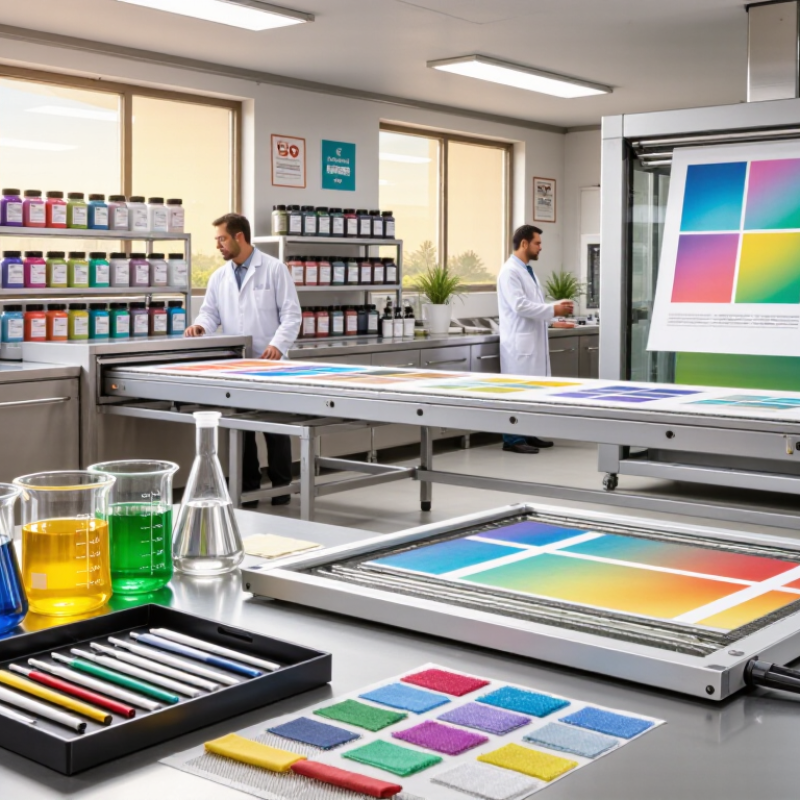
Screen printing textile inks are liquid or paste coatings that transfer images onto fabric through a fine mesh screen. They contain pigments, binders, additives, and sometimes solvents or water. The binder helps pigment attach to cotton, polyester, or blended fibers.
Water-based inks soak into fabric and create a soft hand feel. Plastisol inks stay on the surface and usually provide stronger opacity. Silicone-based inks can perform well on difficult synthetic fabrics, but they need controlled curing.
Each formula behaves differently under pressure. Fabric texture, mesh count, squeegee angle, and curing temperature all affect the final print. A color chart can mislead. The same red may look darker on black fabric.
Tips: Test a small fabric swatch first. Check opacity, stretch, wash resistance, and surface feel after curing. Use a calibrated temperature probe, not only the dryer display. Keep records of ink ratios and curing time. Small details matter.
Reliable suppliers should provide technical data sheets, curing guidance, storage limits, and test support. Ask how the ink performs after repeated washing and stretching. In practical work, rushed curing causes more failures than poor printing technique. Still, no ink suits every garment. A better choice depends on fiber content, production speed, desired softness, and environmental conditions. Reviewing failed samples is useful, even when the mistake seems obvious.
How to Evaluate Chinese Textile Ink Suppliers
How to Evaluate Chinese Textile Ink Suppliers
Evaluating Chinese textile ink suppliers requires more than comparing price lists. Request a technical data sheet, safety data sheet, batch information, and recommended curing conditions. A reliable supplier should explain viscosity, opacity, mesh count, curing temperature, and storage life clearly. Vague answers deserve caution.
Order small samples before discussing large volumes. Print the ink on your actual fabric, not only on a supplier-provided swatch. Check color accuracy, hand feel, bleeding, cracking, and wash resistance after several cycles. Record the dryer temperature and printing speed. Small process changes can create surprisingly different results.
Factory evidence matters. Ask about quality-control checkpoints, raw material traceability, production capacity, and complaint handling. A video call can reveal useful details, but it cannot replace an independent inspection or laboratory test. Review communication speed and technical support during sampling. Fast replies are helpful, but accurate replies matter more. I would not treat a polished sample as proof of stable production. That assumption can fail. Discuss minimum order quantities, lead times, packaging, and replacement procedures in writing. Also ask whether formulas or performance may change between batches. A supplier willing to discuss limitations often appears more dependable than one promising perfection.
How to Evaluate Chinese Textile Ink Suppliers
A practical procurement framework for comparing textile ink suppliers without relying on brand names. The weighting reflects the main factors commonly reviewed by apparel, textile printing, and export buyers.
Quality consistency and application performance should receive the highest priority, followed by compliance, technical support, delivery reliability, and total cost.
China’s Top 10 Screen Printing Textile Ink Suppliers
China’s Top 10 Screen Printing Textile Ink Suppliers should be assessed through performance, not publicity. Public market reports rarely separate screen-printing ink from broader textile printing products. Therefore, any ranking needs careful interpretation. Grand View Research estimated the global textile printing market at about USD 2.72 billion in 2023. It also projected a 10.4% annual growth rate from 2024 to 2030. This growth increases demand for reliable Chinese suppliers.
A practical shortlist should examine ink coverage, curing temperature, wash resistance, and color consistency. Factory trials matter more than catalog claims. Request printed fabric samples, technical data sheets, and batch records. Check whether white ink remains smooth on dark cotton after repeated washing. Ask about viscosity control during long production runs. Suppliers with laboratory testing, export experience, and responsive technical teams deserve higher consideration. Smithers also identifies sustainability and digital workflow integration as major textile printing trends, even though screen printing remains important for durable, high-volume garments.
The “top 10” should not be treated as an audited global ranking. Supplier capacity, regional certifications, and formulation quality can change quickly. Some factories perform well on cotton but struggle with polyester blends. That weakness is easy to miss. Buyers should compare production evidence, compliance documentation, delivery records, and after-sales support before signing contracts. A transparent scoring method creates a more reliable view of China’s leading screen printing textile ink suppliers.