How to Choose the Right Aluminum Alloy Profile for Your Needs?
Choosing the right Aluminum Alloy Profile for your needs requires careful consideration. These profiles are versatile and widely used in construction, automotive, and aerospace industries. With many options available, selecting the ideal alloy can be overwhelming.
Understanding your specific requirements is essential. Each aluminum alloy has distinct mechanical properties and characteristics, which determine its suitability for particular applications. For instance, some alloys offer high strength and excellent corrosion resistance, while others provide good machinability.
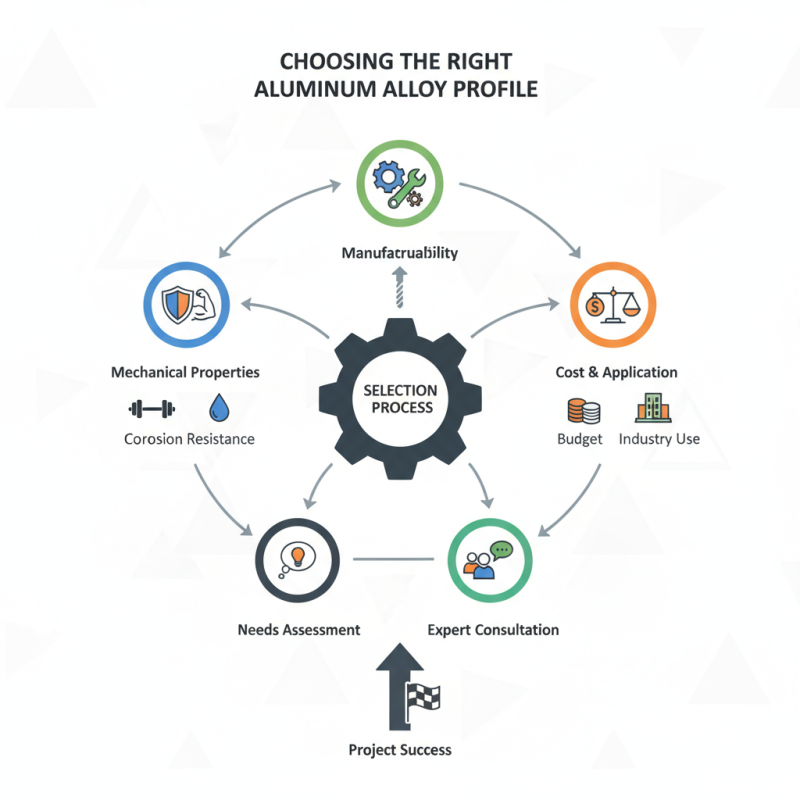
Exploring these facets often reveals trade-offs. Sometimes, the strongest profile may not be the most cost-effective choice. Balancing performance against budget constraints is a common challenge. Additionally, consulting with experts can help you navigate this complexity. Reliable guidance ensures that you make informed decisions to meet your project goals. Ultimately, the right Aluminum Alloy Profile can significantly affect the success of your application.
Understanding Aluminum Alloy Series and Their Properties
When selecting an aluminum alloy profile, understanding the series and their properties is crucial. Aluminum alloys are categorized into two main series: 1xxx and 2xxx through 7xxx. The 1xxx series, comprising 99% or higher aluminum content, is highly resistant to corrosion. They’re ideal for electrical applications. However, they lack strength compared to other alloys.
The 2xxx series is copper-based, known for its high strength and heat resistance. According to the Aluminum Association, these alloys are suitable for aerospace and military applications. Yet, they are less corrosion-resistant. The 6xxx series, a magnesium and silicon alloy, offers moderate strength and good corrosion resistance, making it versatile for construction and automotive industries.
Each series has distinct characteristics that may not fit all projects. For instance, while 7xxx alloys are the strongest and often used in aerospace, limited weldability can be a disadvantage. Industrial reports reveal that mistakenly choosing an alloy can lead to structural failures, costing companies substantial resources. Understanding these properties helps minimize risks and enhance project outcomes. Thus, evaluating the specific application and desired properties is essential.
Key Factors in Selecting Aluminum Alloys for Specific Applications
When selecting an aluminum alloy profile, several key factors play a vital role in ensuring suitability for your specific application. The choice of alloy can significantly impact the performance and durability of the final product. For instance, the Aluminum Association reports that the 6061 alloy is commonly used for its excellent corrosion resistance and weldability. It’s often chosen for structural applications in the construction and automotive industries.
Another critical consideration is the alloy's strength. The 7075 series is renowned for its high strength-to-weight ratio, making it ideal for aerospace applications. This alloy's mechanical properties, including tensile strength and fatigue resistance, allow for lightweight yet strong components. However, such high-strength alloys can be less malleable. This introduces a trade-off that must be analyzed if forming and shaping are essential for your project.
Thermal and electrical conductivity are also significant in many applications. Alloys like 1350 provide exceptional electrical conductivity, which is crucial in electrical applications. However, these alloys may not offer the same level of mechanical strength as their counterparts. Decision-makers must weigh these factors carefully, as the right choice often depends on specific operational conditions and requirements, reflecting a complex balancing act in alloy selection.
How to Choose the Right Aluminum Alloy Profile for Your Needs?
This bar chart presents the properties and applications of different aluminum alloys used in various industries. The selected alloys are 6061, 6063, 2024, and 7075, each with unique characteristics suited for specific applications.
Mechanical Properties of Aluminum Alloys: Strength, Weight, and Durability
Choosing the right aluminum alloy profile can seem overwhelming. It's essential to consider mechanical properties like strength, weight, and durability. Not all alloys are equal; each has unique characteristics. For instance, some alloys provide excellent strength but may be heavier. Others excel in lightweight applications but lack in durability. Understanding these properties is crucial for your selection process.
When evaluating strength, consider the tensile strength of the alloy. Stronger alloys resist deformation better and are ideal for structural applications. Weight plays a significant role in industries like aerospace and automotive. A lighter material can significantly reduce operational costs and improve efficiency. Durability is vital for long-term use. Some alloys resist corrosion better than others, making them perfect for outdoor or harsh environments.
Tip: Always review the specific needs of your project. Consider how the alloy will be used over time. For applications exposed to moisture, select a corrosion-resistant alloy.
Tip: Don't overlook the fabrication process. Some alloys are easier to work with, which can save time and cost.
Balancing these aspects may require revisiting your choices. Understanding the trade-offs is fundamental to making the right decision in selecting the aluminum alloy profile.
Corrosion Resistance of Aluminum Alloys: Ensuring Longevity
Selecting the appropriate aluminum alloy profile is crucial for ensuring that your projects withstand environmental challenges. One significant factor is corrosion resistance. Aluminum alloys can resist corrosion effectively, but not all types are equal. Understanding this can lead to longer-lasting structures and components.
When choosing an aluminum alloy, consider its environment. For example, marine settings require alloys that can cope with saltwater exposure. Some alloys offer better performance against oxidation, while others might be more suitable for industrial applications. Researching alloy specifications and corrosion tests can provide guidance.
Tips: Always test materials in the intended environment before full-scale implementation. For critical applications, consult with an expert. Not all alloys fit every need, and the initial choice can greatly affect longevity.
Regularly inspect the aluminum surfaces for signs of wear and degradation. Even the best options need maintenance. Reflect on your previous choices; leverage experiences to avoid repeating mistakes. Emphasizing corrosion resistance now can save future costs and complications.
Cost Analysis: Budgeting for Your Aluminum Alloy Profile Choice
When budgeting for aluminum alloy profiles, it's crucial to consider various factors that can significantly impact costs. Understanding the specific requirements of your project will help you avoid unnecessary expenses. Depending on the alloy type, prices can vary greatly. For example, specialized alloys designed for specific applications may cost more upfront but offer better performance or durability.
Another important aspect is the fabrication process. Custom profiles often have higher manufacturing costs due to complex designs. Always evaluate whether standard profiles might meet your needs. Additionally, consider the total lifecycle costs. Cheaper options may seem appealing but could lead to higher maintenance or replacement expenses down the line.
Research is essential when determining your budget. Gather multiple quotes and analyze what each includes. Explore different suppliers and their offerings. Engaging in conversations with industry experts can shed light on common pitfalls. Reflecting on your past projects can also provide insight into which materials offered the best value. Balancing initial costs with long-term benefits can lead to a wiser investment.