




Blog
How to Choose Aluminium Takeaway Containers?
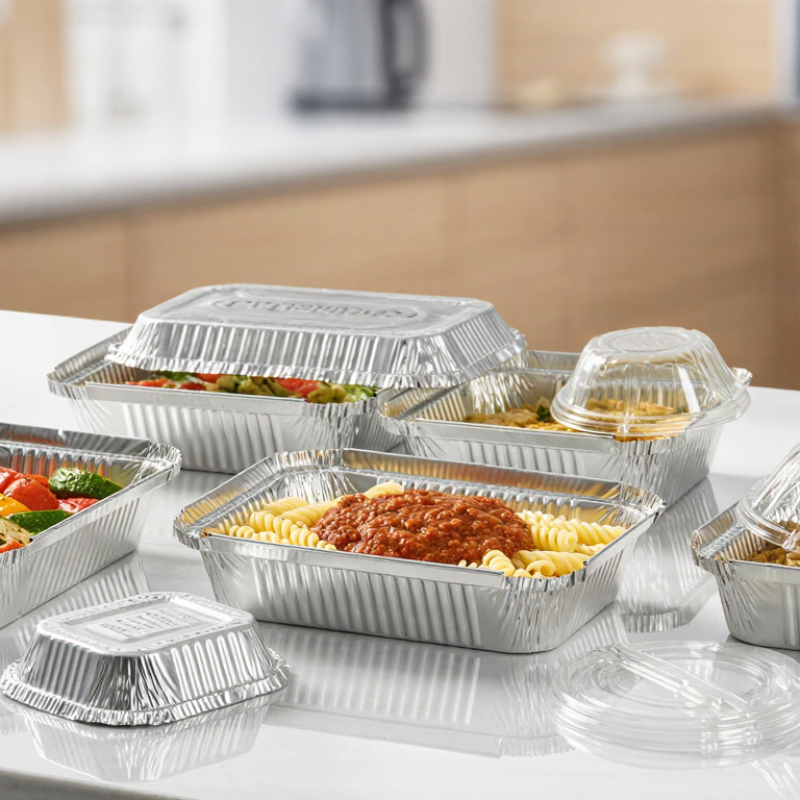
Choosing Aluminium Takeaway Containers is about more than finding a tray that fits a meal. The right option should suit the food, portion size, delivery distance, and way customers will reheat or serve it. A shallow tray may work for roasted vegetables, while a deeper container can better hold sauced pasta. Small details matter.
Start by checking the dimensions, capacity, rim shape, and lid fit. A lid that shifts during a short car ride can turn a tidy order into a frustrating one. Consider the container’s thickness, too: a very light tray may bend when filled, while a sturdier one can be easier to carry. Yet thicker material is not automatically the best choice; it may add cost or storage bulk without solving a real problem.
Food temperature and handling deserve careful attention. Do not assume every aluminium container is suitable for every oven, appliance, or type of food. Check the supplier’s product specifications and instructions, especially before recommending reheating. Ask for relevant food-contact information, and confirm that lids and containers are intended to work together. These checks help buyers compare products using clear details rather than appearance alone.
A practical trial can reveal what a catalogue cannot. Pack a typical meal, close the lid, carry it, and inspect the container afterward. Note spills, soft spots, and awkward stacking. One trial is not proof of long-term performance, though. Use the guide below to compare common container styles, materials, sizes, and supplier details—and to identify which trade-offs deserve another look before placing an order.
Define Food Type, Portion Size, and Service Conditions Before Choosing a Format
How to Choose Aluminium Takeaway Containers?
Start with the food, not the container shape. A saucy curry, crisp pastry, and grilled vegetables place different demands on packaging. For wet dishes, check that the container and lid fit securely; a loose edge can mean spills during delivery. For crisp foods, allow some ventilation where appropriate, since trapped steam can soften a crunchy crust. Details matter.
Estimate portions using the food as served, including sides and sauces. A container that looks roomy when empty may feel cramped once rice, vegetables, and protein are packed together. Choose a depth that protects the food without leaving excessive empty space. Compartments can keep sauces apart, though they may be awkward for dishes meant to mix. It is not always obvious which format works best, so test a typical serving.
Consider how the meal will be handled: eaten immediately, carried across town, stacked in a delivery bag, or reheated later. Check the container’s stated temperature range and suitability for the intended food, especially with highly acidic or salty dishes. Avoid assuming every aluminium container is suitable for every oven or heating method. A brief packing trial helps: fill one with a normal portion, close it, stack it, and carry it. Then inspect for leaks, crushed edges, or food that shifted in transit.
Verify Food-Contact Suitability Under EU Framework Regulation 1935/2004
How to Choose Aluminium Takeaway Containers?
Verify Food-Contact Suitability Under EU Framework Regulation 1935/2004
When choosing aluminium takeaway containers, check how they are intended to be used. Regulation (EC) No 1935/2004 requires food-contact materials not to release substances at levels that could harm health or unacceptably alter food’s composition, taste, or smell. Suitability depends on the food and conditions, not just the container’s appearance. A tray used for dry pastries may not be suitable for hot, acidic tomato sauce. Details matter.
Ask the supplier for documentation identifying the container, its food-contact uses, and any temperature or time limits. Check whether it has a coating, and confirm that the coating is also suitable for the intended food. Evidence may include relevant migration test results and manufacturing controls; ask what conditions the tests represent. The regulation also emphasizes traceability, so product identification and batch details should be available. Where no specific EU-wide measure covers a material or use, national requirements may also be relevant. Paperwork can look tidy while leaving real-use conditions unclear. Match the stated limits to your service: hot filling, holding time, and contact with salty or acidic foods.
| Selection Dimension | What to Check | Useful Evidence or Test | Practical Decision Guide |
|---|---|---|---|
| Intended food contact | Confirm that the container is intended for food contact and identify the foods and conditions of use it is designed for. | Supplier documentation describing intended foods, contact conditions, and any restrictions. | Do not assume a container is suitable for every food or use just because it is made of aluminium. |
| EU Framework Regulation compliance | Assess the finished article against Article 3 of Regulation (EC) No 1935/2004: under normal or foreseeable use, it must not transfer constituents in amounts that could endanger health, cause an unacceptable change in food composition, or impair its organoleptic characteristics. | A reasoned compliance assessment supported by relevant material information and, where appropriate, migration or other testing. | Look for evidence that addresses the actual container and its intended use, not just a general statement about aluminium. |
| Food type and contact conditions | Check compatibility with the intended food, including its acidity or salt content, and the planned contact time and temperature. | Testing or documented technical assessment using food simulants or test conditions relevant to the intended use. | Acidic or salty foods can increase aluminium release. Seek specific suitability evidence for these foods rather than relying on a general-purpose claim. |
| Heating, hot filling, and storage | Verify whether the container is suitable for the actual process, such as hot filling, oven heating, refrigeration, or prolonged storage. | Clearly stated temperature and time limits, supported by testing or a documented assessment where appropriate. | Do not infer oven, microwave, or reheating suitability from appearance. Follow the supplier’s stated instructions and limitations. |
| Coatings, lacquers, and printing | Check whether the food-contact surface has a coating or lacquer and whether printing or other treatments could contact the food. | Information identifying the food-contact layers and evidence that the finished article is suitable for its intended conditions. | Evaluate the complete article, including coatings and foreseeable contact with printed areas—not only the aluminium substrate. |
| Migration and applicable requirements | Determine which EU and relevant national requirements apply to the specific article and market. EU-level harmonised rules do not provide one universal, specific aluminium-container migration limit for every use. | Test reports or other technical evidence using appropriate methods and conditions; review applicable national rules where relevant. | Do not treat a single test value or an unrelated limit as proof of compliance. The assessment must match the material, food, and use conditions. |
| Good manufacturing practice | Check that manufacture, processing, and quality control are managed under applicable good manufacturing practice requirements, including Regulation (EC) No 2023/2006. | Documented quality controls, specifications, and production procedures; audit information may provide additional assurance. | Ask how changes to materials, coatings, or production are controlled and how food-contact suitability is maintained. |
| Traceability | Confirm that the supplier can identify the product and relevant production or supply batches through the supply chain. | Product specifications, batch or lot identification, and traceability records consistent with Article 17 of Regulation (EC) No 1935/2004. | Traceability helps identify and manage affected products if a safety or compliance issue arises. |
| Instructions and consumer information | Check whether restrictions or instructions are needed for safe use, such as limits on temperature, contact time, or particular foods. | Clear information supplied with the product or provided through the appropriate sales and packaging channels. | Use any stated restrictions when selecting containers and when providing handling instructions to food businesses or consumers. |
| Supplier documentation | Request documentation that clearly identifies the article, its intended use, relevant limitations, and the basis for the compliance assessment. | A signed supplier statement or equivalent supporting documentation, with test or technical records available where appropriate. | A document alone is not conclusive: check that its scope covers the exact container, food types, and conditions of use. |
| Important: Regulation (EC) No 1935/2004 sets general safety requirements for food-contact materials. Suitability must be assessed for the specific finished container and its foreseeable use; no single generic claim establishes suitability for all foods, temperatures, and contact times. | |||
Specify Alloy, Temper, and Gauge Using ASTM B209 Supplier Data
How to Choose Aluminium Takeaway Containers?
Specify Alloy, Temper, and Gauge Using ASTM B209 Supplier Data
A container’s performance starts with the sheet specification, not its appearance on the shelf. Ask suppliers to state the alloy, temper, and actual thickness, then provide data against ASTM B209. This specification covers aluminium sheet and plate; it does not certify a finished container’s leak resistance or food-contact suitability. Small details matter.
Alloy affects formability and strength. A supplier may propose 3003 or another suitable grade, but the right choice depends on the container’s shape and forming process. Temper describes the material’s condition after processing. For example, a harder temper may improve stiffness, yet it can make deep drawing more demanding. Request the temper designation and relevant mechanical-property data, rather than accepting “food-grade aluminium” as a complete specification.
Avoid relying on gauge alone. Gauge conventions can vary, so specify thickness in millimetres or inches and include the permitted tolerance. Ask for the ASTM B209 edition, a material test report, and confirmation that the report matches the delivered coil or sheet. Then test samples on your own forming line. I would not assume a supplier’s standard stock behaves exactly like your production material; small differences may show up at a sharp corner or folded rim.
Compare Recycling Impacts: Aluminum Recycling Uses About 95% Less Energy (IAI)
When choosing aluminium takeaway containers, recycling impact deserves attention alongside size, strength, and heat performance. The International Aluminium Institute reports that recycling aluminium uses about 95% less energy than producing primary aluminium. That difference makes recycled material an important consideration. It does not mean every used container is automatically recycled.
A container’s journey depends on what happens after the meal. A quick scrape can remove leftover rice, sauce, or oil, making sorting easier. Check whether local collection accepts food containers; rules and facilities vary. Some containers have plastic lids or coatings, which may need separate handling. Small details matter.
For takeaway meals, choose a container sturdy enough to resist bending when stacked, but not heavier than the food requires. A flimsy tray can spill, while an oversized one uses more material than needed. Aluminium conducts heat well, which helps with hot food but can make the container uncomfortable to hold. Consider a compatible lid and clear separation of materials. The 95% figure is useful, but it is not a complete scorecard: transport, contamination, and actual recovery rates also shape the outcome. Recycling sounds simple. In practice, it can be messy.
How to Choose Aluminium Takeaway Containers?
Compare the energy impact of primary aluminium production and aluminium recycling.
Recycling aluminium uses about 95% less energy than producing primary aluminium. The chart expresses this comparison as an index: primary production is set to 100, so recycled aluminium is approximately 5.
Check Local Recovery Options: About 75% of Aluminum Ever Made Remains in Use (IAI)
When choosing aluminium takeaway containers, look beyond thickness and price. The International Aluminium Institute (IAI) reports that about 75% of all aluminium ever produced remains in use. This reflects aluminium’s long service life and recovery potential; it does not mean 75% of takeaway trays are recycled. A tray may be recyclable in theory but still miss local collection routes. Check with your council or waste provider before ordering in bulk.
Tips: Ask whether clean aluminium trays are accepted, and whether foil lids or paper sleeves belong elsewhere. Scrape off food; greasy residue can affect sorting. Choose a size that fits the meal without excess space, and check that the rim closes securely for delivery. For hot or acidic foods, follow the supplier’s handling guidance. Do not assume every container is suitable for ovens or microwaves.
Look for clear disposal instructions, then test one local collection point rather than relying on a recycling symbol alone. A quick call can prevent a box of trays becoming general waste. The 75% figure is useful context, not a guarantee. Recovery depends on collection, sorting, and local demand. The system is not perfect.


