



Blog
How to Choose Indoor Trampoline Park Suppliers?
Choosing the right Indoor Trampoline Park Suppliers can determine whether a venue feels secure, profitable, and ready for busy weekends. The decision involves more than comparing equipment prices. It requires careful attention to design experience, material quality, installation support, staff training, maintenance, and documented safety procedures.
“An attractive trampoline park is valuable only when its safety systems work every day,” says John McIntosh, an indoor recreation safety consultant. His point deserves attention. A supplier may present impressive 3D drawings, colorful foam pits, and exciting climbing features. However, photographs cannot prove long-term performance. Ask for installation records, inspection routines, warranty terms, replacement-part availability, and references from operating facilities.
Walk through the details.
A reliable supplier should explain how frames, padding, nets, anchors, and access points are tested. The company should also provide clear manuals that employees can use during real opening and closing checks. Vague promises are not enough. Neither is a very low quotation.
Experience matters here.
Still, buyers can make mistakes. A famous supplier may not understand your building’s ceiling height, local customer habits, or staffing limits. A smaller company may offer better communication but weaker after-sales support. That tension deserves honest evaluation.
Request a practical site assessment before signing. Compare delivery schedules, training coverage, inspection documentation, and service response times. Speak with existing customers, not only the supplier’s preferred references. The best choice is rarely the cheapest option. It is the supplier that can support safe, consistent operation long after the grand opening.
Define Your Indoor Trampoline Park Project Requirements
How to Choose Indoor Trampoline Park Suppliers?
Define your Indoor Trampoline Park Project Requirements
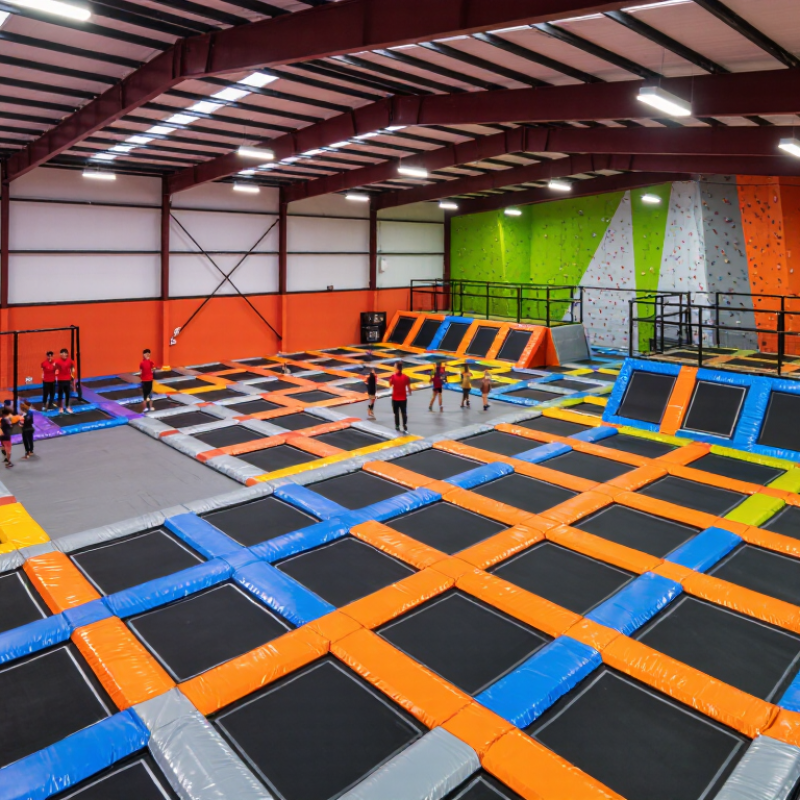
A reliable supplier conversation starts with a clear project brief. Measure the building, ceiling height, columns, entrances, and emergency access routes. Record the usable floor area, not the total leased area. A thirty-centimeter mistake can affect circulation and equipment placement.
Define your visitor profile and operating goals. Will the park serve young children, teenagers, families, or mixed groups? Estimate peak attendance, session length, staffing levels, and expected daily traffic. Include reception desks, party rooms, lockers, seating, toilets, and staff areas. These details influence layout, capacity, and maintenance planning.
Safety requirements need practical detail. Specify impact-absorbing surfaces, protected edges, clear fall zones, controlled entry points, and inspection access. Ask for material specifications, load ratings, cleaning methods, replacement cycles, and installation records. The supplier should explain how the design supports applicable building, fire, accessibility, and safety requirements.
Budget planning should include transport, installation, training, spare parts, inspections, and future repairs.
Cheap equipment may create expensive downtime. We once focused too heavily on attraction count and underestimated storage space. That mistake affected staff movement. Leave room for revisions before signing drawings. A professional supplier should welcome questions, provide documented calculations, and identify limitations instead of promising everything. Past project evidence, qualified installers, and responsive after-sales support also deserve careful review.
Evaluate Supplier Safety Standards and Product Certifications
When evaluating indoor trampoline park suppliers, examine their safety standards before comparing prices. A supplier should provide clear design specifications, installation procedures, and maintenance instructions. Look for compliance with relevant national standards, such as ASTM F2970 where applicable. Standards differ by market, so confirm local requirements with a qualified inspector.
Request full product certifications and independent laboratory reports. The documents should identify the tested component, test date, laboratory, and applicable standard. Check whether the certification covers the complete system or only one material. Do not accept vague promises. A certificate alone can create false confidence. Ask whether the reports remain valid after design changes.
Physical details matter. Inspect anchor points, frame joints, spring covers, landing mats, and protective netting. Padding should stay secure during repeated impact. Netting must resist tearing at seams and connection points. Ask for fire-resistance information for foam and fabric materials. The supplier should explain how staff inspect these parts after heavy daily use. If they avoid practical questions, that is a warning.
Request training records, inspection checklists, and replacement schedules. An independent inspection before opening can reveal installation problems that documents miss. A practical review should include emergency access, clear signage, and visible staff supervision. I would still question any supplier promising zero risk. Equipment can meet standards and still fail through poor installation or neglected maintenance. Safety depends on both verified products and disciplined operation.
How to Choose Indoor Trampoline Park Suppliers?
Evaluate Supplier Safety Standards and Product Certifications
Use this evidence-based checklist when comparing suppliers. ASTM F2970 addresses trampoline-court design, manufacture, installation, operation, maintenance, inspection, and major modification. EN 1176 focuses on playground equipment safety, while ISO 20957 covers safety requirements for stationary training equipment. Ask suppliers for current declarations of conformity, test reports, installation records, inspection procedures, maintenance manuals, and documented staff training. Certifications should be verified against the exact product model and intended use.
Compare Equipment Quality, Design Options, and Customization Services
How to Choose Indoor Trampoline Park Suppliers?
Choosing an indoor trampoline park supplier requires more than comparing prices. Equipment quality should come first. Inspect frame thickness, spring protection, foam density, and platform anchoring. Ask for test reports, load ratings, maintenance schedules, and material certificates. Reliable suppliers explain how their equipment performs after repeated daily use. During site evaluations, I have found that small details matter. Loose padding can quickly affect visitor confidence and staff workload.
Design options should match your building, audience, and operating plan. Compare layouts for toddlers, active jumpers, and supervised challenge areas. Review digital drawings carefully. A beautiful render may hide narrow walkways or difficult cleaning zones. Customization is valuable when it solves a real problem. Suppliers may adjust colors, obstacle sizes, signage, safety barriers, or branded wall graphics. However, excessive customization can complicate repairs and delay replacement parts. That trade-off deserves honest discussion.
Tips: Request a sample corner before approving the full project. Touch the padding, inspect stitching, and test access panels. Ask how quickly damaged components can be replaced. Speak with operators using similar layouts, not only sales representatives. A supplier who welcomes critical questions is usually easier to trust. I would also leave room for improvement. Visitor behavior changes, and the first design may not be perfect. Choose modular equipment when future adjustments are likely.
Review Supplier Experience, Installation, Training, and Maintenance Support
How to Choose Indoor Trampoline Park Suppliers?
Supplier experience should be measured in operating parks, not polished presentations. Ask for project references with similar floor areas, visitor volumes, and equipment mixes. An experienced supplier can explain weak points, replacement cycles, and realistic opening timelines. That honesty matters. Request installation drawings, load calculations, anchor details, and a clear handover checklist. Visit photographs can reveal loose padding, uneven gaps, or unfinished safety surfacing. However, photographs are not proof. Independent inspection records and documented testing provide stronger evidence. Confirm that the design follows applicable safety standards and local requirements.
Installation quality affects daily safety and future repair costs. Training should cover more than button pressing. Staff need practical drills for inspections, guest control, incident response, and equipment shutdown. Ask whether new employees receive refresher training after opening. Maintenance support deserves equal attention. Confirm response times, spare-part availability, inspection schedules, and remote troubleshooting procedures. Clarify what remains covered after the initial warranty period. A low purchase price may become expensive when one missing spring delays operations. Keep a written maintenance log. Review it monthly with the supplier, even when everything appears normal.
No supplier is perfect. Some proposals overlook local staffing realities or underestimate cleaning time. Use those gaps as discussion points, not automatic rejection. Reliable partners accept questions, correct assumptions, and document every change before installation begins. Suppliers should also provide clear maintenance manuals, labeled replacement parts, and reachable technical contacts. These details often matter more than attractive showroom finishes.
Assess Pricing, Contracts, Delivery Terms, and Long-Term Reliability
Choosing an indoor trampoline park supplier requires more than comparing catalog prices. I examine the full quotation, including installation, spare parts, training, inspections, and taxes. A low initial price can hide expensive replacements later. Ask for an itemized proposal. It makes negotiations clearer.
The contract should define material specifications, production milestones, payment stages, warranty coverage, and response times. I also request drawings before manufacturing begins. They reveal awkward entrances, weak padding, or maintenance gaps early. Delivery terms deserve equal attention. Confirm packaging standards, shipping responsibility, unloading equipment, and customs documents. One delayed container can postpone opening and increase staff costs. Do not accept vague phrases such as “fast delivery.” Require a practical date range and written notice procedures.
Reliability appears in small details. Check factory experience, quality-control records, installation references, and the availability of replacement components. Ask how quickly damaged springs, pads, or safety nets can be supplied. Speak with previous customers when possible. Their feedback often exposes problems that polished presentations conceal. I once focused too heavily on quoted savings and underestimated local installation delays. That mistake changed my evaluation method. I now compare total ownership cost over several years, not just the purchase invoice. Still, supplier promises need verification. A signed contract helps, but regular communication matters just as much. Keep inspection photos, delivery records, and approved changes in one shared file. This simple habit supports accountability when plans shift.
How to Choose Indoor Trampoline Park Suppliers? Assess Pricing, Contracts, Delivery Terms, and Long-Term Reliability
| Supplier Profile | Typical Equipment Scope | Indicative Equipment Price Range | Payment Terms to Review | Warranty Coverage | Estimated Production Lead Time | Delivery and Installation Terms | Compliance Documentation | Long-Term Reliability Indicators | Overall Assessment |
|---|---|---|---|---|---|---|---|---|---|
| Established Full-Service Manufacturer | Custom trampoline zones, dodgeball courts, foam pits, climbing features, padding, flooring, and installation support | Approximately US$250–US$550 per m² for equipment packages, excluding building renovation and local taxes | Commonly 30% deposit, milestone payment after design approval or production inspection, and balance before shipment | Typically 2–5 years for structural components; shorter periods may apply to soft goods, electronics, and consumable parts | Approximately 8–16 weeks after final drawings, deposit, and technical specifications are approved | May offer FOB, CIF, or DDP quotations; verify whether unloading, assembly, travel, permits, and commissioning are included | Request material specifications, load calculations, risk assessments, installation manuals, inspection records, and applicable local conformity documents | Documented project history, spare-parts availability, trained installation teams, maintenance instructions, and responsive after-sales support | High |
| Regional Commercial Play-System Supplier | Standard trampoline courts, padded platforms, foam pits, party rooms, soft play, and selected recreational attractions | Approximately US$300–US$700 per m², depending on customization, local labor, and installation scope | Often requires 40%–50% upfront, with the remainder due at delivery or after installation; negotiate retention until final acceptance | Usually 1–3 years, with separate terms for framework, springs, mats, safety padding, and electrical components | Approximately 6–14 weeks for standard configurations; custom layouts may require additional engineering time | Usually provides local delivery and installation; confirm site preparation, access requirements, removal of packaging, and final safety inspection | Ask for product test reports, fire-resistance information, installation drawings, maintenance schedules, and local safety compliance evidence | Local service technicians, accessible spare parts, references from operating venues, and clearly defined response times | High |
| Factory-Direct Export Supplier | Modular trampoline frames, jumping mats, protective padding, foam pits, and basic attraction packages for overseas shipment | Approximately US$180–US$400 per m² before freight, import duties, local installation, and project management | Commonly 30% deposit and 70% before shipment; use third-party inspection and avoid paying the full balance before verification | Frequently 1–2 years, subject to exclusions for wear-and-tear items, misuse, incorrect installation, and unauthorized modifications | Approximately 6–12 weeks for standard products; custom engineering and material changes may extend the schedule | May quote EXW, FOB, or CIF terms; buyer may need to manage customs clearance, inland transport, unloading, assembly, and local certification | Request technical drawings, bill of materials, material certificates, factory quality records, packing lists, and independent pre-shipment inspection results | Consistent export history, stable production capacity, documented quality-control procedures, and reliable communication across time zones | Medium–High |
| Budget Modular Supplier | Basic trampoline beds, simple padding systems, small foam pits, and limited standard accessories | Approximately US$120–US$250 per m², excluding engineering, freight, installation, and local compliance work | May request 50%–70% upfront; require written milestones, inspection rights, delivery penalties, and a defined acceptance process | Often 12–24 months, with extensive exclusions and limited coverage for labor, shipping, or replacement installation | Approximately 4–10 weeks for standard items, although schedules may change when materials or production slots are limited | Usually supplies equipment only; the buyer is responsible for logistics, installation, structural verification, and operational commissioning | Documentation may be incomplete; independently verify load ratings, fire performance, material quality, and suitability for commercial public use | Evaluate product consistency, spare-parts continuity, financial stability, complaint handling, and the supplier’s ability to support future expansion | Medium |
| Specialist Custom-Design Integrator | Complex themed parks, multi-level attractions, interactive systems, climbing elements, slides, and integrated visitor-flow layouts | Approximately US$500–US$1,000+ per m² for highly customized projects, excluding building works and specialized technology | Typically divided into design, engineering, manufacturing, installation, and handover milestones; retain 5%–10% until defects are resolved | Often 2–5 years for major structural systems, with separate warranties for software, lighting, sensors, and mechanical equipment | Approximately 12–24 weeks or longer because of design coordination, engineering approval, prototyping, and site integration | May provide turnkey delivery; confirm responsibility for architectural interfaces, power requirements, HVAC coordination, permits, training, and final inspection | Require engineered drawings, structural calculations, electrical documents, user instructions, risk assessments, test certificates, and operator training records | Strong project-management capability, change-control procedures, documented handover, preventive-maintenance planning, and long-term technical support | High |
| Local Installer and Refurbishment Contractor | Replacement mats, padding, frames, flooring, repairs, refurbishment, relocation, and upgrades to existing trampoline facilities | Approximately US$80–US$300 per m² for refurbishment work, depending on replacement scope, site condition, and labor requirements | Often staged by survey, material delivery, installation, and final acceptance; confirm whether quotations include disposal and emergency call-outs | Commonly 1–3 years for supplied replacement components; workmanship coverage should be stated separately | Approximately 2–8 weeks for standard replacement work, subject to material availability and site access | Usually provides on-site service; verify inspection methods, closure time, temporary safety controls, and responsibility for reopening approval | Request inspection reports, replacement specifications, installation records, repair recommendations, and evidence that materials are suitable for commercial use | Fast response, local stock, qualified technicians, transparent service rates, and familiarity with routine inspection and maintenance requirements | Medium–High |
Note: The figures are practical industry benchmark ranges for preliminary supplier comparison. Final costs depend on park size, design complexity, building conditions, shipping route, local labor, taxes, certification requirements, and installation scope. Obtain itemized quotations and verify all contractual terms before purchase.


