





Blog

7 Portable Drug Detector Buying Tips for Global Buyers

Global buyers need more than a compact device and a long feature list. They need clear evidence that a detector suits their intended, lawful screening environment. The UNODC’s World Drug Report 2024 estimates that 292 million people used drugs in 2022, a 20% rise over ten years. That figure describes a broad public-health challenge, not a direct measure of detector demand. Still, it underlines why dependable screening tools and careful interpretation matter.

UNODC Executive Director Ghada Waly has emphasized evidence-based responses to evolving drug challenges. For buyers, that principle translates into practical questions: What substances can the instrument identify? How does it handle mixtures? What training, calibration, and maintenance does it require? A result on a bright trade-show screen may look convincing. Performance in heat, dust, or a busy inspection area matters more. Small details count.

This guide presents seven buying tips for a Portable Drugs Detector, from detection method and validated performance to software updates, operator support, and total ownership costs. Buyers should compare independent test evidence, not rely on brochures alone. NIST’s guidance on chemical measurement also reinforces a basic point: results need context, defined methods, and appropriate quality controls. No device removes uncertainty. Even a well-chosen instrument can produce results that require review. That deserves more attention than it often gets.
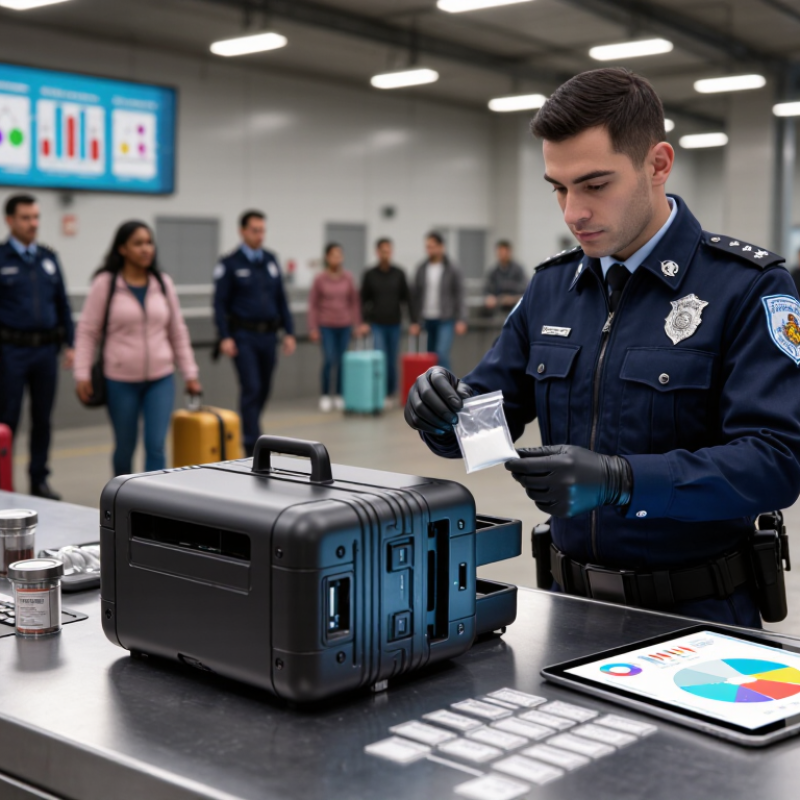
7 Portable Drug Detector Buying Tips for Global Buyers

Understanding Portable Drug Detectors and Their Applications

Portable drug detectors are compact screening tools for checking selected pharmaceutical compounds outside a laboratory. Depending on the sensor and method, they may examine a small sample, a surface trace, or a medicine’s packaging. Their usefulness depends on what they are designed to detect. No single device can identify every compound.

In clinics, pharmacies, and authorized supply-chain settings, these tools can support incoming-product checks and help staff flag samples that need closer review. A small handheld unit may be practical at a receiving desk or during inventory inspections. It can reduce delays, but it does not replace trained staff or established quality procedures. Read the operating range carefully.

Results need context. Temperature, sample condition, and calibration can affect readings. Some instruments provide a quick screening result rather than a confirmed identification. A field result is a clue, not a verdict. That distinction matters. Buyers should check whether the device supports their sample types, how often calibration is required, and whether results can be recorded for later review. Portability is convenient, but it can create misplaced confidence. I would treat that as a real limitation, not a footnote.

Identifying Detection Needs and Regulatory Requirements

Before comparing portable drug detectors, define the screening task and the decision the result will support. A checkpoint team may need rapid, non-invasive screening, while a laboratory may require documented measurements and confirmatory procedures. Specify the materials being screened, expected sample conditions, daily test volume, and acceptable response time. Ask suppliers for validation data under conditions similar to yours, not only ideal demonstrations. A clean test room is rarely guaranteed.

Tips: List your authorized screening scope, sample types, operating temperature range, and required record format. Check whether the device needs consumables, routine calibration, or specialist training. Small operating details can affect total cost.

Regulatory requirements differ by destination and use. Before ordering, confirm applicable import permissions, product certifications, labeling rules, and any restrictions on collecting or storing test records. Request current documents from the supplier, then verify them with the relevant local authority or procurement specialist. Requirements can be unclear, and a translated certificate may not answer every question. Keep written confirmation with purchasing records. Also check warranty coverage, service access, and calibration support in the destination country; a device that cannot be maintained may not remain dependable.

Comparing Technologies, Targets, and Test Methods

When comparing portable detectors, start with the target, not the sensor. Is the device screening tablets, liquids, or surface residues? Raman and near-infrared instruments read material fingerprints; colorimetric kits and immunoassays look for specified compounds. Each has limits. Packaging, moisture, and mixed ingredients can affect readings.

The World Health Organization’s 2017 report estimated that about one in ten medical products in low- and middle-income countries is substandard or falsified. A 2018 Lancet Global Health review estimated a pooled prevalence of 13.6% across sampled studies.

These are broad estimates, not detector accuracy figures. Ask vendors for blinded-test results, false-positive rates, and performance on your actual sample types. Ask, too, whether the unit flags an uncertain match or simply displays the nearest library result. That distinction matters.

Check the test method in the field. A handheld Raman unit may identify a tablet through clear packaging, but opaque layers can block a reading. An immunoassay strip may return quickly, yet usually covers only its stated panel.

For consequential decisions, plan confirmatory laboratory testing and retain a sample. Try the device under real lighting, with gloved hands, beside the receiving bench. Battery life and calibration are easy to overlook.

A clean match is not the whole story. Sometimes the result needs a second look.

Evaluating Portability, Accuracy, and Operating Costs

For global buyers, portability means more than a low carry weight. Check whether the detector fits a hand, runs through a full shift, and works in heat, humidity, or dusty storage areas. Ask suppliers for battery-runtime results under real operating conditions, not idle-mode claims. A compact case is useful. So is a screen readable outdoors. Accuracy needs equal scrutiny: request independent test reports that state the sample conditions, detection limits, and rates of inconclusive results. A single accuracy percentage can hide important weaknesses. Ask how often the device needs calibration and whether operators can complete routine checks without specialist support.

Operating costs often decide whether a detector remains in daily use. Compare consumables, calibration, software fees, training, repair turnaround, and battery replacement over several years. MarketsandMarkets’ 2023 Drug Screening Market report estimated the broader market at USD 7.1 billion, with a projected USD 11.3 billion by 2028; this is market context, not proof of any detector’s performance. A useful but imperfect rule: compare the cost per completed test, not just the purchase price. Request a written service schedule and a sample annual-cost calculation. Then check the assumptions. A low-cost unit may require frequent recalibration, while a higher-priced model may reduce downtime; neither claim matters without evidence from your expected workload.

Assessing Suppliers, Support, and Global Compliance

For global buyers, supplier support matters as much as detector specifications. Check whether the supplier provides clear operating instructions, scheduled calibration, and repair options in your region. Ask for written details on response times and replacement parts. A device may perform well in a demonstration but still be difficult to maintain across borders. Request test documentation and confirm that its stated performance suits your intended, lawful setting.

Tip: Compare service coverage, not just price. Ask who handles calibration and what records are supplied. Check that training materials are available in languages your staff can use.

Compliance requirements differ by destination and application. Ask suppliers for relevant product documents, including safety information and export or import paperwork where applicable. Have a qualified local professional verify requirements before ordering; a supplier’s general assurance may not cover every jurisdiction. Also check how results are stored, who can access them, and whether data handling matches your organization’s policies. A simple checklist helps. It may still miss an edge case, so review it with the people responsible for procurement and compliance.

Portable Drug Detector Buying Tips: Standards to Check

Edition years of selected quality, laboratory competence, and electromagnetic compatibility standards.

Use these references to guide supplier questions about manufacturing quality, test evidence, and EMC performance. Applicability depends on the detector and destination market; these standards are not, by themselves, product approvals.