What Are PVC Cabinets and Are They Durable?
Pvc Cabinets are often considered for kitchens, bathrooms, laundry rooms, and other spaces where spills are part of daily life. Their smooth surfaces are easy to wipe, and many styles resemble painted wood from a few steps away. A damp cloth can remove ordinary splashes. That is useful. Yet a cabinet’s appearance tells only part of the story. PVC products differ in thickness, internal structure, edge finishing, and hardware, so durability cannot be judged by the material name alone.
Moisture resistance may help in humid rooms, but it does not make every cabinet waterproof or immune to damage. Prolonged heat, direct sunlight, heavy loads, and poorly sealed joints can affect performance over time. Hinges and drawer runners matter, too; a strong panel can still feel flimsy when its fittings loosen. In this guide, we’ll look at how PVC cabinets are made, where they tend to work well, and what to inspect before buying. Small details count. Check the edges, open and close the doors, and ask about cleaning instructions and warranty coverage. These checks are not a perfect test, and real-world use varies. Still, they offer a more reliable starting point than judging a cabinet by a glossy showroom finish alone.
What PVC Cabinets Are and How They Are Made
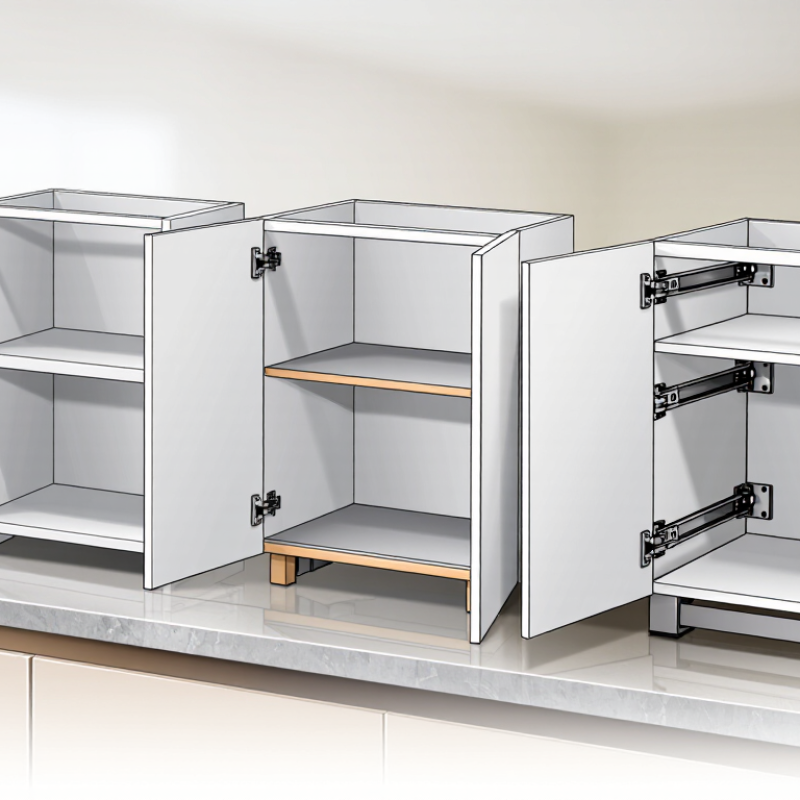
PVC cabinets are made with polyvinyl chloride, a plastic used either as the cabinet board itself or as a surface covering. In one common construction, panels are cut from rigid PVC foam board, then joined to form cabinet sides, shelves, and doors. Other cabinets use a wood-based core wrapped in a thin PVC film. These products may look similar, but their internal materials differ.
The manufacturing details matter. Foam-board panels can be cut and routed to size, then assembled with suitable fasteners, adhesives, or welded joints. Wrapped panels are shaped from a core, covered with PVC film, and pressed so the film follows the surface and edges. Small gaps or poorly sealed corners can affect how well a cabinet handles moisture.
That distinction matters. “PVC cabinet” is not one exact recipe; board density, joint quality, and finish vary.
PVC resists water better than many untreated wood surfaces, but prolonged heat can soften or distort some components. Sunlight may also affect color over time. Ask what the panel core is, how its edges are sealed, and what care the maker recommends.
It is easy to assume every PVC cabinet performs alike. It doesn’t.
Common PVC Cabinet Types and Their Uses
PVC cabinets are not all built the same way. Solid PVC foam-board cabinets use lightweight, rigid panels that resist splashes and are easy to wipe clean. They suit bathrooms, laundry rooms, and kitchens where water may collect near the sink.
Lightweight, but not indestructible. Heavy cookware or a poorly supported shelf can still cause bending or damage.
PVC-wrapped cabinets use a core such as MDF, covered with a PVC film. The smooth surface comes in colors and wood-like patterns, making it useful for bedroom storage, vanities, and kitchen doors. PVC-laminated panels are another option, with a decorative surface bonded to a board core. Their performance depends on the core and how well the edges are sealed.
That detail is easy to miss.
In a damp room, inspect corners and joints for gaps, where moisture may reach the substrate. Strong heat near an oven, direct sunlight, or rough scrubbing can also shorten a cabinet’s service life.
Check the panel construction, edge finish, and hardware—not just the word “PVC” on a product description.
How PVC Cabinets Perform Under Daily Use
PVC cabinets are usually built from PVC sheets or a PVC surface over a supporting core. Their smooth, nonporous finish resists routine splashes and wipes clean with a damp cloth. That makes them useful near sinks, where small drips are common. Small details matter. Construction quality still varies, so inspect hinges, edge seals, and the cabinet’s internal support before choosing.
Under daily use, PVC cabinets handle ordinary kitchen moisture well, but they are not indestructible. Repeated heat from an oven or kettle may soften or distort nearby panels, while heavy cookware can strain weak shelves and hinges. Use gentle cleaners; abrasive pads can dull the finish. A cabinet may look sturdy in a showroom, yet loose hardware can become noticeable after months of opening and closing. This is worth checking.
Tips: Keep hot appliances away from cabinet surfaces, wipe standing water promptly, and avoid overloading shelves. Tighten loose hinges when needed. If a panel begins to peel or warp, check for a nearby heat or moisture source before assuming the entire cabinet has failed.
Factors That Affect PVC Cabinet Durability
PVC cabinet durability depends on panel formulation, thickness, edge sealing, hardware, and installation. “PVC” may describe rigid sheet, foam board, or a PVC-faced composite; these constructions do not perform identically. The Plastics Pipe Institute’s PVC design handbook gives a typical thermal expansion coefficient near 54 micrometers per meter per °C. A two-meter panel could therefore shift about 3.2 millimeters across a 30°C temperature change. Cabinet doors need room to move. Poorly adjusted hinges can make that small movement look like material failure.
Moisture and heat matter, too. Sealed PVC surfaces resist routine splashes, but water can still reach exposed edges, screw holes, or weak joints. Prolonged heat near ovens may soften some formulations or weaken adhesive bonds. ASTM D543 evaluates plastics after chemical exposure, while ASTM D2244 measures color differences. These methods offer useful benchmarks, but neither predicts every cabinet’s service life. Construction details remain decisive, and published lifespan figures should be treated cautiously.
Tips: Check for sealed edges, sturdy hinges, and a stated heat limit. Wipe spills promptly, avoid abrasive cleaners, and inspect joints occasionally. A little maintenance helps. It does not fix poor construction.
Care and Maintenance for PVC Cabinets
PVC cabinets are valued for their moisture resistance and easy-clean surfaces, but they still need thoughtful care. Their durability depends on construction, edge sealing, hardware, and everyday use. A damp cloth usually handles fingerprints and light splashes. Dry the surface afterward, especially around seams and cabinet edges. Standing water can work into joints or damage nearby materials. PVC is practical, not indestructible.
Tips: Use a soft cloth with mild soap and lukewarm water. Avoid abrasive pads, strong solvents, and excessive heat; these may dull, scratch, or deform the finish. Wipe spills promptly. Check hinges and handles now and then, and tighten loose screws gently. Don’t hang heavy items from cabinet doors. Small habits help.
For greasy marks, let a soapy cloth rest on the spot briefly, then wipe without hard scrubbing. Test any unfamiliar cleaner on a hidden area first. I have found that rushing with a rough sponge can leave a mark that is more noticeable than the original stain. Keep cabinets away from direct heat where possible, and use ventilation when cooking. If a panel becomes swollen, cracked, or separated at an edge, cleaning alone may not fix it; ask a qualified cabinet professional to assess the damage. Even well-maintained PVC can show wear over time.