Top 10 Types of Artistic Decorative Tiles for Buyers
Artistic Decorative Tiles can turn a plain backsplash, fireplace surround, or entryway into a defining feature. Yet a striking pattern is only part of a good buying decision. Buyers also need to consider material, finish, installation requirements, and how much maintenance a surface will need. A glossy hand-painted tile may catch the light beautifully, while a textured cement design can feel warm and tactile. Neither choice suits every room. That matters.
This guide introduces ten types of decorative tiles, from encaustic and mosaic designs to relief, metallic, and hand-painted styles. Each offers a different balance of color, texture, durability, and visual impact. Look closely at sample pieces in the room where they will be installed; daylight can change a glaze, and grout can alter a pattern’s appearance. Ask suppliers about dimensions, shade variation, recommended applications, and care instructions. These details help buyers compare options with fewer surprises, though no sample can show every variation across a full order. Looks can mislead. A tile that feels perfect in a showroom may seem busy across an entire wall. Use the ideas here as a starting point, then match the design to the space, practical needs, and personal taste.
What Defines Artistic Decorative Tiles
Artistic decorative tiles are defined by deliberate visual or tactile expression, not by one material or manufacturing method. Hand-painted motifs, layered glazes, raised relief, geometric mosaics, and varied tile edges can turn a wall or floor into a focal point. Look closely at glaze depth, pattern alignment, edge finish, and how colors shift under warm or cool lighting. Small variations may be part of the design, but they can also make installation harder. That distinction is easy to miss.
The Grand View Research report on the ceramic tiles market valued it at about US$227.7 billion in 2023 and projected 6.2% annual growth from 2024 to 2030. This market figure reflects broad demand, not artistic quality. Technical suitability still matters: ANSI A137.1 defines porcelain tile as having water absorption of 0.5% or less, measured using ASTM C373. Buyers should also check slip resistance, wear rating, and whether the tile is rated for the intended surface. Decorative appeal alone does not confirm performance.
Tips: Request a sample and inspect it in the room’s actual light. Dry-lay several pieces to assess repeat patterns and color variation. Confirm grout width and installation guidance before ordering; intricate designs can expose uneven spacing quickly.
Top 10 Types of Artistic Decorative Tiles for Buyers — What Defines Them?
Decorative styles—including mosaics, encaustic, zellige, terracotta, and hand-painted tiles—describe appearance or format, not necessarily the tile body’s performance. Water absorption is one measurable factor buyers can compare.
How to read it: Lower absorption generally indicates a denser tile body. The chart shows the upper limit for each listed ceramic group under ISO 13006 / EN 14411; Group III is above 10% and has no upper limit shown here. Decorative styles can be made with different bodies, so check the product’s technical specification before choosing.
Materials and Techniques Used to Make Decorative Tiles
Decorative tile character starts with its body. Ceramic tiles use refined clay, silica, and feldspar; a fired glaze adds color and a washable surface. Porcelain uses a denser body and generally lower water absorption, making it useful in wet areas. Natural stone brings veining and mineral variation, while cement tiles gain color from pigmented cement layers pressed into a mold. Details matter.
The European Commission’s Reference Document on Best Available Techniques in the Ceramic Manufacturing Industry reports tile-firing temperatures of roughly 1,000–1,300°C. That range helps explain why clay composition, kiln control, and glaze fit affect strength and color. For decoration, makers may hand-paint designs, screen-print repeating patterns, press relief into clay, or assemble small glass and ceramic pieces into mosaics. Each method leaves a different surface: raised edges catch light, while glossy glaze deepens color.
Buyers should ask whether a tile is glazed, sealed, or intended for walls rather than floors. A handmade surface may vary in shade and size; that variation can be appealing, but it complicates tight grout lines. One limitation: firing ranges are broad, not a guarantee of performance. Check the maker’s technical sheet and test a sample under the room’s lighting. Not always.
Ten Types of Artistic Decorative Tiles for Buyers
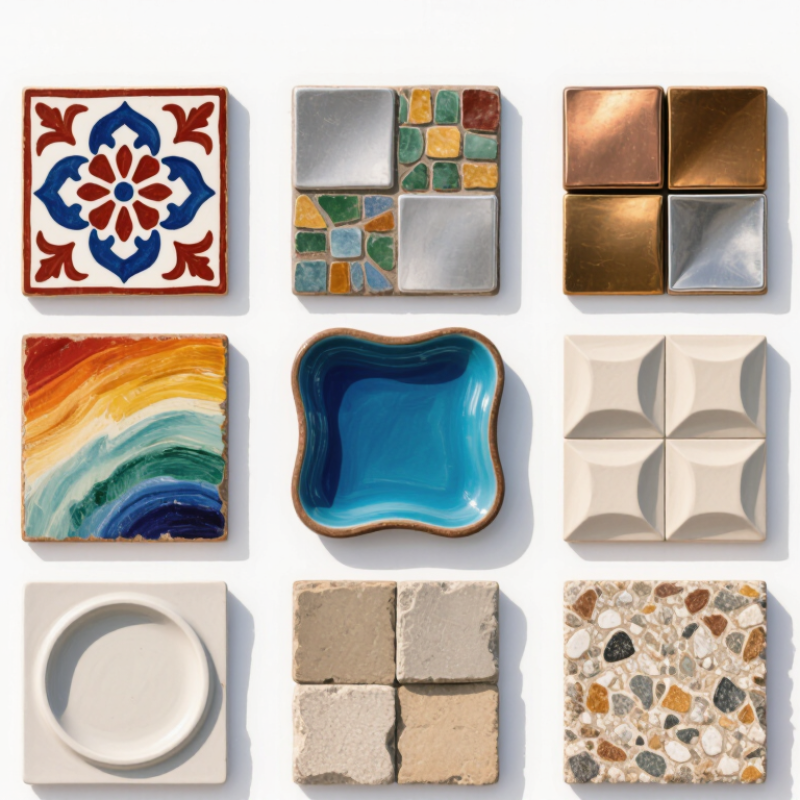
Artistic decorative tiles can change a room through color, texture, and pattern. Hand-painted ceramic tiles suit small feature walls, while encaustic cement tiles create bold, repeating floors. Zellige tiles bring irregular edges and shifting glaze tones. Mosaic tiles work well around niches or curved surfaces. Look closely at samples. Tiny differences become noticeable across a large area.
For raised detail, consider relief tiles, but check how their grooves collect dust. Glazed porcelain offers patterned looks with a durable surface, making it practical for busy kitchens. Terracotta adds warm, earthy color; it usually needs appropriate sealing. Glass tiles reflect light and can brighten a dim backsplash. Each material behaves differently during cutting and installation, so ask an experienced installer about substrate preparation and grout width.
Metallic-finish tiles add a reflective accent, though strong lighting may make them feel harsh. Terrazzo-style tiles offer speckled color and can connect several shades in a room. Request samples and view them in the actual space, both by day and at night. A sample can still mislead: installed patterns often feel busier than expected. Check slip resistance for floors, confirm care requirements, and order enough tiles to allow for cuts and future repairs.
How Decorative Tile Styles Differ in Appearance and Performance
Decorative tiles differ not only in style, but in how they handle water, wear, and daily cleaning.
Hand-painted ceramic brings visible brush marks and small color variations. Its glazed surface is generally easy to wipe, though chips can expose the clay beneath. Lovely, but not indestructible.
Glass tiles reflect light and can brighten a dim backsplash; their smooth faces resist stains, while grout lines still need attention.
Encaustic cement tiles have matte colors and patterned bodies, so minor surface wear may blend in rather than reveal a different color underneath. They are porous, however, and usually need sealing and careful cleaning.
Porcelain is denser and often better suited to busy floors or wet areas, but its printed patterns may look less textured up close.
Mosaic tiles offer detailed designs and fit curved surfaces, though their many grout joints can collect residue.
Terracotta adds warm, earthy variation, yet its porous surface calls for protection and routine care.
Metal accents create a crisp, reflective detail, but scratches and water marks can be more noticeable.
A tile sample helps. View it in the room’s actual light, and check the maker’s care guidance before choosing. A comparison like this has limits: finish, installation, grout, and use can change performance considerably.
Factors to Consider When Choosing Decorative Tiles
Decorative tiles can change a room’s mood, but appearance is only one buying factor. Check the tile’s material, finish, thickness, and intended use before choosing a pattern. Handmade ceramic may have gentle variations in color and edge, while printed designs tend to look more uniform. Those differences can be beautiful, but they affect alignment and grout spacing. For floors or splash-prone areas, confirm that the tile is rated for the location and has a suitable surface. A glossy finish may brighten a wall, yet feel slippery underfoot.
Tips: Order a sample and view it in the actual room. Check it beside your lighting, paint, and countertop. Ask whether colors vary between production batches, and keep a few extra tiles for future repairs. Measure the area carefully, including corners and outlets. Small details matter. A sample can still mislead: one tile may not show the full pattern repeat or natural variation.
Think about installation and upkeep, too. Intricate mosaics may require more grout lines and careful setting, while large patterned tiles need precise layout to keep motifs aligned. Ask an experienced installer to review the substrate and pattern plan before purchase. Compare cleaning instructions, grout color options, and replacement availability. If maintenance requirements are unclear, pause and ask for written guidance; assumptions can become costly. A slightly imperfect layout may be acceptable in a handmade design, but decide where variation feels intentional.