





Blog

Best Organic Body Lotion Manufacturers in 2026?

Choosing the best Organic Body Lotion manufacturers in 2026 takes more than reading a “natural” label. A cream may smell faintly of oats, spread smoothly across dry elbows, and still leave questions about its ingredients or production standards. Cosmetic chemist Perry Romanowski’s practical reminder is that natural ingredients are not automatically safer; the finished formula matters. That distinction is useful. It also makes comparisons less tidy.

This guide looks at manufacturers through clear, checkable criteria: ingredient transparency, relevant quality certifications, formulation experience, production capacity, packaging options, and responsiveness to buyers. It considers whether a company can explain its sourcing and testing, rather than relying on green claims alone. For brands developing private-label products, details such as minimum order quantities, sample availability, and lead times can matter as much as the lotion’s texture. Small details count.

No single manufacturer suits every brief. A startup may need flexible runs and hands-on formulation support, while an established brand may prioritize consistent large-scale production. Public information can be incomplete, and certifications do not guarantee that every product will suit every skin type. That is worth remembering. The aim here is a practical shortlist, not a promise of perfection: readers can compare potential partners, ask sharper questions, and verify current claims directly before making a decision.
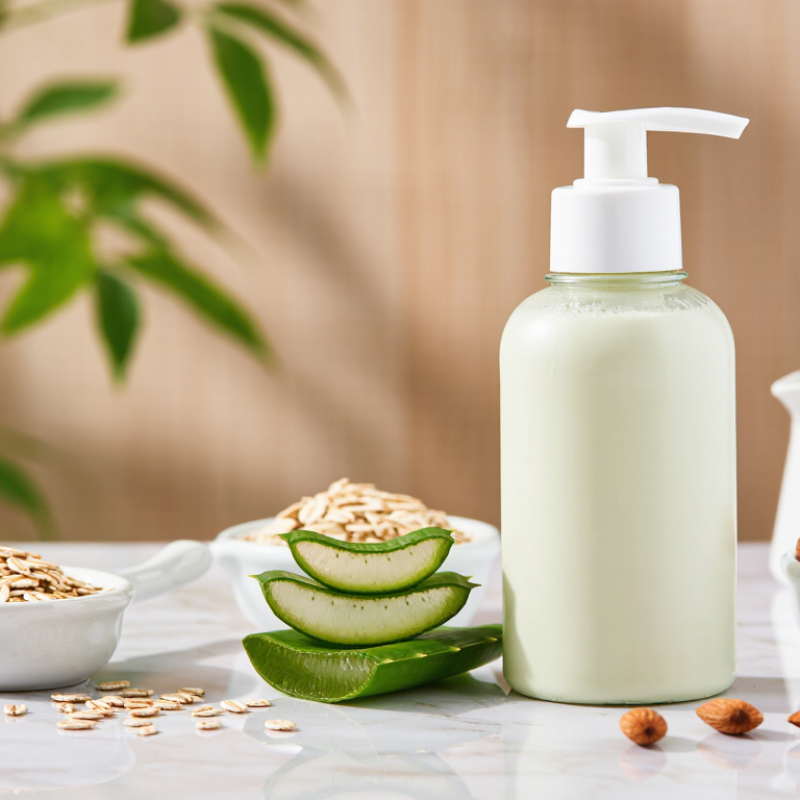
Best Organic Body Lotion Manufacturers in 2026?

What Defines an Organic Body Lotion Manufacturer in 2026?

In 2026, an organic body lotion manufacturer should be able to explain what “organic” means in its formula, not just print the word on a label. That starts with ingredient records, supplier checks, and traceable batches. Ask how plant oils, extracts, and other key ingredients are verified. Clear documentation matters.

Formulation expertise shows up in small details. A lotion should spread evenly, absorb comfortably, and remain stable through its intended shelf life. Manufacturers can support this with documented quality checks, stability testing, and suitable microbial controls. A smooth texture is not proof of safety. Nor is a botanical scent. Testing and records provide stronger evidence.

Look for relevant third-party certification where available, and confirm its scope: it may cover ingredients, processing, or the finished product. Packaging choices matter, too. A pump must protect the formula and work reliably; recycled content alone does not tell the whole story. Ask for sample batch records and clear explanations of testing methods. Even careful systems have gaps, and suppliers change. A manufacturer willing to discuss those limits may be more credible than one offering perfect-sounding promises.

How Organic Lotion Manufacturers Are Evaluated

A credible evaluation of organic body lotion manufacturers begins with ingredient traceability. Ask how plant oils, extracts, and fragrance components are sourced, and request current supplier records. Clear specifications and batch documents make it easier to verify what goes into each formula. Vague claims deserve follow-up. Small details count.

Manufacturing expertise shows in how a lotion performs, not just in its ingredient list. Review stability data across warm and cool storage, microbial testing, and checks for separation, odor, or texture changes. Packaging compatibility matters too: a formula should dispense cleanly from its container without leaking or changing noticeably. Ask who reviews quality records and how production batches are tracked. These answers can reveal whether written procedures are part of daily practice.

Communication is another useful measure. A capable manufacturer should explain formulation limits, testing timelines, and ingredient substitutions in plain language. Compare samples under consistent conditions, such as the same amount applied to clean skin, and record absorption and residue. No scorecard is perfect. A neat dossier cannot predict every real-world result, and sample testing takes time. Still, documented controls, transparent sourcing, and specific answers offer a stronger basis for comparison than marketing language alone.

Leading Organic Body Lotion Manufacturers in 2026

Leading organic body lotion manufacturers in 2026 are judged by more than ingredient lists. Buyers should examine sourcing records, batch consistency, and product testing. Grand View Research estimated the global organic personal care market at USD 21.3 billion in 2023, with a projected 9.1% compound annual growth rate from 2024 to 2030. This signals growing demand for transparent suppliers. But market growth alone does not prove product quality.

A capable manufacturing partner should explain ingredient origins and provide relevant stability and microbiological test results. Ask how it checks fragrance allergens, packaging compatibility, and consistency between batches. Request a production-representative sample: a smooth lab prototype may behave differently in a full-size pump bottle. Details matter. Certification scope also deserves a close look; confirm whether it applies to ingredients, the facility, or the finished lotion. Some supplier records can be incomplete, so leave time to verify claims rather than relying on polished brochures.

Tips: Compare two or three suppliers using the same checklist. Review sample texture, scent, and absorption on skin, then ask for written specifications and recent test documentation.

Organic Body Lotion Manufacturers in 2026: USDA Organic Content Benchmarks

Compare U.S. USDA organic labeling categories by their minimum required organic ingredient content.

These are USDA labeling thresholds, not manufacturer rankings or product-quality scores. The percentages refer to organic ingredients, excluding water and salt. Verify each lotion’s certification and ingredient list when evaluating suppliers. Source: USDA Organic Labeling.

Comparing Certifications, Formulations, and Production Capabilities

Comparing organic body lotion manufacturers in 2026 takes more than reading an “organic” claim. Ask which certification applies, and what it covers: the finished lotion, selected ingredients, or the production facility. Standards such as COSMOS or USDA Organic can help buyers assess sourcing and processing, but a certificate is not a complete quality check. That distinction matters. Request current documentation and confirm that the product you plan to order falls within its scope. Then review the formula: the percentage of certified organic ingredients, the source of plant oils, fragrance details, and preservation approach. A lotion should feel consistent, not separate after weeks on a warm shelf.

Production capability is just as important. Ask about minimum order quantities, batch traceability, stability testing, and how the manufacturer handles scale-up. On a factory call, request a sample from a representative batch, not only a polished development sample. Check whether packaging choices suit the formula; a rich lotion may dispense poorly through a narrow pump. Small details count. Be cautious of vague answers about testing or lead times. And remain a little skeptical: even thorough documents cannot predict every change in texture across seasons, so agree on measurable product specifications before ordering.

Best Organic Body Lotion Manufacturers in 2026? - Comparing Certifications, Formulations, and Production Capabilities

2026 supplier evaluation matrix: This comparison focuses on verifiable standards and capabilities rather than ranking or naming individual companies. Certification availability, product eligibility, and requirements depend on the product and target market.
Comparison area What to compare Evidence to request Why it matters
Finished-product organic certification Whether the finished lotion is certified under a recognized organic or natural cosmetics standard, versus using only selected organic ingredients. Current certificate, certifier name, certified product or product-category scope, and permission to use the relevant seal or claim. Ingredient certificates alone do not establish that a finished lotion is certified.
Standard and claim fit The supplier’s experience with the standard and labeling rules relevant to the intended sales market. Cosmetics and agricultural organic standards are not interchangeable. Standard name and version, certification scope, approved label artwork, and written confirmation of which claims are permitted. A “natural” or “made with organic ingredients” claim is not the same as certification of the finished product.
Cosmetics GMP Documented cosmetic manufacturing controls. ISO 22716 provides guidelines for cosmetics Good Manufacturing Practices; it is not an organic certification. Current certificate or audit evidence, issuing body, site address, and scope covering the relevant manufacturing activities. Confirms that production controls are addressed separately from organic sourcing and product claims.
Organic ingredient traceability Ability to trace organic oils, butters, extracts, and other applicable ingredients through the supply chain and keep certified and non-certified materials appropriately documented. Ingredient certificates, supplier documentation, lot records, certificates of analysis where applicable, and a documented traceability or recall process. Supports supply-chain verification and investigation of ingredient or batch issues.
Formulation range Experience with the requested lotion type, such as a light daily emulsion, richer body cream, fragrance-free formula, or formula using specified organic oils and butters. Representative formulation briefs, ingredient lists, sample-development process, and confirmation that the proposed formula meets the target standard and claim requirements. Organic content, texture, preservation needs, and certification rules can constrain ingredient choices.
Stability and microbiological testing Testing appropriate to the formula, packaging, and intended shelf life, including stability assessment and microbiological testing where applicable. Test protocols and reports, sample conditions, packaging compatibility results, and preservative efficacy testing when appropriate to the product. Supports product quality and helps identify changes such as separation, odor shift, or packaging interaction.
Batch size and production capacity Whether the facility can produce the required pilot, launch, and repeat-order volumes, with a stated minimum order quantity and lead-time assumptions. Written MOQ, batch-size range, available production schedule, scale-up process, and contingency plan for ingredient availability. There is no single industry-wide batch size that defines a suitable manufacturer; capacity must match the project.
Filling and packaging options Compatibility with the chosen pack format, such as a bottle, pump bottle, or tube, and the requested fill sizes and labeling requirements. Available filling formats, packaging specifications, compatibility testing, line capabilities, and responsibility for sourcing components. A suitable formula still needs packaging that works with its viscosity and remains compatible during storage.
Regulatory documentation Support for the documentation and responsibilities applicable to each destination market, while making clear which tasks remain with the brand owner or other responsible party. Ingredient and product specifications, safety or compliance documents available for the market, label review process, and a written responsibility matrix. Regulatory duties vary by jurisdiction and should not be assumed from a manufacturer’s certification alone.
Private-label and development support Availability of stock formulas, formula customization, fragrance options, sampling, and development services under agreed ownership and confidentiality terms. Development timeline, sample rounds, formulation ownership terms, change-control process, and costs for customization. Clarifies how much differentiation is possible and who controls the formula and its future changes.

Verify certificates directly with the issuing organization and confirm that they are current and cover the specific product, facility, and activity being evaluated.

How to Choose the Right Manufacturer for Your Brand

Choosing an organic body lotion manufacturer starts with traceability, not a glossy sample. Ask how each plant oil, butter, and botanical is sourced, then request supplier records and current certification documents. Check whether certification covers the finished product or only selected ingredients. That distinction matters. Request batch records, stability results, and microbiological testing plans, especially for water-based lotions.

Production capability matters as much as the formula. Ask about minimum order quantities, lead times, packaging compatibility, and how the factory handles ingredient substitutions. Verify that its quality system aligns with ISO 22716 cosmetic good manufacturing practices. A manufacturer should explain what happens when a raw material changes—not just promise consistency. McKinsey and NielsenIQ reported that US consumer products with environmental, social, and governance-related claims achieved 28% cumulative growth from 2017 to 2022, compared with 20% for products without such claims. This broad market finding is not a guarantee for organic lotion, but it shows why substantiated claims deserve attention.

Request a pilot batch before committing to a large order. Check how the lotion spreads, absorbs, and smells after several weeks, not only on delivery day. Ask for evidence behind “organic” wording and agree on who reviews packaging claims. A polished sample proves little. I would still compare the paperwork against the physical batch; that step can feel tedious, and it is easy to overlook when timelines tighten.