





Blog
Top Silver Ink for Screen Printing Suppliers in China?
Finding a dependable Chinese supplier for Silver Ink For Screen Printing takes more than comparing the shine of sample jars. A bright metallic paste can print dull if the mesh, substrate, or curing conditions are unsuitable. Ask suppliers for technical data, recommended mesh ranges, curing guidance, and samples printed on your intended material. Small details matter. So does consistency.
Compare more than appearance. Check opacity, adhesion, flexibility, resistance to rubbing, and how easily the ink passes through the screen. Request repeat samples from different production batches when possible. This can reveal variation that one attractive swatch may hide. Discuss packaging, lead times, and quality checks in clear terms. Then test the ink on your own press. A supplier’s sample is useful, but it cannot reproduce every shop’s setup.
Screen-printing educator Scott Fresener is known for practical guidance in the field. A concise editorial takeaway—not a verbatim quotation—consistent with sound printing practice is: “Judge the silver by the cured print, not the shine in the container.” That distinction helps buyers assess suppliers with evidence, not promises. This guide examines what to compare among Chinese suppliers, from print performance to technical support. No single ink suits every job. That is worth remembering. A careful test can prevent an expensive mismatch, though it may not answer every question.
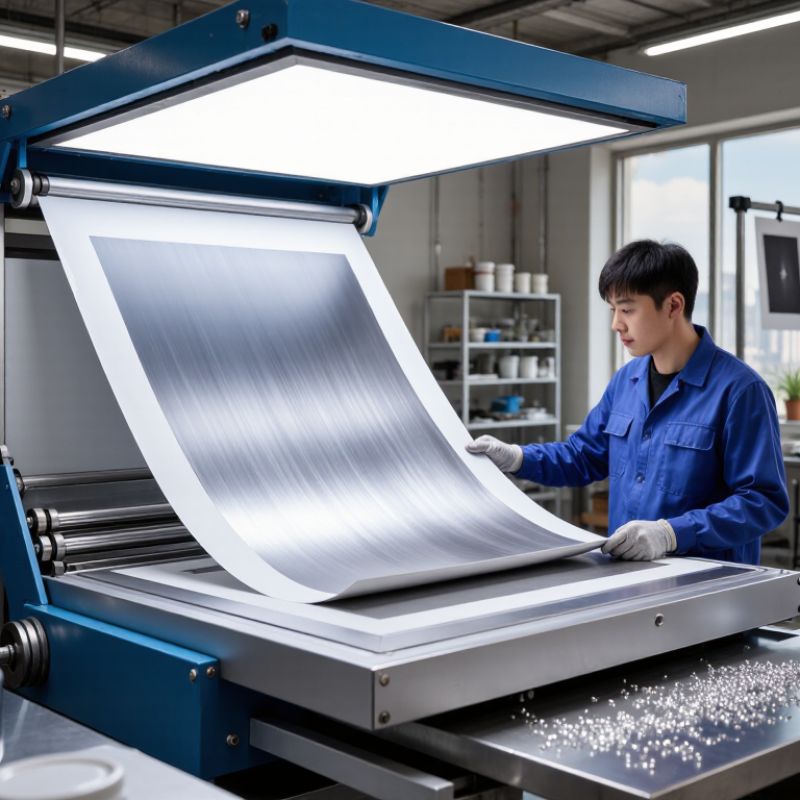
Understanding Silver Ink for Screen Printing and Its Common Uses
Silver ink for screen printing creates a metallic surface by reflecting light from fine aluminum or other reflective particles. The finish may appear bright, soft, or slightly grainy. It depends on particle size, ink coverage, fabric color, and viewing angle. Small differences matter. A sample viewed under workshop lights can look different near a window.
These inks are used on T-shirts, tote bags, labels, posters, and some packaging. On dark fabric, an opaque underbase may help the silver stand out, though it can change the fabric’s feel. Fine mesh can produce sharper details, while larger particles may need a more open screen. There is no single setup that works for every design. Test prints help reveal coverage, hand feel, and curing issues before a full run.
Metallic particles can settle in the container, so gentle, regular mixing helps keep the print consistent. Avoid excessive pressure or overworking the ink; either can reduce the crispness of small details. The effect is not always mirror-like, and that expectation deserves a reality check. Confirm the ink’s curing requirements and compatibility with the chosen substrate, then assess a washed sample when printing garments.
Comparing Silver Ink Types, Finishes, and Substrates
Top Silver Ink for Screen Printing Suppliers in China?
Comparing Silver Ink Types, Finishes, and Substrates
Silver ink is not one uniform product. Metallic-pigment inks create a soft, brushed shimmer, while highly reflective formulations can look brighter under direct light. Water-based, plastisol, and UV-curable options may suit different production lines, but their drying and curing needs vary. Ask suppliers for technical data and printed samples, not just a color card. A silver tone can shift noticeably between them.
Substrate choice changes the finish. On smooth polyester, fine particles may produce an even sheen; on textured cotton, the same ink can look grainy or muted. Dark fabric often makes silver appear stronger, while pale paper can soften its contrast. Check adhesion, wash resistance, and flexibility on the actual material. A sample may look impressive on the table, yet crack after stretching. I would not judge by shine alone.
Tips: Test a small print run on the intended substrate. Compare samples under daylight and indoor lighting, and record mesh count, ink deposit, and curing conditions. Test before scale. If the finish feels dull, adjust one variable at a time; changing several together makes the cause hard to identify.
Key Criteria for Evaluating Chinese Silver Ink Suppliers
When evaluating Chinese silver ink suppliers, look beyond brightness in a catalog photo. Ask for a current technical data sheet covering metal content, recommended mesh range, curing conditions, and storage life. Details should match your fabric or substrate, not just a generic product description. Request a small production sample and print it using your own screen, squeegee, and curing setup. Check opacity, edge definition, and whether the metallic layer cracks after bending or washing. Small details matter.
A bright wet print can look impressive, then lose reflectivity after curing. Compare samples under consistent lighting and record ink batch, mesh count, deposit thickness, and cure settings. Ask how the supplier checks batch consistency and handles complaints; clear, specific answers are more useful than broad promises. Confirm packaging seals tightly, since dried material near the lid can signal poor handling. Test adhesion on the actual substrate, too. This step is easy to skip when deadlines are tight. It can also reveal that your own curing settings need adjustment. No single sample proves long-term performance, so request repeat samples when production consistency is critical. Keep records.
Supplier Capabilities, Certifications, and Customization Options
A capable silver ink supplier should explain how its production controls affect print consistency. Ask about pigment dispersion, viscosity checks, batch records, and storage conditions. These details matter. For a trial, request a sample from a recent production batch, not only a laboratory blend. Test it with your mesh, squeegee, substrate, and curing setup. A supplier’s advice is useful, but your press test remains essential.
Review documents as carefully as samples. ISO 9001 certification can indicate a quality management system, while a safety data sheet explains handling information. Ask for a current certificate, its scope, and relevant batch test reports. Where needed, request market-specific restricted-substance testing. A certificate alone does not prove that an ink will adhere well or retain its metallic finish. Check those claims on the material you actually print.
Customization may cover viscosity, particle size, opacity, metallic appearance, packaging, and curing requirements. Share the substrate type, mesh count, expected production speed, and finishing conditions. Small changes can affect both printability and shine. There is a trade-off. A very bright finish may need different handling than a softer silver tone. Suppliers should explain these limits and provide written test guidance. Real production is messy, so allow time for a second trial.
Top Silver Ink for Screen Printing Suppliers in China? - Supplier Capabilities, Certifications, and Customization Options
Supplier-screening guide: the capabilities below describe common product and service options, not verified claims about any specific supplier. Request current technical documents and test samples before qualification.
| Capability Area | Typical Offering | Specifications to Confirm | Documents and Verification | Customization Options |
|---|---|---|---|---|
| Metallic-effect silver ink | Screen-printing ink formulated with reflective metallic pigments for decorative graphics, labels, and packaging. | Substrate compatibility, visual brightness, opacity, gloss, adhesion, rub resistance, and whether a protective overprint is recommended. | Technical data sheet (TDS), safety data sheet (SDS), and print samples evaluated on the intended substrate. | Shade, gloss level, opacity, viscosity, and formulation for a specified substrate or print effect. |
| Conductive silver ink | Silver-flake or other silver-particle formulations intended for printed electrical paths, contacts, or electronic applications. | Sheet resistance or resistivity, cured-film thickness, adhesion, flexibility, and electrical performance after environmental or mechanical testing. | TDS plus test results stating the measurement method, printed geometry, film thickness, substrate, and curing conditions. | Target electrical performance, viscosity, deposition thickness, flexibility, and compatibility with the customer’s curing process. |
| Ink chemistry and cure | Solvent-based, water-based, or UV-curable products may be available, depending on the supplier’s formulation range. | Recommended drying or curing conditions, ventilation needs, pot life where applicable, and suitability for the selected press and substrate. | Current TDS and SDS; confirm operating conditions with a production trial rather than relying on a generic cure setting. | Cure profile, drying speed, viscosity, and formulation adjustments within the supplier’s validated product range. |
| Substrate compatibility | Formulations may be developed for materials such as paper, coated stock, plastics, films, or textiles; compatibility is formulation-specific. | Exact substrate grade, surface treatment, adhesion, flexibility, blocking, and resistance to the intended use environment. | Substrate-specific print and adhesion test results. ISO 2409 or ASTM D3359 may be relevant for applicable coating systems and test setups. | Adhesion and flexibility tuning for the identified substrate, subject to sample testing. |
| Screen-printing process support | Technical guidance may cover stencil selection, ink handling, print speed, squeegee setup, and production troubleshooting. | Recommended mesh and stencil parameters, squeegee requirements, ink mixing or thinning guidance, and reprint or cleanup instructions. | Written process recommendations and a trial print using the intended artwork, equipment, and production conditions. | Process recommendations tailored to the customer’s screen, press, artwork, and production line. |
| Quality control and testing | Batch controls may include appearance, viscosity, fineness or dispersion checks, and performance testing defined by the product specification. | Acceptance limits, test methods, batch-to-batch tolerances, shelf life, storage conditions, and traceability practices. | Representative certificate of analysis (CoA), batch identification, and applicable test-method details. ISO 9001 is a quality-management-system standard, not a product-performance guarantee. | Agreed inspection criteria, reporting fields, and sample-retention or batch-documentation requirements. |
| Regulatory and environmental documentation | Suppliers may provide product safety and market-compliance documents for a specific ink formulation and intended market. | Applicable chemical restrictions, destination-market requirements, and whether the supplied document covers the exact product and current formulation. | SDS and applicable RoHS or REACH declarations. RoHS and REACH are regulatory frameworks; declarations are not universal product certifications. ISO 14001 relates to an organization’s environmental management system. | Documentation package tailored to the destination market, customer requirements, and exact product SKU. |
| Sampling and private-label services | Some suppliers may offer evaluation samples, custom packaging, or private-label arrangements, subject to their production capabilities. | Sample quantity, development and production lead times, minimum order quantity, packaging format, and change-control process. | Written quotation, sample identification, agreed specification, and confirmation that production material matches the approved sample. | Packaging, label language, order quantity, and product specification, subject to written agreement. |
Note: Metallic-effect silver ink is designed primarily for visual appearance and should not be assumed to provide electrical conductivity. For conductive applications, qualify the ink using electrical measurements on the actual printed and cured construction.
Sampling, Quality Control, and Import Considerations
When comparing silver ink screen printing suppliers in China, request a sample made with your actual fabric, mesh, and curing setup. Metallic particles can settle during storage, so check the ink after mixing and again during a longer print run. Look for smooth coverage, consistent shine, and clean edges—not just a bright first impression. A small sample may hide production problems.
Ask the supplier to record the ink batch, viscosity, mesh count, and curing conditions. Test adhesion after washing and rubbing, and inspect several prints from the run. Keep an approved sample as your reference. Even a clean test sheet can mislead if your production fabric behaves differently. Ask how the supplier checks batch consistency and handles nonconforming material; vague answers deserve a follow-up.
Tips: Request current technical and safety data sheets, sealed sample packaging, and a written lead-time estimate. Confirm carton weight, dimensions, and shipping terms before ordering. Have a qualified customs broker verify the product classification and import paperwork for your destination. Small details matter. Don’t assume the sample’s shade will match every batch; agree on a practical color tolerance before production.
Top Silver Ink for Screen Printing Suppliers in China
A practical sample-evaluation scorecard for quality control and import readiness
The chart shows an example 100-point buyer-defined scorecard, not measured supplier or market data. Test samples against your print process and written specifications, including cured-film conductivity, adhesion, color, and curing conditions. Request current safety and shipping documents, and confirm import requirements for the destination country before ordering.


