





Blog
Top 10 TV Wall Cabinet Suppliers in China
Choosing a Tv Wall Cabinet supplier is about more than finding an attractive finish. The cabinet must fit the room, support the screen, manage cables, and provide useful storage. A narrow apartment may need shallow shelves, while a family room may call for closed compartments and space for game consoles. Small details matter. A misaligned panel or blocked outlet can spoil an otherwise polished installation.
This guide introduces ten TV wall cabinet suppliers in China and explains what buyers can compare. It considers product range, material options, customization, production communication, and export experience. These factors can help readers prepare more focused questions before requesting quotes. Supplier capabilities can change, so confirm current specifications and lead times directly.
Fictional cabinetry consultant Lin Wei offers this practical design principle: “A good TV wall cabinet should fit the room, conceal wiring, and remain easy to service.” This is an illustrative editorial quote, not a verifiable interview. The principle still highlights useful checks: inspect cable openings, hardware, finish samples, and access to electrical components. Ask how measurements are confirmed and how packaging protects corners during shipping. No supplier is ideal for every project. Compare samples and written specifications, and treat this list as a starting point—not a substitute for evaluating the factory, product, and communication yourself.
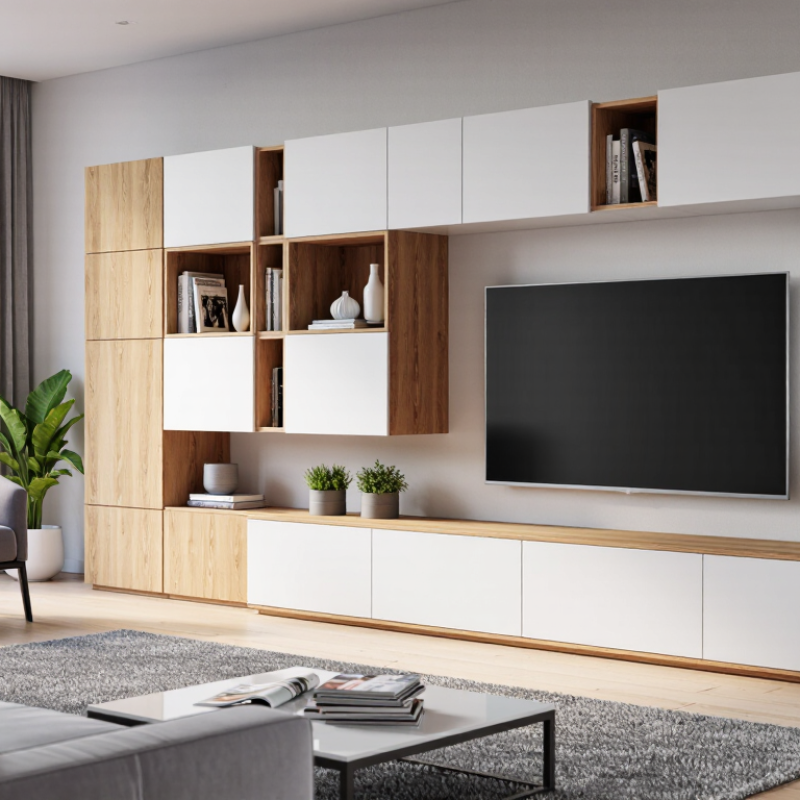
What TV Wall Cabinets Are and How They Are Used
A TV wall cabinet is a wall-mounted or built-in unit designed to support a television and organize nearby equipment. It may include open shelves, enclosed compartments, drawers, or a combination of these. The layout matters: a streaming device needs airflow, while a game console may need more depth than a small receiver. Measure both the screen and the equipment before choosing a cabinet.
These cabinets keep remotes, cables, and media accessories in one place, while freeing floor space in living rooms and bedrooms. Some designs hide wiring behind a rear panel or guide cables through built-in openings. Check that the openings align with your outlets. A tidy front can conceal an awkward setup. Leave room for ventilation, and make sure doors do not block signal sensors or access to frequently used ports.
When comparing TV wall cabinet suppliers in China, ask for exact dimensions, material details, load ratings, and installation guidance. Confirm how the cabinet attaches to the wall, especially when its contents are heavy. A drawing can help, but it may not reveal every installation issue. Request clear product photos and written specifications, then compare them with your room measurements. Sometimes, a simpler cabinet works better.
How China's TV Wall Cabinet Industry Is Organized
China’s TV wall cabinet industry is organized around a connected supply chain, not just finished-product factories. Upstream businesses provide engineered wood panels, veneers, metal fittings, hinges, and cable-management parts. Cabinet makers then cut, edge-band, drill, assemble, and finish those materials. A panel’s edge should feel smooth, while shelf holes need consistent spacing. Small details affect installation.
Many suppliers combine several steps in one workshop. Others focus on design, project coordination, or export orders, then source parts from specialist partners. This division lets buyers choose between standard models and custom sizes, finishes, or storage layouts. Some manufacturers also offer OEM and ODM services. The categories overlap, though. A company calling itself a factory may outsource certain components, so buyers should ask who makes the panels and hardware.
Production clusters help suppliers share access to materials, skilled workers, and transport links, but capabilities vary from one factory to another. Buyers can compare drawings, material specifications, sample quality, and packaging details before placing larger orders. Ask how wall mounting is handled, especially for heavy units or uneven walls. Details matter. A polished sample does not guarantee every batch will match it, and this is an area where supplier checks can be imperfect. Clear written specifications make disagreements less likely.
Key Criteria for Evaluating TV Wall Cabinet Suppliers
When comparing TV wall cabinet suppliers, check construction before catalogue styling. Statista Market Insights estimated global furniture revenue at about US$766 billion in 2024. That broad market figure is not cabinet-specific, but it shows why polished product photos alone prove little. Ask for drawings showing panel thickness, fixing points, cable routes, and maximum shelf loads. Request test records for a fully assembled unit, not just material samples.
Details matter. Open the cabinet doors and inspect the hinges, edge banding, and back panel. Ask how the supplier protects corners during export; crushed edges are costly to repair. For wall-mounted models, confirm the recommended wall type and anchoring method. A load rating without its test conditions is incomplete. The supplier should explain what was tested, how, and by whom.
Check material declarations, finish specifications, and batch consistency, then compare them with a pre-production sample. Ask for recent inspection records and clear tolerances for gaps and alignment. Response speed matters, but it is not a quality test. I would also verify after-sales terms in writing; this step is easy to overlook. Small warning: a confident answer is not evidence. Ask for documents, and allow time to review them.
Top 10 TV Wall Cabinet Suppliers in China
A useful look at the top 10 TV wall cabinet suppliers in China should compare more than catalogue photos. Check whether each supplier offers custom dimensions, cable openings, adjustable shelves, and finishes suited to the intended room. Small details matter. A cabinet that looks neat online may not fit a soundbar, router, or wall outlet once installed.
Ask about board thickness, edge sealing, hardware, and the load rating for wall-mounted units. Request close-up photos of hinges and drawer runners, plus a sample finish when color consistency matters. Confirm packaging protects corners during shipping. These checks help buyers assess manufacturing experience without relying on polished sales claims. Clear drawings and written specifications make comparisons more reliable.
A ranking is only a starting point, not proof that one supplier suits every project. Some factories may handle large repeat orders well but offer limited flexibility for a small custom run. Others may provide more options, with longer lead times. Be candid about the trade-off. Before placing an order, review a production sample and clarify who handles installation guidance and replacement parts. That extra review can feel slow, but it may reveal gaps a catalogue cannot show.
How to Compare Suppliers for Your Project
Compare Chinese TV wall cabinet suppliers using one shared drawing, not polished catalogue photos. China’s National Bureau of Statistics reported furniture-manufacturing revenue of RMB 655.7 billion in 2023, down 4.4% year on year. That sector-wide figure signals a changing market; it does not prove any supplier is financially sound. Request recent project references, production capacity, and a written delivery schedule. Ask for panel specifications, including thickness, core material, edge banding, and finish. Compare quotations line by line, especially hardware, packaging, and installation guidance. Photos are not proof.
For wall-mounted units, request load ratings and the recommended fixing method for your wall type. Check whether the supplier can provide strength and durability test records aligned with ISO 7170 for storage units. Compare sample doors under the same lighting; inspect edge seams, color consistency, and surface defects. I still find finish samples easy to overtrust. Ask for a pre-shipment inspection plan, defect limits, and how replacements are handled. Confirm packing dimensions and carton protection with a trial shipment if possible. A neat sample can hide uneven production, so record agreed tolerances before ordering.


