China Top Vintage Military Boots Suppliers?
China has become a major sourcing base for military-inspired footwear, but Vintage Military Boots remain a specialized category. Reliable public data rarely separates vintage-style boots from wider footwear sales. The World Footwear Yearbook 2024 reported approximately 23.9 billion pairs produced globally in 2023. This scale explains China’s manufacturing strength, not automatic supplier quality. Buyers still need evidence.
Grand View Research identifies durability, e-commerce growth, and changing consumer preferences as important footwear-market drivers. For Vintage Military Boots, those drivers appear in practical details: full-grain leather, reinforced toe caps, oil-resistant rubber soles, brass eyelets, and welted construction. Supplier comparisons should examine sample consistency, leather thickness, sole bonding, stitching density, and packaging protection. A polished product photograph proves very little.
Footwear historian Jonathan Walford has observed, “A boot can preserve history through its wear.” That idea helps explain the category’s appeal, while also creating a sourcing challenge. Artificial distressing can look convincing online but fail after several weeks. The strongest Chinese suppliers combine historical references with controlled production, documented inspections, and clear material declarations. Ask for factory videos, recent test records, and a physical sample before discussing large orders. Small mistakes matter. A slightly narrow toe, weak pull tab, or uneven patina can damage buyer trust.
This guide examines China’s leading Vintage Military Boots suppliers through manufacturing experience, product quality, customization capability, export reliability, and transparent communication. Supplier rankings should remain provisional, because factories change equipment, subcontract work, and update materials. That uncertainty deserves attention, not optimistic assumptions.
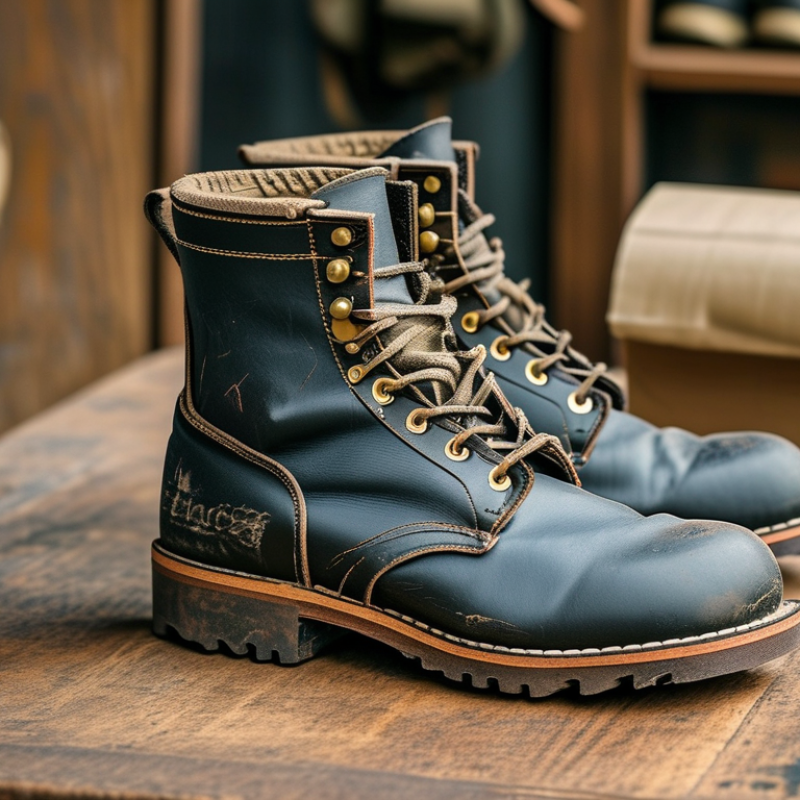
What Defines a Reliable Vintage Military Boots Supplier in China?
A reliable Chinese vintage military boots supplier is not defined by aged leather alone. It proves repeatable quality through traceable materials, controlled stitching, and honest production records. The World Footwear 2023 Yearbook reported that Asia produced 87.4% of global footwear in 2022. That scale creates strong manufacturing options, but scale alone proves little. Ask for factory details, audit dates, material specifications, and sample-to-bulk comparison photos. Proof matters.
For vintage-style boots, inspect the heel counter, welt attachment, eyelet setting, outsole bonding, and lining thickness. A dependable supplier should explain tolerances, repair rates, inspection stages, and packaging protection. Independent testing can verify abrasion, flexing, slip resistance, color migration, and chemical safety. The EU Safety Gate 2023 report recorded 3,412 alerts, with chemical risks forming 32% of notifications. Compliance files deserve careful review. The supplier should also distinguish vintage-inspired products from verified historical surplus.
Experience appears in communication, too. Request a pre-production sample, signed specifications, and a batch inspection plan. The supplier must document changes before production begins. I would not trust unusually low prices without checking leather origin, labor conditions, and replacement terms. Some suppliers look organized but still miss sizing consistency. No checklist is perfect. Even a passed sample can hide later variation. A reliable partner accepts corrective action and provides evidence, not vague promises.
China Top Vintage Military Boots Suppliers: What Defines Reliability?
A reliable vintage military boots supplier should be assessed through documented quality systems, material consistency, production capability, compliance, and fulfillment performance rather than company size alone.
The chart presents a practical procurement weighting model. Quality control and material consistency receive the highest priority because they directly influence durability, appearance, and repeat-order consistency.
Key Manufacturing Regions and Supplier Types in China
China’s vintage military boot supply chain is concentrated in several footwear regions. Wenzhou, Zhejiang, is known for leather shoes, rubber soles, and flexible production lines. Factories there often support private-label orders and moderate quantities. Quanzhou, Fujian, has strong footwear infrastructure, including molded soles and durable textile uppers. Dongguan and nearby Guangdong areas provide skilled finishing, pattern development, and material sourcing.
Supplier types differ considerably. OEM factories manufacture from your drawings, size charts, and approved samples. ODM suppliers offer existing boot patterns, then adjust colors, hardware, or tread designs. Trading companies can combine products from several factories, but production visibility may be weaker. Smaller workshops sometimes deliver impressive hand-finishing, although capacity and quality control can fluctuate. I have found that a clean sample room matters more than attractive catalog photos. Even experienced buyers can overlook uneven welt stitching or stiff ankle padding.
Tips: Request a physical sample before discussing bulk production. Check heel alignment, outsole bonding, eyelet strength, and odor after packaging. Ask for factory photos, material specifications, inspection records, and realistic lead times. Confirm that the design is a lawful fashion product, not an unauthorized official uniform. Independent inspections add cost, but they can expose defects early. One practical mistake is judging boots only by appearance. Wear testing often reveals pressure points that photographs cannot show.
How to Evaluate Quality, Authenticity, and Production Standards
China Top Vintage Military Boots Suppliers?
Evaluating a supplier starts with evidence, not attractive photographs. Ask for material specifications, factory images, production records, and recent inspection reports. Genuine vintage boots should show consistent aging, period-appropriate construction, and traceable sourcing. New reproductions need clear labeling. A supplier should never present them as original military surplus. That distinction matters for buyers and collectors.
Examine the leather closely. It should have natural grain, firm edges, and stitching with even spacing. Check the sole attachment, eyelets, heel structure, and lining. Request a sample pair before placing a large order. Wear testing can reveal loose seams, uncomfortable pressure points, or unstable soles. I have found that polished samples may hide weak finishing. A second inspection is wise. Production standards should include size tolerances, moisture checks, color consistency, and packaging protection. Ask who performs final quality control, and require dated records.
Tips:
Compare three suppliers using the same checklist. Confirm factory capacity, worker training, and corrective-action procedures. Ask for independent testing when available. Be cautious with vague claims such as “100% authentic” without documentation. Also, remember that distressed leather can look convincing while lacking durability. Supplier communication is evidence too; unclear answers often predict avoidable production problems.
Ordering, Customization, Pricing, and Export Considerations
Choosing a China-based vintage military boot supplier requires more than checking product photographs. I ask for factory videos, material specifications, and recent inspection records. Request a sample pair before discussing a large order. Examine welt stitching, heel bonding, eyelet alignment, and outsole hardness. Small faults often appear around the ankle padding. They matter during long wear. Ask whether the supplier manufactures directly or uses subcontractors. This distinction affects communication, consistency, and accountability.
Customization should be written into a technical sheet. Include leather type, thickness, lining, toe shape, sole compound, color tolerance, size grading, and packaging. A reference sample is safer than vague terms such as “authentic” or “premium.” Confirm whether logos, markings, or historical insignia are permitted in your destination market. Keep the design clearly for lawful fashion, collecting, or outdoor use. Approve a pre-production sample, but do not assume it represents every pair. Batch variation still happens.
Pricing depends on quantity, materials, tooling, inspection, and delivery terms. Compare total landed cost, not only the factory quotation. Ask for a breakdown covering sampling, cartons, freight, duties, and payment stages. For export, verify HS classification with a qualified customs professional. Check labeling, chemical restrictions, product safety rules, and import permits before shipment. Agree on Incoterms, tolerances, replacement procedures, and inspection timing. Third-party inspection can reduce disputes, although it adds cost. My own caution is simple: the cheapest offer often leaves important details undocumented.