Top Wooden Door Hinge Types for Global Buyers?
Choosing the right Wooden Door Hinge can affect a door’s movement, security, appearance, and service life. Global buyers often compare butt hinges, ball-bearing hinges, lift-off hinges, concealed hinges, and heavy-duty strap hinges. Each type suits different door weights, frame designs, traffic levels, and installation methods. A hinge that performs well on a light interior door may fail on a solid oak entrance.
This guide introduces the leading wooden door hinge types used in international projects. It considers steel, stainless steel, brass, and coated finishes. Material selection matters near coastlines, where salt air can stain ordinary steel. Hinge size also matters. A tall hardwood door may need three or more hinges, while a small cabinet-style door needs far less support. Always check the manufacturer’s tested load rating.
Small details matter.
Practical buyers should inspect pin design, knuckle alignment, screw quality, finish thickness, and opening angle. They should also confirm whether the hinge fits the door’s rebate and frame preparation. Product descriptions can sound convincing, yet some ratings lack clear testing information. That deserves caution. A perfect hinge does not exist; durability depends on installation, maintenance, door movement, and local conditions. This overview helps importers, builders, distributors, and manufacturers compare options more carefully. It also leaves room for judgment, because the lowest unit price may become expensive after noisy operation, loose screws, or repeated replacements.
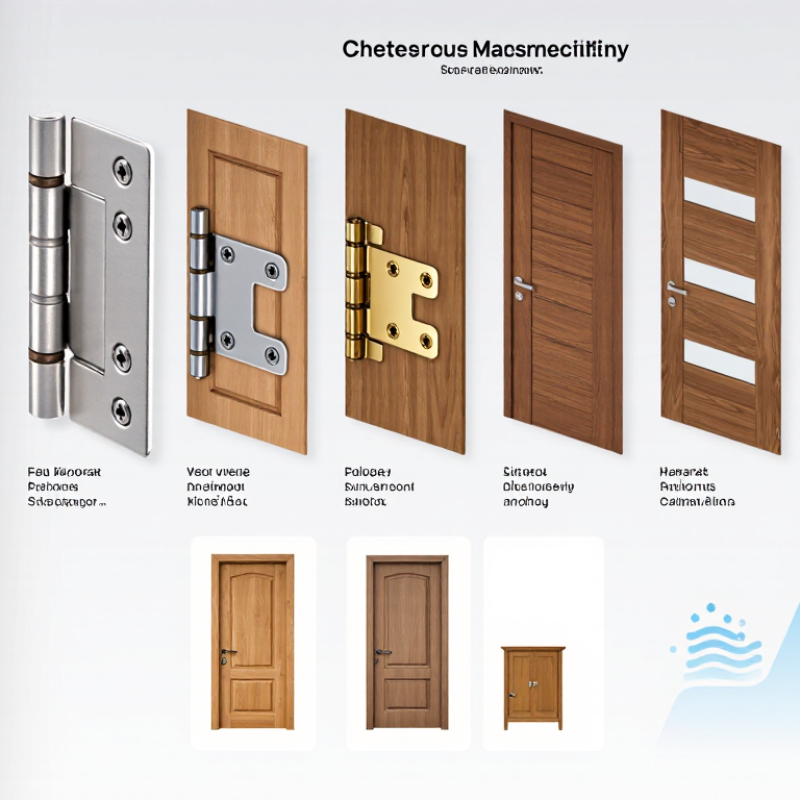
Wooden Door Hinge Basics: Structure, Materials, and Core Functions
Wooden door hinges connect the door leaf to its frame while carrying repeated opening loads. Their basic structure includes two leaves, a knuckle, a removable or fixed pin, and screw holes. The leaves distribute pressure across the timber. The knuckle guides rotation. The pin keeps the joint aligned. Butt hinges suit most interior and exterior doors. Parliament hinges offer wider clearance for shutters or doors opening away from the frame. Pivot hinges transfer weight through top and bottom points, but they require accurate installation.
Material selection affects service life. Stainless steel resists moisture and suits bathrooms, coastal homes, and utility areas. Brass provides a warm appearance and moderate corrosion resistance. Zinc alloy can reduce cost, yet heavy doors may expose its limits. Plain steel offers strength when protected by a durable finish. Check the door weight, thickness, frame condition, and hinge size together. A thick hinge can still fail if screws are too short. That detail is often missed.
Core functions include supporting weight, maintaining alignment, controlling swing, and reducing friction. Ball-bearing designs can improve movement on heavier doors. Standard hinges may be sufficient for light timber panels. During inspection, installers should look for loose screws, crushed wood, uneven gaps, and pin movement. A 3-millimeter gap change can signal frame settlement. Measurements matter. However, hinge selection is not perfectly predictable. Timber expands, finishes vary, and actual use can exceed estimates. Buyers should request load data, cycle testing, corrosion information, and installation guidance before comparing quotations.
Pivot Hinges: Supporting Heavy or Full-Height Wooden Doors
Pivot hinges suit heavy or full-height wooden doors because weight transfers through pivot points, not side-mounted screws alone. In site inspections, this arrangement has helped keep wide doors stable and visually clean. The hinge usually sits at the top and bottom, or near the head and floor. This reduces stress on the door edge. It also allows a controlled swing. Quiet movement matters. Yet pivot hardware is not automatically stronger. Door weight, width, timber moisture, and opening frequency must match the selected load rating.
Global buyers should confirm the floor structure before ordering. A stone or concrete surface may need a reinforced fixing zone. Floating floors can compress or crack under concentrated loads. The top pivot needs accurate alignment with the bottom point. Even a small error can cause rubbing, uneven gaps, or a door that slowly drifts open. Measure the slab, frame, and finished floor together. Do not rely on drawings alone. A physical mock-up often reveals clearance problems around handles and wall returns.
Choose adjustable models where installation conditions vary. Stainless or treated finishes are useful in humid rooms, coastal buildings, and frequently cleaned interiors. Ask for tested load data, cycle results, fixing instructions, and replacement parts. These documents support reliable procurement across markets. However, specifications can look convincing and still hide weak assumptions. We once found a heavy door rated correctly on paper, but its soft timber core could not hold the screws securely. The hardware was fine; the substrate was not. For safer performance, pair the pivot with suitable reinforcement, a proper floor anchor, and a qualified installer. Then inspect alignment after the first weeks of use.
Concealed Hinges: Creating a Clean, Modern Door Appearance
Concealed hinges give wooden doors a quiet, uninterrupted face. With the door closed, the hardware disappears into the stile and frame. This suits modern homes, hotels, offices, and flush interior doors. The effect is clean, but installation is less forgiving. Carpenters must cut accurate pockets for both hinge leaves. A small error can create uneven reveals or rubbing edges.
For global buyers, check the hinge’s load rating, adjustment range, and corrosion resistance. A three-dimensional hinge usually permits height, side, and depth adjustment. That helps installers maintain an even 3 mm door gap during seasonal movement. However, adjustment cannot repair weak timber or an overloaded door. Solid oak, engineered wood, and hollow-core doors need different fixing methods. Ask for test samples before approving a large order. Open and close each sample repeatedly. Inspect screw pull-out, movement, and finish wear.
Door thickness matters. So does frame construction. Some concealed hinges suit standard interior doors, while others support thicker or heavier panels. Confirm the required routing depth and compatible screw length. Moist rooms also deserve attention. Unprotected steel may stain surrounding wood over time. Stainless or treated materials can reduce that risk, but coating quality still needs verification. A nearly invisible hinge is not always the best choice. If future servicing is difficult, a visible adjustable hinge may be more practical. That trade-off deserves honest review.
Top Wooden Door Hinge Types for Global Buyers
Concealed Hinges: Creating a Clean, Modern Door Appearance
Common concealed-hinge formats offer different nominal opening angles. Compact cabinet-style hinges are typically available around 95°–120°, while architectural invisible hinges can support wider opening ranges, including approximately 180° designs. Buyers should verify door weight, thickness, frame construction, adjustment range, and installation requirements before selection.
How to Select the Right Hinge for Global Door Applications
Top Wooden Door Hinge Types for Global Buyers?
How to Select the Right Hinge for Global Door Applications
Selecting a hinge for a wooden door requires more than matching its finish. Butt hinges suit many standard interior doors and offer simple installation. Ball-bearing hinges reduce friction on heavier doors used frequently. Concealed hinges create a clean appearance, but they demand accurate routing and careful adjustment. Pivot hinges can support distinctive designs, although installation errors may affect alignment.
Start with the door’s weight, thickness, width, and opening frequency. A solid oak entry door needs stronger support than a lightweight bedroom door. Check the hinge leaf size, screw position, pin design, and load rating. Three hinges may work for a medium door, while taller or heavier doors often need additional support. Measure twice.
Climate also changes the specification. Coastal air, high humidity, and large temperature swings can accelerate corrosion or cause wood movement. Stainless steel or protected steel may perform better in demanding environments. Confirm that the hinge material matches the door hardware and surrounding conditions. Finish matters, but it should not replace structural testing.
Global buyers should request installation drawings, material details, tolerance information, and quality inspection records. Verify regional building, accessibility, and fire-door requirements before ordering. A common mistake is choosing by appearance alone. Another is assuming every “heavy-duty” label means the same thing. Testing a sample door under real use can reveal noise, sagging, or loose screws. Specifications sometimes look perfect on paper. Real doors are less forgiving.