





Blog
Why Are Make Up Pouches Essential for Global Buyers?
For global buyers, Make Up Pouches are more than attractive packaging. They protect products, support brand presentation, and simplify daily customer use. A well-designed pouch can hold foundation, brushes, compact powder, and small skincare items without creating unnecessary clutter. Buyers notice practical details. A smooth zipper, reinforced seams, and a washable lining can influence repeat purchases.
In sourcing projects, experienced buyers usually examine material quality, dimensions, printing accuracy, and production consistency. A sample may look excellent under showroom lighting, yet feel weak after repeated opening. That matters. Suppliers should provide clear specifications, stable color references, and reliable quality checks before mass production. Certifications and material documentation also deserve careful review, especially when products enter different international markets. Packaging choices should respect applicable safety, labeling, and environmental requirements.
Make Up Pouches can also reduce transport concerns when their structure is lightweight and space-efficient. Flat designs may lower storage pressure, while structured cases can offer stronger protection. The right option depends on product type, target customers, budget, and sales channel. There is no universal answer.
Small details matter most.
A gold zipper may photograph beautifully but scratch easily. A recycled fabric may support sustainability goals, but its texture can vary between batches. Buyers should ask difficult questions before approving a design. They should test samples in real conditions, not only trust attractive product images. Reliable communication, honest timelines, and documented inspections build stronger international partnerships. Even careful decisions can require adjustment. That is normal, and it is often how better pouches are developed.
What Are Makeup Pouches and How Do They Work?
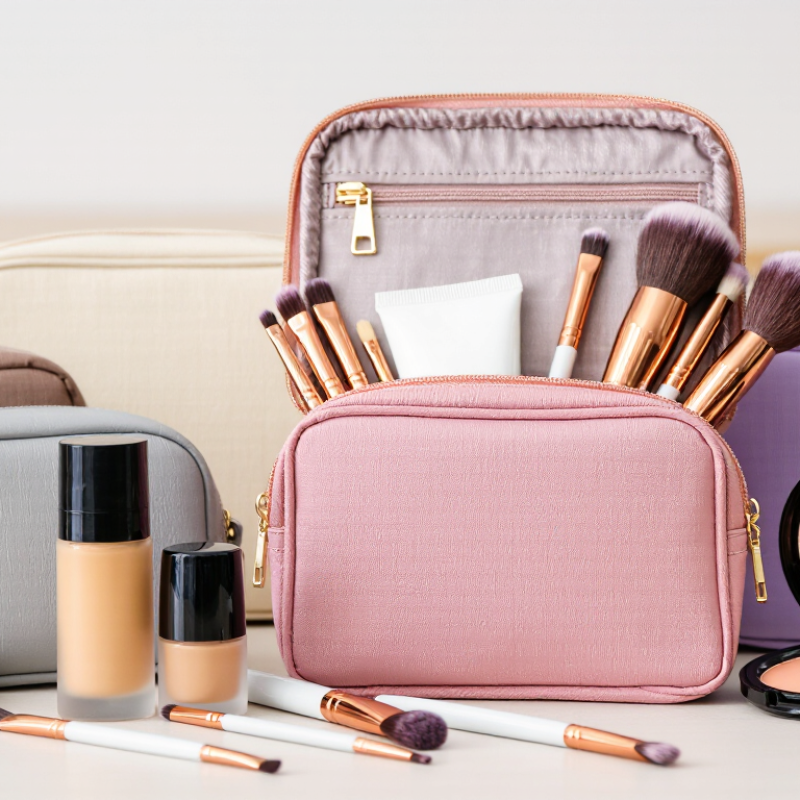
A makeup pouch is a compact storage case designed to hold cosmetics, brushes, and small personal-care items. It usually combines a fabric or synthetic outer layer with a lined interior. A zipper, snap, or drawstring keeps the contents inside during travel.
Simple design.
The pouch works by creating separate spaces for products that would otherwise move together. Elastic loops can secure brushes, while mesh pockets keep small items visible.
A wipe-clean lining helps manage powder, cream, and occasional spills. However, it does not prevent every leak. A poorly closed bottle can still damage the pouch and nearby items.
For global buyers, practical construction matters as much as appearance.
Buyers should check seam strength, zipper movement, lining quality, and the pouch’s measured capacity. A sample packed with real products reveals problems that product photos hide. For example, a flat pouch may look elegant but fail to hold rounded containers.
Water-resistant fabric can improve daily use, although “water-resistant” does not mean waterproof.
Buyers should also confirm dimensions, material composition, color consistency, and packaging requirements before placing large orders. These checks support clearer purchasing decisions and reduce avoidable quality disputes.
A pouch may be attractive, yet uncomfortable or difficult to clean. That trade-off deserves honest attention.
Why Are Makeup Pouches Important for Global Beauty Buyers?
Makeup pouches are important for global beauty buyers because they combine organization, protection, and daily convenience. A well-designed pouch keeps brushes, bottles, and compact products separated during travel. It can prevent powder from spreading inside a suitcase. It also helps users find small items quickly in busy mornings. Buyers often assess zipper strength, lining quality, stitching, and internal pockets before placing large orders. These details influence customer satisfaction more than decorative features alone.
From practical sourcing experience, size must match real routines. A pouch for personal travel needs different space from one used by professional makeup users. Water-resistant lining is useful after a product leaks, although it cannot replace careful packaging. I once underestimated how easily a stiff zipper could scratch delicate items. That mistake showed why samples should be tested with real products, not empty containers. Buyers should also check material consistency, odor, seam finishing, and cleaning performance across several samples. Reliable suppliers should provide clear measurements and honest production details.
Tips: Test the pouch with full-size products. Check zipper movement at least fifty times. Inspect corners and handles closely. Ask for material details and sample photos. Consider compact shipping, but do not reduce durability for a lower cost. A smaller pouch may look attractive online, yet users can reject it when brushes bend or bottles cannot stand upright. Feedback from different markets matters because beauty habits and product sizes vary widely.
| Buyer Dimension | Why It Matters | Typical Practical Data | Global Purchasing Consideration |
|---|---|---|---|
| Product Organization | Separates cosmetics, skincare items, brushes, and personal-care accessories in luggage or retail displays. | Multi-compartment designs Common features include one main compartment, inner pockets, elastic loops, or a zippered divider. | Compartment layouts should match the intended product assortment and reduce searching time during travel or daily use. |
| Travel Capacity | Different consumers require different pouch sizes, from a small daily kit to a larger travel organizer. | Typical size range Small: approximately 15–20 cm wide; medium: 20–28 cm wide; large: over 28 cm wide. | Buyers should compare the internal usable capacity rather than relying only on external dimensions. |
| Material Selection | Material affects appearance, durability, cleanability, weight, and perceived product value. | Common materials Polyester and nylon offer lightweight construction; cotton offers a textile feel; coated fabrics provide easier surface cleaning. | Material descriptions should state the fiber or coating clearly because “waterproof” and “water-resistant” are not identical claims. |
| Spill Protection | Cosmetics may contain liquids, creams, oils, powders, or pigments that can leak or create stains. | Protective construction Useful features include a wipe-clean lining, sealed seams, structured panels, and a secure zipper closure. | No pouch can guarantee leak prevention for every container; buyers should evaluate lining coverage and closure quality. |
| Cleaning and Hygiene | Makeup residue and skincare products can accumulate inside a pouch during repeated use. | Maintenance Coated or synthetic linings are generally easier to wipe clean; textile products require care instructions suited to the fabric. | Care labels should identify whether the pouch is suitable for wiping, hand washing, or machine washing. |
| Closure Durability | The zipper or closure is opened frequently and protects the contents from falling out. | Key checkpoints Inspect zipper smoothness, pull-tab attachment, stitching density, end stops, and alignment along the opening. | Sample testing should include repeated opening and closing, overfilled use, and transport simulation. |
| Weight and Portability | A lightweight pouch helps reduce the total weight of a travel or handbag kit. | Design balance Lightweight fabrics reduce bulk, while foam, lining, and structural panels increase protection but add weight. | Global buyers should balance empty product weight with the level of protection required by the target market. |
| Size and Measurement Units | International buyers use different measurement systems and packaging standards. | Useful conversions 1 inch = 2.54 cm; dimensions should be listed as length × width × height when the pouch has depth. | Product specifications should include both centimetres and inches to reduce ordering and listing errors. |
| Sustainability Profile | Material composition, durability, packaging, and end-of-life options influence environmental claims. | Verification points Request fiber composition, recycled-content documentation where applicable, packaging details, and care information. | “Recyclable,” “recycled content,” and “biodegradable” describe different properties and should not be used interchangeably. |
| Customization Potential | Pouches can support different retail positions without relying on a specific brand identity. | Common options Color, size, lining, zipper pull, handle, pocket layout, printed artwork, woven label, and packaging format. | Customization should be confirmed with a physical sample because color, texture, and print appearance may vary by material. |
| Compliance and Documentation | Import requirements may vary according to destination, material, labeling, and packaging claims. | Recommended documents Material composition, care instructions, country-of-origin information, test reports when required, and packaging specifications. | Buyers should verify destination-market requirements before mass production or shipment. |
| Retail Presentation | A well-structured pouch can be sold as a practical accessory, travel item, gift item, or beauty organizer. | Merchandising features Flat construction supports efficient packing; gussets, handles, and transparent panels improve product visibility or usability. | Packaging dimensions and display format should be planned together with the intended retail channel. |
Which Materials and Designs Suit International Markets?
Make Up Pouches for International Markets
Material selection shapes a pouch’s value, durability, and market suitability. Recycled polyester offers a smooth surface and resists light moisture. Nylon feels lighter, yet it may need stronger stitching around the zipper. Cotton canvas creates a natural appearance, but it absorbs water more easily. For humid regions, a coated lining can protect powders and creams from damp air. Keep it practical. Heavy materials may raise shipping costs and reduce retail appeal.
Design should reflect different routines, climates, and purchasing habits. A wide opening helps users find small items quickly. Flat pouches save space in luggage and store displays. Separate compartments suit brushes, bottles, and compact cases. Smooth zippers reduce snagging, while reinforced corners handle repeated travel. Neutral colors often support wider markets, but local color preferences still deserve research. Simple layouts are easier to produce consistently.
International buyers also examine cleaning, packaging, and supply reliability. Materials should have clear specifications, stable color performance, and dependable quality checks. Suppliers need to verify applicable labeling and safety requirements for each destination. Avoid vague claims such as “eco-friendly” without supporting details. A pouch may look attractive in a sample, then disappoint after repeated washing. That weakness matters. Testing should include zipper cycles, seam strength, abrasion, and moisture exposure. No design fits every market, and changing one feature can create another problem.
Why Are Make-Up Pouches Essential for Global Buyers?
Material selection and pouch structure increasingly influence international compliance, recyclability, and market acceptance. The chart below shows the European Union’s legally defined 2030 minimum recycling targets for common packaging materials, providing a useful benchmark for global packaging design.
Design implication: Mono-material PE or PP pouches can support simpler recycling pathways than complex multi-layer structures, while lightweight flexible formats help reduce material use during transport. Final recyclability depends on local collection and sorting systems.
Source: European Commission, Packaging and Packaging Waste Directive 2018/852, 2030 recycling targets.
How Do Makeup Pouches Support Branding and Product Safety?
For global buyers, a makeup pouch is more than a container. It is a daily touchpoint between a product and its user. A well-made pouch can display a logo, color system, or message without overwhelming the package. Clean printing, consistent stitching, and a useful shape make branding feel deliberate. Buyers should request material samples before approving large orders. Photos can hide weak seams. Small details matter. A zipper pull, lining, and handle all affect perceived quality.
Product safety begins with material selection and practical construction. Suppliers should explain fabric composition, coating details, odor control, and colorfastness. Inner linings help separate cosmetics from outside dirt and reduce staining. Smooth edges protect hands and prevent damage to nearby products. Secure closures also lower the chance of spills during travel. Quality checks should include seam strength, zipper performance, surface rubbing, and packaging cleanliness. Test results are valuable, but real-use trials reveal problems paperwork may miss. This is where buyer experience matters.
Branding and safety must work together, not compete. A heavily printed pouch may look attractive but transfer ink or feel unpleasant if poorly finished. Buyers should verify artwork placement, label accuracy, and production consistency. They also need clear care instructions for end users. No pouch is perfect. Heat, moisture, and repeated washing can expose design weaknesses. A small pilot order can reveal these issues before wider distribution. Honest supplier communication, traceable inspections, and realistic performance claims build stronger purchasing decisions across markets.
What Should Global Buyers Consider When Choosing a Supplier?
Why Are Make Up Pouches Essential for Global Buyers?
Makeup pouches protect products during shipping, storage, and daily use. Their shape also supports organized retail displays and travel-friendly packaging. Global buyers should examine the supplier behind the pouch, not only the sample shown on a screen.
Material knowledge matters. Ask whether the supplier can provide fabric specifications, coating details, zipper information, and test records. A pouch may look attractive but fail after repeated opening. Request samples with different loads, then check stitching, odor, color consistency, and seam strength. Small details matter.
Production experience is equally important. Buyers should review factory photographs, quality procedures, production capacity, and previous export experience. Clear communication helps prevent mistakes in dimensions, printing, packing, and delivery schedules. Ask how defects are recorded and corrected. Real answers are more useful than polished promises.
Compliance should be verified carefully. Suppliers must provide accurate material documentation and follow the destination market’s packaging and product requirements. Avoid vague claims such as “eco-friendly” without supporting evidence. Recycled content, solvent use, and disposal guidance should be explained clearly. This area is often overlooked.
Cost still matters. However, the cheapest quote may exclude testing, stronger hardware, or protective packaging. A detailed quotation reveals hidden differences. Buyers should compare total value, not just unit price. A small trial order can expose weaknesses before a large commitment. It may feel slower, but rushed sourcing creates expensive problems. No supplier is perfect. Reliable partners admit limitations, document changes, and improve after feedback.


