





Blog
Why Choose a Curling Iron Straightener Supplier from China?
Choosing a curling iron straightener supplier from China can offer access to established manufacturing networks, component sourcing, and product customization. The market opportunity is real, but supplier quality varies. Grand View Research estimated the global hair styling tools market at USD 30.09 billion in 2023 and projected a 5.7% compound annual growth rate from 2024 to 2030. Its category includes multiple tools, so this figure does not measure curling straighteners alone. That distinction matters.
For buyers exploring curling iron straightener service from china, market size is only a starting point. A reliable partner should explain heating-element options, temperature controls, plate or barrel materials, packaging, and production lead times in clear terms. Ask for product specifications, sample units, and documented quality checks before placing a large order. Check that the sample heats evenly and that controls respond consistently. Small details count. A polished catalog does not prove consistent factory performance, and a low quotation may leave key costs unclear. Request written terms for sampling, customization, inspection, and after-sales support. Where possible, verify claims through an independent audit or product testing appropriate to the destination market. Grand View Research offers useful market context, not a supplier endorsement. There is no shortcut here. Comparing several manufacturers takes time, but it helps buyers judge whether the service, product, and communication match their needs. A careful decision may feel slower; it is usually the more dependable one.
What Defines a Curling Iron Straightener Supplier in China?
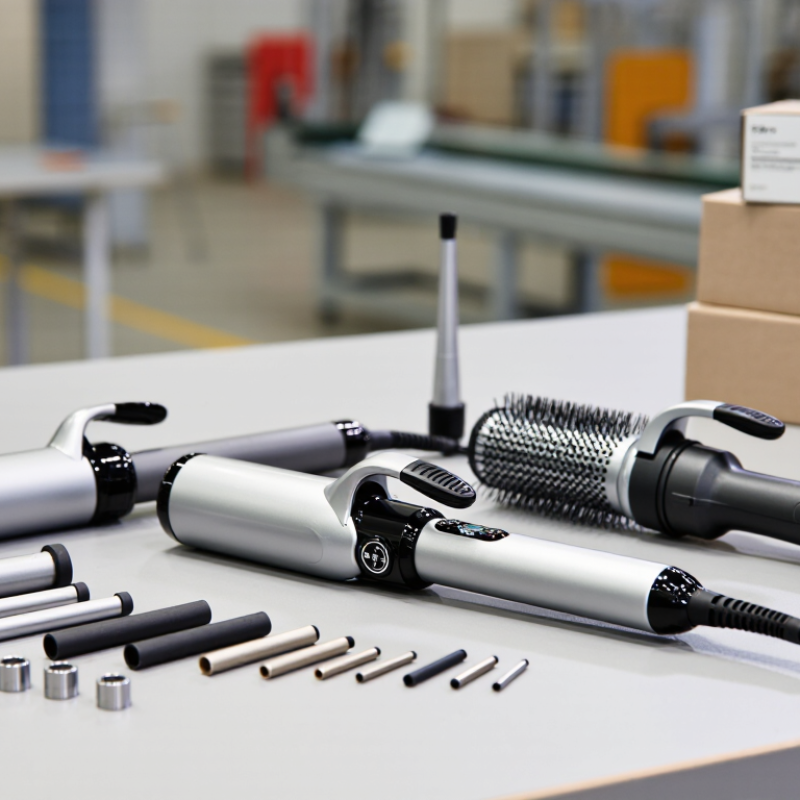
A reliable curling iron straightener supplier in China is defined by process control, not a polished catalog. The supplier should explain how barrel temperature, plate alignment, and handle insulation are checked during production. Ask for test records, including heat-up time and temperature variation across several units. Small details matter. A sample that heats evenly on a workbench may behave differently after repeated use. That gap deserves attention. Strong suppliers welcome specific questions about materials, assembly tolerances, and inspection frequency.
Look for clear communication from engineering through packaging, with written specifications that match the approved sample. Confirm the cord length, voltage options, coating type, and automatic shutoff behavior before ordering. A dependable team also describes how it handles defects and provides realistic production lead times. Not every answer will be perfect. A supplier may need to revise a drawing or clarify a test method. Honest correction beats vague reassurance. Compare pilot units from separate production runs when possible. Consistency is harder to prove than one good sample.
Why Choose a Curling Iron Straightener Supplier from China?
A capable supplier should confirm that each product is designed and tested for the electrical requirements of its destination market. The chart shows typical nominal household supply voltages; actual requirements can vary by country and region.
How China’s Hair Styling Appliance Industry Supports Production
China’s hair styling appliance industry supports production through a broad network of component makers, tooling workshops, and assembly facilities. Many factories can source heating elements, temperature controls, cords, and housing parts within the same manufacturing region. That proximity may help teams coordinate design changes and manage production schedules. Small details matter.
For a curling iron straightener, production involves more than assembling a heated plate and handle. Engineers need to match the heating element with the temperature control system and the appliance’s intended use. Teams can inspect plate alignment, cord connections, surface finish, and heat consistency during development. Testing should cover repeated heating cycles, not just a quick power-on check. Heat consistency matters.
Buyers can ask suppliers for product specifications, sample units, quality-control procedures, and clear records of test results. Visiting a factory or arranging an independent inspection can help confirm that actual production matches the sample. A supplier’s ability to explain materials and process controls is useful, but claims still need verification. The manufacturing network is capable, though not flawless; communication gaps or component changes can disrupt a run. Even a small finish difference may need another round of review.
What Advantages Chinese Suppliers Offer to Buyers
Chinese suppliers can offer buyers a broad manufacturing network for curling iron straighteners, including heating elements, temperature controls, housings, and packaging. When these components are sourced nearby, factories may coordinate changes more quickly and provide several design options. A buyer can compare handle shapes, plate coatings, cord lengths, and temperature settings before committing to a larger order. That matters.
Many suppliers also support product sampling and private-label customization, which helps buyers test grip comfort and heat consistency in real use. Ask for clear specifications, such as temperature range, warm-up time, and test procedures, rather than relying on attractive product photos. Some factories can adjust packaging or accessories to fit a retailer’s needs. This is not automatic, though; capabilities differ, and sample quality may not match bulk production unless controls are agreed in writing.
China’s established export infrastructure can make shipment planning and supplier coordination more accessible for international buyers. Still, distance and time-zone differences can slow conversations, and the lowest quote may exclude useful testing or packaging details. Request a production schedule, inspect samples, and confirm what quality checks are performed on finished units. Keep the questions specific. A careful supplier should explain limitations as well as strengths.
How to Assess Product Quality and Supplier Reliability
Why Choose a Curling Iron Straightener Supplier from China?
How to Assess Product Quality and Supplier Reliability
China offers broad manufacturing capacity, but a low quote alone says little about quality. Grand View Research estimated the global hair styling tools market at USD 5.28 billion in 2023 and projected 5.7% annual growth through 2030. Growing demand makes careful supplier checks more important. Ask for test reports matching the exact model, not a similar unit. For heated hair appliances, review relevant safety testing, including IEC 60335-2-23. Check temperature stability, plate coating, cord strain relief, and automatic shutoff. Small details matter. A polished sample can still hide weak batch controls.
Assess reliability through evidence. Request production-line photos, quality-control records, and a written defect-handling process. Compare the sample with units selected from a production run; test heat-up time and temperature consistency with the same thermometer. Confirm packaging, lead time, and spare-part availability in writing. A factory audit or independent inspection can reveal gaps that video calls miss. Still, one inspection is only a snapshot, not a guarantee.
Tips: Ask for a pilot order before scaling. Keep dated samples and inspection results. If a supplier avoids clear answers, pause—even when the price looks attractive.
Which Factors Shape Sourcing Costs and Delivery Timelines
Why Choose a Curling Iron Straightener Supplier from China?
Which Factors Shape Sourcing Costs and Delivery Timelines
Sourcing costs depend on the product specification, order volume, and level of customization. A dual-function styling tool may need different plates, temperature controls, cord lengths, or housing materials. Each change can affect component costs and assembly time. Keep the specification clear. Even small differences matter.
Minimum order quantities influence unit pricing, but the lowest quote may not reflect the full cost. Ask whether packaging, sample development, quality checks, and shipping are included. A sample with a smooth hinge and consistent heat settings can reveal issues that a price sheet cannot. Estimates can still miss details; confirm what each quote covers in writing.
Delivery timelines depend on component availability, production capacity, inspection, and freight arrangements. Custom molds or packaging usually add time, while peak seasons can make schedules less predictable. Request a production schedule with sample approval, manufacturing, inspection, and dispatch dates separated. Allow room for delays. Before shipment, agree on measurable checks for temperature accuracy, electrical safety features, finish quality, and carton condition. A realistic timeline is more useful than an optimistic promise.
| Sourcing Factor | Typical Planning Range | Effect on Cost | Effect on Delivery Timeline | Practical Sourcing Note |
|---|---|---|---|---|
| Product specifications and materials | Depends on features such as temperature settings, heating technology, plate or barrel material, cord design, and voltage configuration. | Higher-grade components, added controls, and more complex designs generally increase unit cost. | New or less common components may require additional sourcing, testing, or production setup time. | Confirm the target market’s voltage, plug, temperature range, and product dimensions before requesting a quotation. |
| Order quantity and MOQ | Minimum order quantities vary by factory, product configuration, and customization; they are commonly negotiated per model and order. | Larger orders may reduce per-unit production and packaging costs, while smaller runs can carry setup or customization charges. | Large orders may require a longer production slot; small orders are not necessarily faster if components must be specially sourced. | Ask suppliers to quote several quantity tiers so the effect of volume on unit price is clear. |
| Samples and product approval | Sample preparation often takes about 7–15 days, depending on whether an existing model or a modified design is used. | Sample, courier, and engineering charges may apply; some suppliers credit sample fees against a later order. | Approval changes can add time before mass production begins. | Approve the final sample and written specifications before placing or releasing a production order. |
| Tooling and design customization | Existing designs may need little setup; new molds, housing changes, or custom components require a separate assessment. | Tooling is generally an upfront cost and can raise the total cost of a low-volume project. | Tool design, manufacture, and validation can add several weeks, depending on complexity and revision rounds. | Confirm tooling ownership, maintenance responsibilities, and whether tooling charges are refundable or amortized. |
| Compliance and product testing | Requirements depend on the destination market. Electrical hair-care appliances may need assessment against applicable safety and electromagnetic compatibility rules. | Testing, documentation, factory audits, and market-specific certification can add project costs. | Testing and corrective actions can extend the schedule, especially if the product or components need changes. | Identify applicable standards and documentation with a qualified testing or compliance provider; do not assume one certificate covers every market. |
| Packaging and labeling | Options range from standard packaging to custom cartons, inserts, manuals, and market-specific labels. | Custom printing, special materials, and small print runs can increase per-unit packaging costs. | Artwork approval and packaging procurement may affect production readiness. | Finalize language, electrical ratings, warnings, barcode details, and packaging artwork before mass production. |
| Mass production and quality inspection | A common planning estimate is about 25–45 days after specifications, materials, packaging, and production details are confirmed. | Inspection level, rework, and agreed quality requirements can affect total project cost. | Production capacity, component availability, and inspection results influence the actual completion date. | Agree on quality criteria, inspection timing, defect handling, and shipment-release conditions in writing. |
| Freight, Incoterms, and destination | Transit time varies by destination, route, carrier, and transport mode; ocean freight is generally slower than air freight. | Freight, insurance, duties, taxes, and local handling charges affect landed cost. Air freight usually costs more per unit than ocean freight. | Port congestion, customs clearance, peak seasons, and inland delivery can add time beyond production. | Compare quotations on the same Incoterm and destination basis, and distinguish production lead time from total door-to-door transit time. |


