Why Choose a Round Trampoline?
A Round Trampoline can suit a compact yard, a family play area, or a space where users want a simple, symmetrical layout. Its circular frame gives the jumping surface a clear center, while the enclosure, springs, mat, and frame still determine how the product performs. Shape alone does not guarantee safer bouncing. Check the model’s weight limit, frame stability, padding, enclosure, and assembly instructions before buying.
Safety deserves equal attention. The American Academy of Pediatrics’ 2012 policy statement, coauthored by pediatrician Dr. Carden Johnston, cites U.S. estimates of nearly 100,000 trampoline-related injuries in 2009 and about 3,100 hospitalizations. The statement says: “The American Academy of Pediatrics recommends that trampolines not be used at home, in routine physical education classes, or in outdoor playgrounds.” That is a serious caution, not a product comparison. The figures cover trampolines generally; they do not show that round models are safer or riskier than other shapes.
A careful choice starts with the people using it and the space around it. Measure the yard, note nearby walls or branches, and leave room for safe access. Then compare construction details, warranty terms, and replacement-part availability. Small details matter. A loose net or exposed spring can change the experience quickly. No shape is magic. A round model may fit your needs, but regular inspection and close supervision remain essential. Manufacturers’ claims can sound reassuring; verify them against clear specifications and credible safety guidance.
What Defines a Round Trampoline?
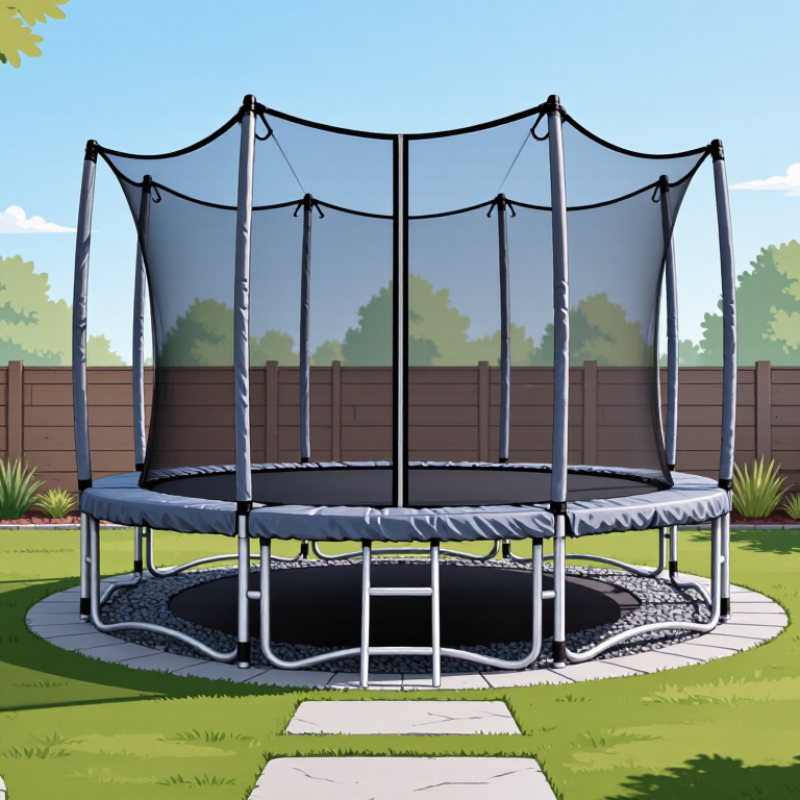
A round trampoline is defined by its circular frame and matching jumping mat. Springs connect the mat’s edge to the frame, creating a continuous, ring-shaped bounce surface. Unlike a rectangular trampoline, it has no corners. Its geometry is designed to direct movement toward the middle, though actual bounce depends on spring tension, mat condition, and where someone lands. Shape matters, but it does not tell the whole story.
The ASTM F381-16 standard covers trampoline components, assembly, use, and labeling. It is a useful reference for understanding how design details matter; a round shape alone does not indicate compliance. The U.S. Consumer Product Safety Commission estimated 104,691 trampoline-related emergency-room-treated injuries in 2014. That figure is dated, but it underlines why frame shape should not be treated as a safety guarantee. Enclosure design, padding, assembly, and supervision also matter.
Tip: Check that springs are evenly spaced and covered, the frame sits level, and the mat has no tears. A small gap in the padding can be easy to miss. Inspect it before each use.
Key Benefits of Choosing a Round Trampoline
A round trampoline suits many backyards because its shape is simple to place and leaves no corners to work around. Its circular mat creates a clear central jumping area, while the frame and springs follow a consistent perimeter. That can make assembly and routine visual checks easier, though careful setup still matters. Measure the yard first; allow open space around the frame and keep it away from fences, trees, and hard surfaces.
Round does not mean risk-free. The American Academy of Pediatrics’ clinical report, drawing on U.S. Consumer Product Safety Commission surveillance, estimated about 100,000 trampoline-related emergency department visits in 2009. That figure is older, but it underscores why supervision, one jumper at a time, and regular checks for torn matting or loose springs matter. A round design can help organize the jumping space; it cannot prevent collisions or poor landings.
There is a practical benefit, too: a circular form often fits neatly into open lawn areas, and its uncluttered outline is easy to see from a patio or window. Still, the best fit depends on the yard, the number of users, and the available safety clearance. I would not choose by shape alone. Check the manufacturer’s weight limits and safety guidance, then inspect the enclosure, padding, and frame before use.
How to Select the Right Round Trampoline
Why Choose a Round Trampoline?
How to Select the Right Round Trampoline
Start with the space, not the trampoline. Measure the usable area, then leave clear room around the frame for movement and access. Check overhead branches, low wires, and nearby walls. A model that fits on paper may feel cramped once its safety enclosure is installed.
Round trampolines suit many family yards because their shape encourages jumpers toward the center. Size still matters. A smaller mat can feel crowded when several children take turns, while a larger frame needs more open ground. Measure twice. Set the trampoline on firm, level ground, and check the maker’s installation guidance for required clearance.
Read the listed weight limit and age guidance before buying. The limit applies to the combined load, not just one jumper, so avoid simultaneous use unless the instructions permit it. Look for a secure enclosure, covered springs, and a frame that feels stable when assembled. Small details matter. Inspect stitching, padding, and fasteners regularly; weather and frequent use can loosen or wear them. One detail is easy to overlook: entry access. A zipper or latch should be simple for an adult to check, but children should not be left unsupervised. Consider storage and seasonal weather, too. A cover may help, but it does not replace routine inspection.
Why Choose a Round Trampoline? How to Select the Right Round Trampoline
Round trampolines are a popular choice for home use because their shape provides a central jumping area. This chart compares example diameters with the circular footprint area calculated using A = π × (diameter ÷ 2)². The figures are geometric estimates, not usable mat area; check the product’s actual dimensions and allow for the manufacturer’s recommended clearance when choosing a size.