




Blog
Why Choose a Slim Smart Lock for Global Sourcing?
Global buyers are rethinking door hardware as connected-home demand expands. Grand View Research valued the global smart lock market at USD 2.57 billion in 2022. It projects a 19.6% compound annual growth rate from 2023 to 2030. MarketsandMarkets also forecasts strong adoption through hospitality, rental housing, and residential projects.
A Slim Smart Lock fits narrow doors, metal frames, and modern interior designs. Its compact body can simplify installation where standard locks create clearance problems. Buyers can also reduce packaging volume and improve product presentation. Small details matter. A two-millimeter fit can affect an entire installation batch.
David VanWert, a smart-home technology consultant, has emphasized, “The smart home should make life easier, not more complicated.” That principle matters during global sourcing. Buyers need reliable credentials, stable mobile applications, clear installation guides, and responsive after-sales support. Matter compatibility may improve interoperability, while Bluetooth, Wi-Fi, and fingerprint options address different project needs.
Yet slim does not automatically mean better. Some compact designs limit battery capacity or internal motor strength. That trade-off deserves testing. Samples should face repeated locking cycles, low-battery conditions, moisture exposure, and emergency access checks. Certification requirements also differ across markets, so one specification may not fit every region.
The opportunity is real. So is the risk. A disciplined sourcing process should compare security architecture, materials, firmware support, warranty terms, and supplier production records before selecting a Slim Smart Lock.
What Is a Slim Smart Lock and How Does It Work?
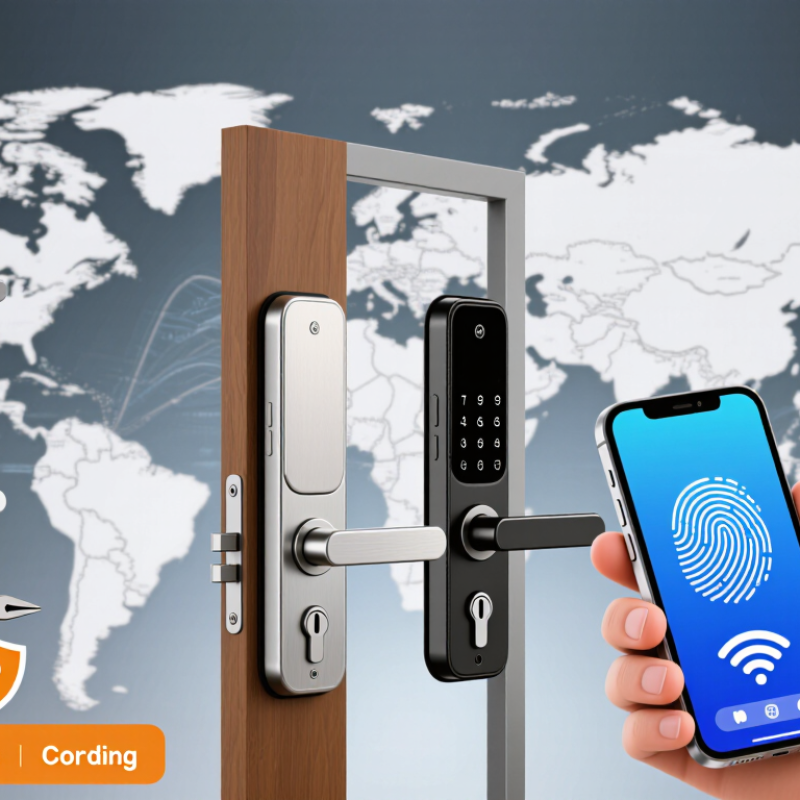
A slim smart lock is an electronic door-locking system designed to fit narrow doors or existing lock spaces. Its compact body usually contains a small motor, control board, battery compartment, and position sensors. Unlike a traditional lock, it can receive access commands through Bluetooth, Wi-Fi, or another approved wireless protocol.
Here is the basic process. An authorized user sends a command from a phone, keypad, fingerprint reader, or access platform. The lock verifies the credential, then powers a motor that turns the cylinder or thumb-turn. Sensors confirm whether the door is locked, unlocked, or partly closed. A low-battery alert may appear before the motor loses power. A physical key or interior thumb-turn remains important.
Small details affect global sourcing.
Door thickness, backset, cylinder type, and strike-plate position must match the target market. A lock that fits one apartment door may fail on another. I have found that measurement drawings are more useful than attractive product photos. Suppliers should provide battery tests, wireless security information, installation instructions, and documented safety testing. Regional requirements can also differ, so importers need local verification rather than assumptions.
Slim does not mean simple. Limited internal space can reduce battery capacity or motor strength. Some fingerprint readers also perform poorly with wet or damaged fingers. That weakness matters. Sample units should be tested on real doors, across repeated locking cycles, before any large order is considered.
Which Features Define a High-Quality Slim Smart Lock?
A high-quality slim smart lock begins with a precise fit. Its body should suit narrow doors without weakening the internal mechanism. Check the backset, door thickness, cylinder position, and available clearance before discussing price. A few millimeters can change installation results.
Durable materials matter. Reinforced metal, protected sensors, and a stable latch support repeated daily use. The lock should also provide secure communication, encrypted data handling, and controlled user permissions. Look for tested performance rather than attractive specifications. Independent safety and electromagnetic compliance reports add credibility. Battery alerts must appear early, while emergency power access should remain simple and reliable. Mechanical entry is still valuable.
Testing should reflect real conditions. Suppliers need to examine heat, humidity, dust, impact, and thousands of locking cycles. Ask for sample reports, traceable production records, and clear quality-control procedures. App compatibility and integration also deserve attention. A lock that works only under ideal network conditions may disappoint property managers and installers.
No model is perfect. A slimmer housing can limit battery space or motor strength. I have seen sourcing decisions focus too heavily on appearance. That mistake becomes expensive during installation. Request production samples, inspect hidden components, and test them on different door types. Clear firmware updates, spare-part access, and responsive technical support can define long-term reliability more than a polished product page.
Why Do Global Buyers Choose Slim Smart Locks?
Global buyers choose slim smart locks because compact design solves practical problems in modern housing and hospitality projects. A narrow body fits more door styles, especially aluminum frames, glass doors, and older wooden doors. It also preserves a clean appearance when interior space is limited. This matters to architects, distributors, and property managers seeking easier installation without major door changes.
In product evaluations, I look beyond appearance. Reliable buyers compare locking strength, battery endurance, emergency power options, and mobile access stability. A slim lock should support clear installation instructions and consistent quality control. It must also match regional door thickness, cylinder positions, and hardware requirements. A low profile is useful, but it is not automatically better. Some thin designs leave less room for batteries or internal protection. That trade-off deserves honest testing.
Tips: Request samples before placing a large order. Test the lock on several real door types, not only a showroom panel. Check battery performance in cold and humid conditions. Ask for material details, factory inspection records, and market-appropriate certifications. Confirm software language, user permissions, and after-sales support. Small oversights can become expensive. Global sourcing is rarely perfect, and even experienced buyers sometimes underestimate installation differences between regions.
Why Choose a Slim Smart Lock for Global Sourcing? - Why Do Global Buyers Choose Slim Smart Locks?
| Sourcing Dimension | Typical Slim Smart Lock Data | Why It Matters to Global Buyers | Recommended Verification |
|---|---|---|---|
| Lock Body Profile | Many slim models use an exterior escutcheon approximately 35–45 mm wide and 12–20 mm thick; exact dimensions vary by cylinder and handle design. | A compact profile is easier to fit on narrow doors, aluminum frames, apartment entrances, offices, and retrofit projects with limited clearance. | Request a dimensioned technical drawing and test the lock on the target door profile. |
| Door Thickness Compatibility | Common product configurations support approximately 35–60 mm door thickness, while adjustable versions may cover a wider range. | One adjustable platform can serve multiple regional door markets and reduce the number of stock-keeping units. | Confirm minimum and maximum door thickness, backset, spindle size, and cylinder dimensions. |
| Access Methods | Typical options include mobile app, Bluetooth, PIN keypad, RFID or NFC credential, mechanical key, and temporary access codes. | Multiple access methods support residential, hospitality, rental, coworking, and small-business use cases across different markets. | Check offline operation, administrator roles, credential limits, audit logs, and emergency entry procedures. |
| Wireless Connectivity | Bluetooth Low Energy is commonly used for local unlocking; Wi-Fi or a separate gateway may be required for remote access. | Local Bluetooth control can reduce power consumption, while gateway-based connectivity allows remote management without replacing the lock hardware. | Verify operating range, gateway requirements, supported mobile operating systems, and cloud-region availability. |
| Power System | Battery-powered designs commonly use alkaline or rechargeable cells. Battery life is often specified in months or by cycle count and depends on usage and connectivity. | Replaceable batteries simplify maintenance in regions where wired power is difficult or expensive to install. | Request battery type, low-battery warning level, emergency power method, and test results under defined usage conditions. |
| Mechanical Security Grade | ANSI/BHMA A156.2 and A156.25 are relevant U.S. standards for certain bored and electrified locks; European products may reference EN 12209 or EN 14846, depending on design. | Recognized standards help buyers compare durability and security performance across suppliers and regions. | Request valid test reports or certificates for the exact model, not only general factory certifications. |
| Environmental Protection | Indoor models may have limited moisture protection; outdoor versions are often designed with an IP rating such as IP55 or higher, depending on the product. | The correct protection level reduces failure risks in humid, dusty, coastal, or partially exposed installations. | Confirm the IP test standard, test conditions, operating temperature range, and whether the rating covers the complete assembly. |
| Installation Method | Retrofit, mortise, cylinder-replacement, and surface-mounted formats are available; installation time depends on the existing door hardware. | Slim retrofit designs can reduce drilling, labor, and disruption in occupied properties. | Conduct a sample installation and evaluate alignment, calibration, fastening points, and included accessories. |
| Regional Compatibility | Door standards differ by market, including mortise dimensions, cylinder formats, handing, backset, and latch geometry. | A modular lock platform with interchangeable parts can support more countries and reduce tooling and inventory complexity. | Map each target market’s door specifications before approving the production version. |
| Data and Privacy Controls | Relevant controls may include encrypted communication, administrator permissions, access logs, account deletion, and firmware-update management. | Privacy and cybersecurity requirements vary by application and jurisdiction, especially for rental, hospitality, and workplace deployments. | Request a security architecture summary, privacy documentation, update policy, and vulnerability-response process. |
| International Compliance | Depending on the destination, buyers may need evidence related to radio equipment, electromagnetic compatibility, electrical safety, restricted substances, and battery transport. | Compliance documentation supports customs clearance, distributor onboarding, and legal sale in the target market. | Verify destination-specific requirements and match every certificate to the final hardware, firmware, and wireless module. |
| Total Cost of Ownership | The purchase price is only one cost component; installation, gateway hardware, batteries, software fees, support, returns, and replacement parts also affect total cost. | A slim, modular design may lower retrofit labor and simplify spare-parts management over the product life cycle. | Compare landed cost, warranty terms, spare-part availability, software charges, and expected maintenance over three to five years. |
Note: Technical ranges are representative sourcing benchmarks rather than specifications for a particular product. Final dimensions, certifications, connectivity, battery life, and market compatibility should be confirmed through model-specific documentation and sample testing.
How to Evaluate Slim Smart Lock Suppliers and Products
Why Choose a Slim Smart Lock for Global Sourcing?
The smart lock market is expanding, but growth increases sourcing pressure. Fortune Business Insights valued the global market at about USD 2.31 billion in 2023. It forecasts USD 5.91 billion by 2032. A slim lock can suit narrow aluminum doors and apartments. However, compact design often reduces battery space. That trade-off needs evidence.
Evaluate suppliers beyond product photos. Request dimensional drawings, material specifications, torque results, and complete battery tests. Check whether the lock supports common door thicknesses. Ask for samples from different production batches. One perfect sample proves little. I once saw a small housing crack after repeated cold-weather testing. The finish looked excellent. The engineering was not.
Supplier reliability also requires factory records and traceable quality controls. Review inspection procedures for motor noise, emergency power input, water resistance, and failed unlock attempts. The IEC 60529 IP rating should match the product’s claimed protection level. For digital security, request penetration-test summaries, encryption details, update policies, and vulnerability response procedures. NIST’s Cybersecurity Framework 2.0 emphasizes governance, identification, protection, detection, response, and recovery. Use those categories during supplier interviews. The 2024 MarketsandMarkets report estimates the smart locks market could grow from approximately USD 2.4 billion in 2024 to USD 4.2 billion by 2029. That forecast supports demand, not quality. Compare warranty terms, replacement-part availability, firmware support, minimum order quantities, and realistic lead times. Cheap pricing can hide costly returns.
Why Choose a Slim Smart Lock for Global Sourcing?
A practical supplier evaluation should balance product security, installation compatibility, certification readiness, and commercial execution. The scorecard below uses a 100-point procurement weighting model for comparing slim smart lock suppliers and products.
How to use it: Ask each supplier to provide test reports, certification documents, protocol details, battery-life data, sample performance, MOQ, lead time, and warranty terms. Score every supplier against the same weighted criteria before requesting a quotation.
What Should Buyers Check Before Placing a Global Order?
Why Choose a Slim Smart Lock for Global Sourcing?
The 2023 MarketsandMarkets report forecast the smart lock market to grow from USD 2.2 billion in 2023 to USD 4.4 billion by 2028. That growth attracts many suppliers. Buyers should check more than appearance. Measure the door thickness, backset, cylinder position, and interior clearance. A slim lock must fit without scraping the frame or blocking a window handle. Test the sample. Small details matter.
Ask for verified information about battery life, emergency power, wireless protocols, and firmware updates. Confirm whether the lock supports the required regional frequency and mobile application language. Request test reports for electrical safety, radio performance, and applicable destination-market requirements. NISTIR 8259 recommends baseline IoT controls, including unique device identity, secure updates, and data protection. These checks are practical, not decorative.
Cybersecurity also deserves attention. Verizon’s 2024 Data Breach Investigations Report found that the human element appeared in 68% of breaches. Require strong administrator controls, access logs, password policies, and a clear method for removing former users. Review data storage locations and support response times before signing a purchase order. Check MOQ, replacement parts, packaging damage rates, warranty terms, and factory capacity during peak seasons. A spreadsheet can still miss reality. One overlooked millimeter may create expensive returns. The cheapest quotation is not always the lowest landed cost.


