Why Is Screen Printing Silver Paste Used?
Screen Printing Silver Paste is used when a printed pattern must do more than look precise: it must conduct electricity reliably. In solar cells, membrane switches, sensors, and printed circuits, the paste forms thin conductive lines on a substrate. A screen transfers the ink through a mesh stencil, placing material only where the design requires it. The result can be fine, repeatable, and suited to high-volume production.
The process is practical, but not automatic. Paste viscosity, mesh opening, squeegee pressure, and drying conditions all influence line shape and conductivity. On a production sheet, a slight change in pressure can widen a trace; uneven drying may leave rough edges or weaker electrical paths. Substrate choice matters, too. Glass, polymer films, and ceramic surfaces respond differently to heat and ink adhesion. That is why reliable results depend on testing the complete print-and-cure process, not selecting paste by conductivity alone.
As [verified expert name and credentials] explains, “[Insert a directly verified quotation about screen printing silver paste, with its original source].” This expert perspective can help frame the central question: why choose Screen Printing Silver Paste over another conductive material or deposition method? The answer usually involves a balance of electrical performance, print resolution, material compatibility, and manufacturing cost. Not every application needs the same balance. A fast, economical print may still require careful validation before it can be called dependable.
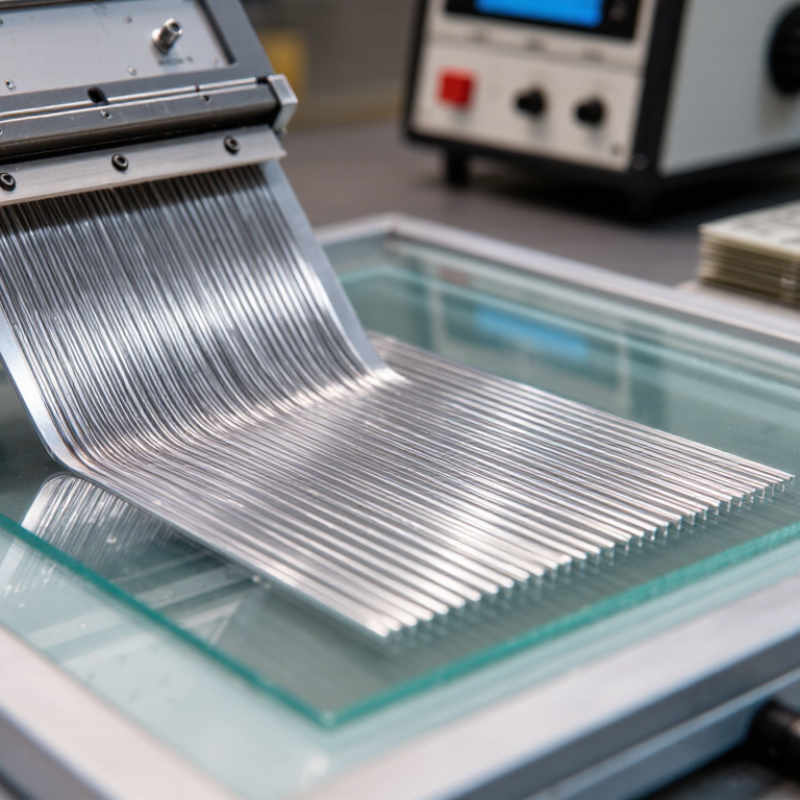
What Silver Paste Contains and How It Conducts Electricity
Why Is Screen Printing Silver Paste Used?
What Silver Paste Contains and How It Conducts Electricity
Silver paste is a carefully balanced mixture, not simply silver powder in glue. It typically contains fine silver particles, an organic vehicle that controls flow, and additives that help printing and adhesion. Solar-cell formulations may also include glass frit, which helps the metal contact the underlying silicon during firing. Exact recipes vary by application, and manufacturers do not always disclose them.
On a production line, a mesh screen deposits narrow paste fingers onto a cell. After drying and heating, the vehicle largely evaporates or decomposes, while silver particles bond into conductive paths. These paths collect current and carry it toward busbars. Tiny gaps between particles matter: poor contact can raise resistance, while excess paste adds cost and may shade active cell area. The Silver Institute’s World Silver Survey 2024 reported industrial silver demand of 654.4 million ounces in 2023, reflecting silver’s broad role in electrical and electronic uses, including photovoltaics. That figure covers many industries, not paste alone.
Tips: Check print width, paste weight, and firing conditions together. A shiny line is not proof of low resistance. Test it. Small process changes can shift conductivity, adhesion, and cell performance; there is no universal “best” paste recipe.
How Screen Printing Deposits Silver Paste onto a Surface
Why Is Screen Printing Silver Paste Used?
How Screen Printing Deposits Silver Paste onto a Surface
Screen printing forms conductive patterns by placing silver paste only where it is needed. A mesh screen carries a stencil that blocks unwanted areas. The open sections define the tracks, pads, or fine lines. This controlled placement can reduce wasted paste and create repeatable shapes across multiple parts.
During printing, a squeegee travels across the screen and presses paste through its open mesh. The paste lands on the substrate beneath it. As the screen lifts, the printed pattern remains on the surface. Mesh size, squeegee pressure, paste thickness, and travel speed all affect the result. Too much pressure can blur edges; too little may leave gaps. Small details matter. The printed layer is then dried or cured according to the paste supplier’s process guidance. That step helps the silver particles form a conductive path, though the final performance depends on the substrate and curing conditions.
Tips: Keep the screen and substrate clean, and check alignment before each run. Test a small sample first. Paste behavior can change with temperature, and even careful settings may need adjustment. Record the mesh, pressure, and curing conditions so results are easier to review and repeat.
Why Silver Paste Suits Fine, Repeatable Printed Patterns
Why Is Screen Printing Silver Paste Used?
Why Silver Paste Suits Fine, Repeatable Printed Patterns
Silver paste works well in screen printing because its flow can be tuned. It moves through mesh openings under squeegee pressure, then holds its shape as the screen lifts. On a ceramic sensor, that can create narrow conductive tracks beside insulating gaps. The process also deposits material only where the pattern requires it. Less waste. But fine detail depends on more than the paste.
IDTechEx’s Printed Electronics Market 2025–2035 report forecasts the broader printed-electronics market will exceed US$20 billion by 2035. This is not a silver-paste sales estimate. It does show growing interest in printed circuits and sensors, where repeatable conductive patterns matter. Silver’s high electrical conductivity helps keep printed paths useful even when designs are compact.
In production, mesh opening, particle size, paste viscosity, and squeegee pressure all affect line edges. A small change can leave a ragged trace or a pinhole. Drying and curing matter too: thick deposits may crack, while thin ones may show uneven resistance. Operators often check test prints under magnification and measure resistance across sample tracks. It is a practical routine, though not a perfect guarantee. Screen printing can repeat a pattern closely, but setup still needs adjustment from one substrate to another.
Where Screen-Printed Silver Paste Is Commonly Used
Screen-printed silver paste is widely used where components need conductive paths deposited quickly and repeatedly. Solar cells are a major application: fine silver lines collect current across the cell surface, while thicker busbars carry it toward electrical contacts. The IEA PVPS report Trends in Photovoltaic Applications 2024 puts cumulative global solar capacity above 1.6 terawatts by the end of 2023. That scale helps explain the demand for dependable, high-throughput metallization. Small lines. Large output.
The paste also appears in membrane switches, printed antennas, RFID inlays, and flexible sensor circuits. In a control panel, for example, printed traces can connect a button to a circuit without adding bulky wire. In an antenna, the pattern’s shape and continuity affect signal performance. Silver offers strong conductivity, but material cost and paste formulation still matter. Not every circuit needs it. Carbon inks may suit lower-current contacts, while silver is often selected when lower resistance is important. Screen printing also has limits: narrow features and uneven substrates can complicate registration and layer thickness. Engineers usually test the finished print, not just the paste, because curing conditions and surface preparation can change conductivity. One detail is easy to overlook: a clean-looking trace is not automatically a reliable one.
Why Is Screen-Printed Silver Paste Used?
Bulk silver has the highest electrical conductivity of the common metals shown below. This helps explain why silver paste is used to print conductive tracks, electrodes, and antenna patterns onto surfaces. The values are for bulk metals at approximately 20°C; cured silver paste is less conductive.
Electrical conductivity (MS/m) — approximate reference values for bulk metals at 20°C. Actual conductivity varies by material and measurement conditions.
Factors That Affect Its Performance and Reliability
Why Is Screen Printing Silver Paste Used?
Screen-printed silver paste forms conductive tracks on substrates such as ceramic, glass, and photovoltaic cells. The process deposits material through a mesh, allowing controlled line patterns without machining each circuit. In solar manufacturing, scale matters: IRENA’s Renewable Capacity Statistics 2024 reports that global solar capacity grew by about 346 GW in 2023. That figure describes market growth, not paste performance, but it helps explain the demand for repeatable production.
Performance depends on several linked factors. Particle size and shape affect how densely silver packs after curing. Paste viscosity must suit the mesh and squeegee pressure; otherwise, fine lines may spread or break. A line that looks clean when wet can still develop weak electrical contact after firing. Small changes matter.
Substrate cleanliness, print thickness, drying time, and curing temperature all influence adhesion and conductivity. The 2024 International Technology Roadmap for Photovoltaic (ITRPV) tracks ongoing development in screen-printed cell metallization, including efforts to reduce silver use while maintaining contact quality. That trade-off is real: thinner lines save material, but can raise resistance or become less reliable during handling. Operators should verify cured-line dimensions and electrical resistance, rather than judging the print by appearance alone. One uncomfortable detail: a stable recipe may still drift when room humidity or paste age changes.