

Blog

What Is the Best Small Room Air Purifier?

A small room can still hold a surprising mix of dust, cooking particles, pet dander, and outdoor pollution. The U.S. Environmental Protection Agency reports that indoor pollutant levels are often two to five times higher than outdoor levels. That makes choosing a small room air purifier a practical health decision—not just a way to reduce visible dust.

Room size matters. The Association of Home Appliance Manufacturers (AHAM) recommends a smoke CADR of at least two-thirds of a room’s floor area, based on standard eight-foot ceilings. For a 120-square-foot bedroom, that means looking for a smoke CADR of roughly 80 or higher. AHAM’s guidance is a useful starting point, not a guarantee: ceiling height, open doors, and where the purifier sits can affect performance. A quiet unit beside the bed may be easier to run overnight, but low fan speed can also mean less air cleaned.

Indoor-air researcher Dr. Richard Shaughnessy of the University of Tulsa has emphasized a simple principle: match the cleaner’s capacity to the room it serves. That advice helps frame this guide. We’ll compare clean-air delivery, filter design, noise, and running costs—not just brand claims. There is no perfect pick for every room. The best small room air purifier is one sized for your space, used consistently, and maintained with replacement filters when needed. A little skepticism helps. A high CADR number alone does not tell the whole story.
What Is the Best Small Room Air Purifier?

What Defines an Air Purifier for a Small Room?

An air purifier for a small room is defined by how effectively it cleans the room’s actual air volume, not by its compact size alone. Measure the floor area and consider ceiling height, too. A tall bedroom holds more air than a low-ceilinged one with the same footprint. Compare the unit’s clean air delivery rate, or CADR, with the room size it is rated for. Check how many air changes per hour that rating assumes; different ratings can make two “small-room” claims hard to compare. Numbers matter.

For particles such as dust and pollen, a well-fitted HEPA filter is a useful feature. A washable prefilter can catch larger lint and hair, but it does not replace the main filter. Noise matters in a bedroom: a purifier that is quiet on its lowest setting may move too little air for your needs. Test the sound at a useful speed before settling on a spot near the bed. Leave space around the air intake and outlet, and check filter replacement intervals and costs. There is no perfect cutoff for a small room. Real rooms have open doors, rugs, and changing air, so advertised coverage is a starting point, not a promise.

How Air Purifier Performance Is Measured

Air purifier performance is not captured by one number. Clean air delivery rate, or CADR, estimates how quickly a unit supplies filtered air for particles such as dust, pollen, and smoke. Higher CADR generally means faster particle removal, but the rating depends on controlled test conditions.

Room size matters. A practical estimate uses CADR and room volume to calculate air changes per hour, or ACH. For example, a purifier may manage several air changes in a compact bedroom but far fewer in a larger living area. Check the ceiling height, too; square footage alone can mislead. That detail is easy to miss.

CADR also reflects airflow, not just the filter’s ability to capture particles. A highly efficient filter may still clean a room slowly if air moves through it at a low rate. Noise can affect real-world performance as well. If a loud setting keeps you from running the unit, its impressive maximum rating may not help much. Noise matters, too. Compare performance at a setting you can tolerate, and note whether the published figure comes from an independent test. Measurements cannot perfectly predict a cluttered room, an open doorway, or a purifier placed behind a chair. Those small differences deserve a second look.

Which Filtration Technologies Suit Small Rooms?

For a small room, filtration choice matters more than a crowded feature list. A mechanical HEPA filter can capture fine particles such as dust, pollen, and some smoke particles. Check the purifier’s clean air delivery rate against the room’s floor area, and consider ceiling height too. A unit that is too weak may keep running without clearing the air quickly.

That matters.

Activated carbon helps reduce some odors and gases, such as cooking smells. Its performance depends on how much carbon the filter contains; a thin layer may lose effectiveness sooner. Carbon does not replace particle filtration, so a combined HEPA-and-carbon system can be useful when both dust and odors are concerns.

In a bedroom, noise and airflow also count. A purifier left on a quiet setting may filter less air than its headline rating suggests. Keep it simple: leave space around the intake and avoid tucking it behind curtains or furniture.

There is no perfect filter for every small room, and replacing filters on schedule is easy to underestimate.

How Room Size, Noise, and Placement Affect Performance

What Is the Best Small Room Air Purifier?

How Room Size, Noise, and Placement Affect Performance

In a small room, “best” starts with matching clean-air delivery to floor area, not choosing the smallest box. The U.S. EPA’s Guide to Air Cleaners in the Home suggests a smoke CADR of at least two-thirds of a room’s area, assuming an eight-foot ceiling. For a 120-square-foot bedroom, that means roughly 80 CADR; consider more for high ceilings or persistent smoke. Check published CADR ratings, tested under ANSI/AHAM AC-1, rather than relying on filter claims alone. That estimate has limits.

Noise affects whether people keep a purifier running. The World Health Organization’s 2018 Environmental Noise Guidelines recommend keeping average nighttime bedroom noise below 30 dB(A). This is a room-level guideline, not a purifier specification. A high setting may clean faster but interrupt sleep, so compare low-setting airflow and measured noise. Small trade-off.

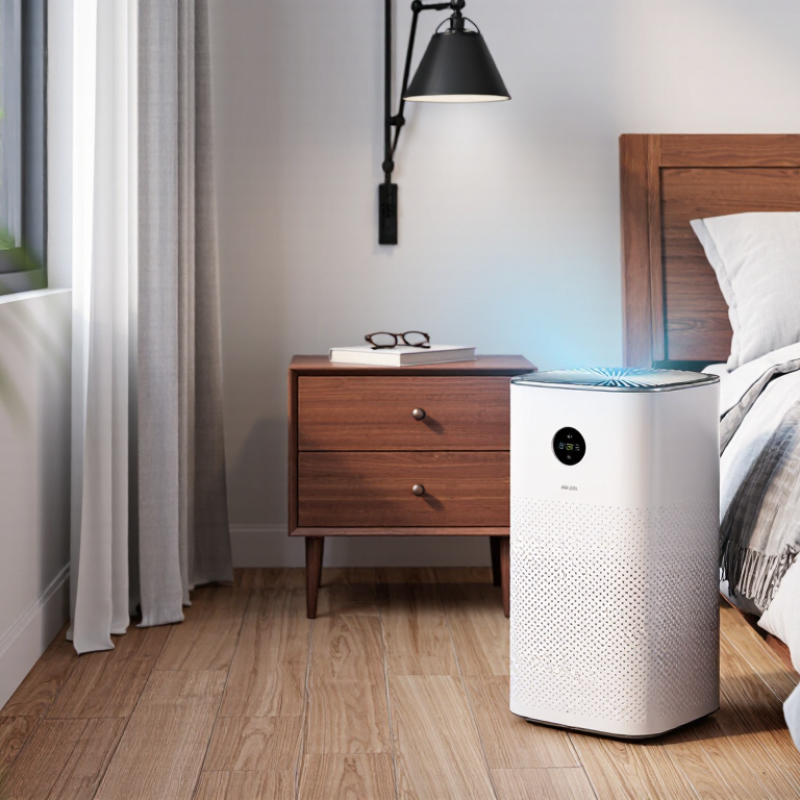
Place the unit with its intake and outlet clear of curtains, bedding, and walls. EPA guidance notes that blocked airflow can reduce effectiveness. A purifier tucked behind a chair may look neat, yet circulate air poorly.

Room geometry complicates the math: an open door, tall bookcase, or ceiling fan can change airflow. CADR ratings are useful standardized comparisons, not guarantees for every furnished room. Check airflow after moving furniture, and reconsider placement if dust keeps gathering in one corner. It is easy to forget that detail.

How to Choose an Air Purifier for a Small Room

What Is the Best Small Room Air Purifier?

How to Choose an Air Purifier for a Small Room

Start with the room’s floor area, not the purifier’s appearance. Measure the bedroom or office, then check the unit’s clean air delivery rate (CADR). With an eight-foot ceiling, a smoke CADR around two-thirds of the room’s square footage is a useful starting point. Choose a higher rate if you want faster cleaning or keep the door open. Room-size labels can be confusing, so check the stated assumptions before comparing models.

Look for a well-sealed unit with a HEPA filter to capture fine particles such as dust and pollen. A filter label alone does not tell you how well the whole device performs. Check replacement-filter availability and cost, too. Small detail. It matters. Avoid devices that intentionally generate ozone, which can irritate the lungs. Carbon filters may help reduce some odors, but they do not remove every gas or smell.

Consider noise and placement before buying. A purifier that is too loud may end up switched off, even if its specifications look impressive. If possible, compare sound levels on both low and high settings. Place the unit where air can flow freely, not behind a curtain or beside a crowded shelf. Leave space around the intake and outlet. Running a suitable purifier steadily on a quieter setting may fit daily life better than using a loud setting only now and then.