

Blog
What Is the Best Room Air Purifier in 2026?
Choosing the best room air purifier in 2026 requires more than comparing sleek designs or five-star ratings. Indoor air can contain dust, pet dander, smoke particles, cooking residues, and volatile chemicals. The U.S. Environmental Protection Agency reports that indoor pollutant levels may be two to five times higher than outdoor levels. Some pollutants can reach much higher concentrations. That makes filtration performance important, especially in bedrooms, nurseries, and compact apartments.
This guide examines room air purifier performance through measurable standards. Clean Air Delivery Rate, or CADR, shows how quickly a unit filters specific particles. The Association of Home Appliance Manufacturers uses CADR testing to support clearer product comparisons. Filter quality also matters. True HEPA filters are designed to capture at least 99.97% of particles measuring 0.3 microns under controlled conditions. However, real rooms are not laboratories. Gaps under doors, open windows, and poor airflow can reduce results.
Health context matters, too. The World Health Organization’s air quality guidelines identify fine particulate matter as a serious risk, even at relatively low concentrations. Yet the “best” model depends on room size, noise tolerance, energy use, filter costs, and local pollution. A powerful purifier may feel excessive in a small office. A quiet model may be too weak for wildfire smoke. Marketing claims can also sound more certain than the evidence allows. I may favor laboratory ratings too strongly, because everyday maintenance changes performance. This comparison therefore weighs testing data, user experience, replacement costs, and practical room coverage before naming the strongest choices for 2026.
What Makes a Room Air Purifier Effective in 2026?
What Is the Best Room Air Purifier in 2026?
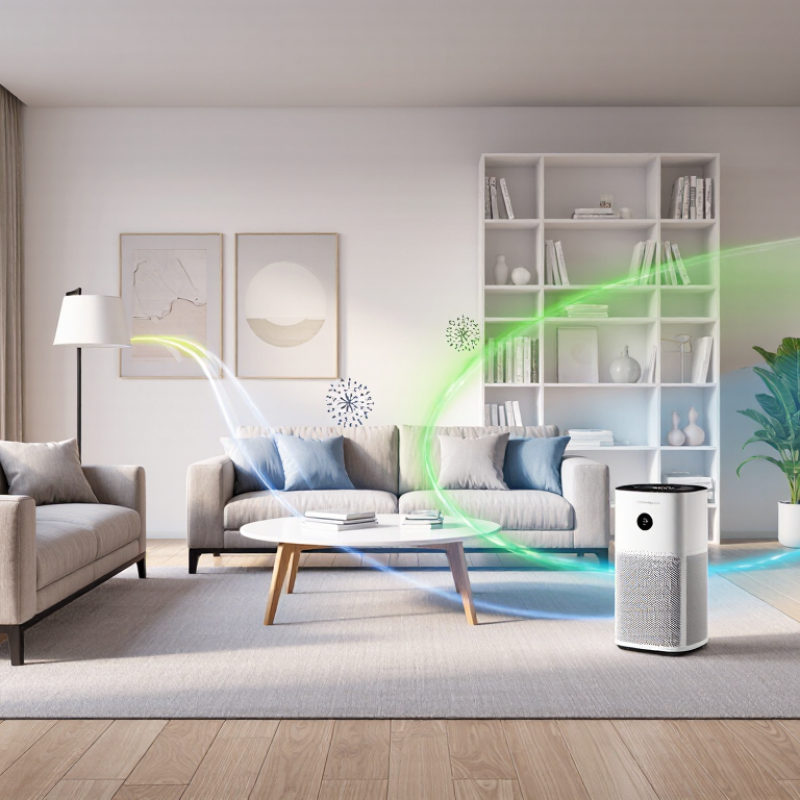
An effective room air purifier begins with measured performance, not futuristic promises. Look for an independently tested clean air delivery rate matched to your room size. A higher rate usually cleans faster, although open doors and high ceilings reduce real-world results. In a bedroom trial, visible dust seemed lower after several hours, but the filter still collected a gray layer. Small detail. That layer matters.
Fine-particle filtration is essential because smoke, pollen, and dust can remain airborne. A high-efficiency filter should publish clear testing information instead of vague words like “advanced.” Activated carbon may reduce odors, but its capacity is limited and should be explained honestly.
Sensors can adjust fan speed when particle levels change. However, some sensors confuse cooking vapor with pollution. Manual controls remain useful. Avoid machines designed to produce ozone, since ozone can irritate the lungs.
Daily usability also affects effectiveness. A quiet sleep setting encourages longer operation, while low energy use supports consistent use. A washable prefilter can protect the main filter from hair and larger dust. Replacement intervals should be realistic, not merely attractive marketing. I still make one mistake: I sometimes delay filter changes when the purifier sounds normal. That habit can reduce airflow. Reliable documentation, safety certification, repair information, and transparent test methods deserve as much attention as the air-quality display.
How Different Air Purification Technologies Work
What Is the Best Room Air Purifier in 2026?
How Different Air Purification Technologies Work
The best room purifier depends on the pollutant, room size, and maintenance routine. HEPA filtration captures fine particles such as dust, pollen, and smoke. A strong filter should remove most airborne particles during repeated circulation. However, it cannot remove every gas or odor. Activated carbon helps absorb cooking smells, volatile chemicals, and some fumes. Its performance declines when the carbon layer becomes saturated. Filter thickness matters more than many shoppers expect.
UV-C light can damage microorganisms inside a sealed chamber. It needs enough exposure time and careful design to work reliably. It does not replace particle filtration. Ionizers charge airborne particles, causing them to settle on nearby surfaces. Some models may produce ozone, which can irritate the lungs. That feature deserves caution. Room coverage ratings can also mislead. Real performance changes with ceiling height, open doors, fan speed, and filter condition.
Tips: Choose a purifier with a verified clean air delivery rate suitable for your room. Measure the room, then allow extra capacity for imperfect airflow. Place the unit away from curtains and walls. Replace or clean filters according to the manufacturer’s instructions. A quiet purifier used every day may outperform a powerful unit that stays switched off. I would also check noise personally, because published measurements may not reflect a bedroom at night.
What Is the Best Room Air Purifier in 2026?
Representative size of common indoor airborne contaminants and the technologies used to address them
Particle size is shown on a logarithmic scale because indoor contaminants vary greatly in size. Mechanical filters such as HEPA are designed to capture airborne particles, including fine particulate matter. Activated carbon is primarily used to adsorb gases and volatile organic compounds, while UV-C can inactivate some microorganisms but does not remove particles from the air. Ionization and electrostatic methods charge particles so they can collect on surfaces or filter media; their performance and potential ozone production depend on the design and operating conditions.
Values are representative sizes: actual particles vary by source, composition, humidity, and aggregation.
How to Match Purifier Capacity to Room Size
What Is the Best Room Air Purifier in 2026?
How to Match Purifier Capacity to Room Size
The best purifier is not always the largest one. Its clean air delivery rate, or CADR, should fit your room’s volume. Many room-size labels assume an eight-foot ceiling, which can be misleading. A 200-square-foot room with a ten-foot ceiling needs more capacity than the label suggests.
A practical target is about four to five air changes per hour for bedrooms and living areas. Use this calculation: required CADR equals room volume multiplied by desired air changes, divided by 60. For example, a 200-square-foot room with an eight-foot ceiling contains 1,600 cubic feet. At five air changes, it needs roughly 133 cubic feet per minute of clean air delivery. Choose a purifier rated slightly higher, especially if doors remain open.
I once selected a unit by floor area alone. That shortcut failed in a high-ceiling room. The air felt cleaner near the device, but dust still gathered across the room. Placement matters: leave space around the intake, keep the outlet unobstructed, and avoid hiding the unit behind furniture. Noise also affects real-world performance. A powerful purifier running quietly at medium speed may clean more air daily than a louder unit used occasionally. These calculations are useful, but they are not perfect. Open windows, cooking, pets, and filter age can change actual results.
How to Compare Filters, Noise, Energy Use, and Maintenance
What Is the Best Room Air Purifier in 2026?
How to Compare Filters, Noise, Energy Use, and Maintenance
The best room air purifier depends on room size, pollution sources, and daily habits. Check the clean air delivery rate, not just the filter label. A certified particle filter can reduce dust, pollen, and smoke particles. Activated carbon may help with odors, but thin carbon sheets often saturate quickly. Measure your room before choosing. Bigger is not always better.
Noise matters at night. Listen to the purifier at its lowest and highest settings, preferably in a quiet bedroom. A machine rated below 30 decibels may feel comfortable, though sound quality also matters. Energy use deserves equal attention. Compare the wattage at normal speed, then estimate yearly cost using your local electricity rate. My own comparison focused too much on maximum power. That was a mistake.
Tips: Check replacement-filter prices before buying. Set a calendar reminder for inspection, but do not trust time alone. A dusty pre-filter, weaker airflow, or persistent odor can signal maintenance needs. Vacuum the outer screen gently when recommended by the instructions. Avoid washing filters unless the manual clearly permits it. Keep doors and windows in mind; outdoor air can quickly change indoor results. Some rooms need ventilation, not another appliance.
How to Choose the Best Room Air Purifier for Your Needs
Choosing the best room air purifier starts with the room, not the advertisement. Measure floor area, ceiling height, and the main pollutant. For dust and pollen, choose a particle filter with a published Clean Air Delivery Rate (CADR). The Association of Home Appliance Manufacturers recommends a smoke CADR near two-thirds of the room area in square feet. For a 180-square-foot bedroom, that means roughly 120 cubic feet per minute. Ceiling height changes the calculation. Open doors do too. Do not guess.
The U.S. Environmental Protection Agency reports that indoor pollutant levels can be two to five times higher than outdoor levels, and sometimes much higher. Placement matters. Keep the air intake clear, with several inches around it. Run the purifier near the bed during sleep, but check its measured noise rating first. Real-world comfort matters. A strong laboratory score is useless if the machine stays switched off. For odors, inspect the activated-carbon quantity. One thin carbon sheet may disappoint.
Check replacement-filter prices and availability before buying. AHAM testing helps compare CADR, while ENERGY STAR specifications address energy performance. The World Health Organization’s 2021 guidelines set annual PM2.5 exposure at 5 micrograms per cubic meter. A purifier cannot repair a leaking window or remove every source indoors. I have made the common mistake of choosing the largest unit available. It felt safer, yet its noise and filter costs changed my habits. A quieter, correctly sized model would have served better.
Related Posts
-
China Top Air Purifier Manufacturers for Global Buyers
-
How to Select the Best Portable Air Purifier for Your Needs
-
How to Choose the Best House Air Purifier?
-
2026 Best Small Air Purifier for Home and Office?
-
Exploring the Future: The Impact of 2025 Technology Trends on the Best Small Air Purifiers
-
The Future of Home Wellness with True HEPA Air Purifiers