


Blog

Best Warm Humidifier 2026 Which Type Should You Buy?

Choosing the best warm humidifier in 2026 is less about chasing a feature list and more about matching heat, room size, and maintenance to your home. A warm-mist model boils water and releases steam; that can feel comforting beside a cold bedroom window. But heated water also means burn risk, especially around children and pets. Quiet operation is useful. So is a design you will actually clean.

The U.S. Environmental Protection Agency’s A Brief Guide to Mold, Moisture and Your Home recommends keeping indoor relative humidity between 30% and 50%, and below 60%. That range matters: excess moisture can encourage mold, while a dry room may feel uncomfortable. Harvard healthy-buildings researcher Dr. Joseph Allen has said, “The air we breathe is the most important thing we interact with every day.” A humidifier is only one part of indoor air care, not a cure-all.

This guide compares warm-mist, cool-mist, and dual-purpose options, with attention to room coverage, running costs, cleaning, and safety. A warm humidifier may suit a small, chilly bedroom. An evaporative model may be a better fit for a larger space or homes with children. Hard water changes the maintenance picture, too. There is no perfect pick. Check the humidity, read the manual, and choose a unit you can keep clean.
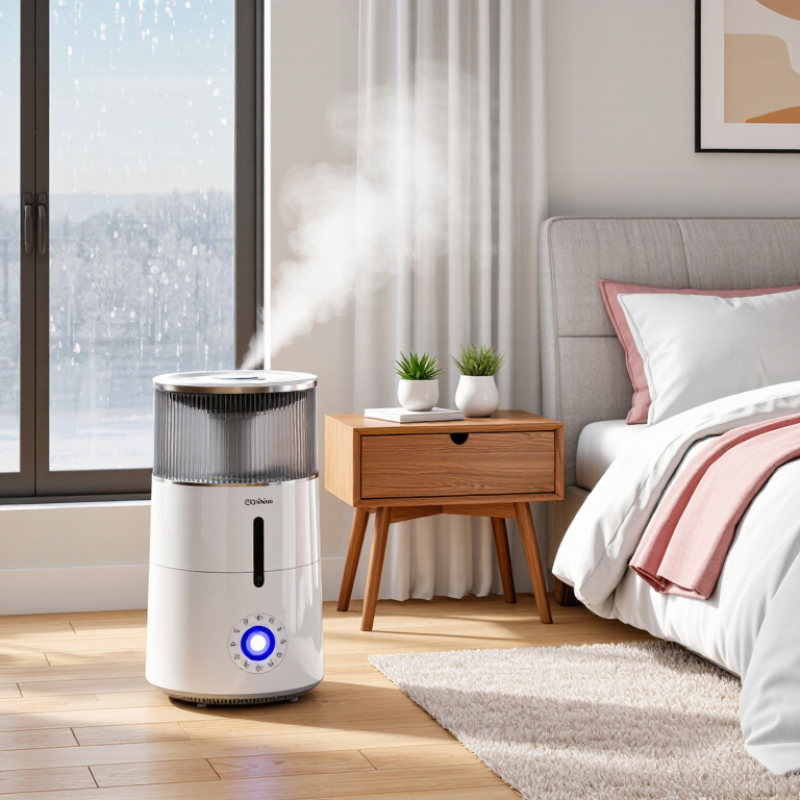
Best Warm Humidifier 2026 Which Type Should You Buy?

What a Warm Mist Humidifier Is and How It Works

A warm mist humidifier heats water inside a reservoir or boiling chamber until it produces vapor. The vapor travels through an outlet and cools as it enters the room. You may notice a gentle warmth near the device, but it will not heat an entire room.

That is the basic mechanism. Simple, but not risk-free.

Heating can reduce many microbes in the water, yet it does not sterilize the room or replace regular cleaning. Mineral deposits may collect around the heating element, especially when tap water is hard. Check the unit’s instructions and clean it on schedule; a thin, chalky film is easy to miss at first. Warm mist can also cause burns if a child or pet tips the humidifier or touches its outlet. Place it on a stable, level surface, away from beds and curious hands.

A hygrometer helps you judge whether the room needs more moisture. Many health and building references suggest keeping indoor humidity around 30–50 percent, while avoiding persistent condensation on windows. Too much moisture can encourage mold. The mist may look comforting on a cold evening, but appearance alone tells you little about the room’s humidity.

Main Types of Warm Mist Humidifiers

Warm-mist humidifiers mainly work by heating water, but their designs differ. A steam vaporizer brings water close to boiling and releases the resulting vapor into the room. You may hear a soft bubbling sound. Its basic mechanism is easy to understand, though mineral residue can collect around the heating area. Regular cleaning matters.

Some warm-mist humidifiers use an enclosed heating chamber and offer controls such as adjustable output or automatic shutoff. A few hybrid models combine ultrasonic mist production with water warming; check the manual, since “warm mist” does not describe one standard design. The warmth can feel pleasant beside a bed on a chilly night, but it does not replace ventilation or treat illness. Warm mist may also increase burn risk if a unit tips or sits within a child’s reach. Place it on a stable, clear surface, and follow the maker’s cleaning instructions. I would not choose by mist temperature alone: tank access, noise, and how easily you can remove scale often matter more in daily use.

Best Warm Humidifier 2026: Which Type Should You Buy? — Main Types of Warm Mist Humidifiers

Warm-mist designs heat water before releasing moisture. Product names and designs can overlap, so compare the actual features and safety instructions rather than relying on the category label alone.

Type How It Works Typical Advantages Trade-Offs Best Suited For What to Check Before Buying
Steam vaporizer Heats water to produce steam, which cools somewhat as it travels through the appliance before entering the room. Simple warm-steam operation; minerals generally remain in the tank as water evaporates. Hot water and steam can cause burns. Heating uses electricity, and mineral deposits can build up inside the unit. Adults seeking a straightforward warm-mist unit for a room where it can be placed well out of reach. Look for stable construction, an automatic shutoff, easy-to-clean parts, and clear instructions for safe placement.
Warm-mist humidifier with a heating chamber Warms water in an internal chamber and releases moisture as warm mist; designs vary in how water is heated and how mist is cooled. Often offers adjustable output and a design intended for regular household use. Can use more electricity than non-heating humidifiers. The tank and heating area need regular cleaning to control scale and residue. People who specifically prefer warm mist and want convenient controls or a larger water capacity. Check cleaning access, tank capacity, expected runtime, output settings, and whether replacement parts are available.
Dual warm-and-cool-mist humidifier Provides a warm-mist setting and a cool-mist setting, usually through different operating modes within one appliance. Offers flexibility when household preferences or seasonal conditions change. Warm mode still involves heating and hot-water precautions. More modes can mean a more complex design and cleaning routine. Households that want a choice of mist temperature rather than warm mist alone. Confirm how each mode works, whether warm mode can be disabled, and how to clean both the tank and mist pathways.
Warm-mist model with humidistat Uses a humidity sensor and control setting to adjust operation or switch the unit on and off around a selected humidity level. Can help limit excessive humidification when the sensor is positioned and calibrated appropriately. Sensor readings may differ from the humidity elsewhere in the room. A separate hygrometer can help verify conditions. Users who want more control over room humidity than a basic manual setting provides. Check whether the humidistat controls warm-mist output, how the target is set, and whether the sensor is easy to keep clean.
Compact or personal warm-mist unit Uses a smaller water reservoir and heating system, typically intended for limited-area use rather than whole-home humidification. Smaller footprint and a modest reservoir can suit a desk-side or bedside area when safely positioned. Usually needs refilling more often and may not provide enough moisture for a large room. Small spaces where the user can monitor the unit and keep it away from bedding, children, and pets. Check the recommended room size, refill frequency, cord placement, and safe distance from people and surfaces.

Safety and care: Keep warm-mist appliances on a stable, level surface and out of reach of children and pets. Follow the manufacturer’s cleaning schedule, empty standing water as directed, and avoid letting indoor humidity become excessive; persistent condensation can encourage mold growth.

Benefits and Limitations of Each Type

Best Warm Humidifier 2026: Which Type Should You Buy?

Warm-mist humidifiers boil water and release visible, warm vapor. That heating step can reduce some microbes in the water, but it does not make the unit sterile. The tank and outlet still need regular cleaning. These models may feel comforting beside a chilly bed, yet boiling parts can create a burn risk around children or pets. They also use more electricity than many cool-mist models. Quiet, but not effortless.

Evaporative humidifiers draw air through a wet wick, while ultrasonic models use vibration to create a fine mist. Both avoid a boiling chamber and may suit bedrooms better. Evaporative units can sound like a small fan, and their wicks need replacement. Ultrasonic units are often quiet, but tap-water minerals can settle as white dust on nearby furniture. The US Environmental Protection Agency recommends keeping indoor relative humidity around 30%–50%; excess moisture can encourage mold. The number matters more than the mist’s warmth.

Tips: Check humidity with a separate hygrometer, especially near windows where condensation can appear. Use distilled water in an ultrasonic unit if mineral dust becomes a problem. Clean and dry the tank as its manual directs. I would not assume a warm-mist model is automatically the healthier choice; room size, cleaning habits, and burn safety matter too.

Best Warm Humidifier 2026: Which Type Should You Buy?

How to read this: Warm-mist humidifiers heat water to make steam, so they typically use more electricity than cool-mist types. Evaporative, ultrasonic, and impeller models generally use less power, though their performance and maintenance needs differ. These are approximate operating-power ranges, not guarantees; check the specifications of the individual model before buying.

Key Features to Compare Before Buying

Start with the room, not the product photo. A small unit may struggle in a large bedroom, while an oversized one can leave windows damp. Check its stated coverage against your room’s floor area. A built-in humidistat can stop misting at a selected humidity level, though its reading may differ from a separate hygrometer. That matters. Indoor humidity around 30–50 percent is a useful general range, but climate and condensation should guide adjustments.

For warm mist, check the automatic shutoff, tank capacity, and how easily the water reservoir opens for cleaning. The heating element makes the mist warm, so place the unit on a stable surface away from children, pets, and bedding. Spills are worth considering. Mineral deposits can collect over time; follow the manual’s cleaning instructions and check whether replacement parts are easy to find. Also compare energy use and noise. Warm mist may feel pleasant on a chilly night, but it is not automatically more effective than every other type. It is easy to focus on warmth and overlook the cost of daily operation.

Safety, Cleaning, and Maintenance Requirements

A warm-mist humidifier heats water, so placement matters as much as room size. Set it on a firm, level surface where a child or pet cannot pull the cord or reach the steam outlet. Keep it away from bedding, curtains, and shelves that could become damp. Hot water can spill. Use the unit only as its manual directs, and check the cord and plug for damage before each use. A separate hygrometer can help you avoid excess moisture; condensation on windows is a clear reason to lower the setting or switch the unit off.

Daily care is simple, but easy to postpone. Empty leftover water, rinse the tank, and let it air-dry before refilling. Let it cool. Unplug it before cleaning, and never submerge the electrical base. Mineral deposits may collect around the heating area, especially with hard water; remove them using only the method and cleaner specified in the manual. Do not mix cleaning products. Rinse thoroughly so no residue remains. I find this routine less convenient than it sounds, particularly on busy mornings, and that is exactly when stale water can be overlooked. Clean on schedule, and inspect the unit for scale or buildup. Avoid adding oils or fragrances unless the instructions explicitly allow them.