Top 10 Best Warm Humidifiers for Home Use?
Dry indoor air can leave your throat scratchy, your nose uncomfortable, and wooden furniture feeling parched. A warm humidifier may add welcome moisture, especially during cold months when heating runs for hours. It releases warm mist by heating water, so its placement and everyday handling deserve attention. Keep it on a stable, heat-resistant surface. Follow the manufacturer’s instructions, and keep hot water and steam away from children and pets. Small details matter.
This guide to the top 10 warm humidifiers for home use compares practical features that shape daily comfort: room coverage, tank capacity, runtime, adjustable settings, cleaning access, and operating noise. We also consider automatic shutoff and humidity controls, where available. Bigger tanks can mean fewer refills, but they may take more counter space. Quiet operation sounds appealing. Still, every home has different needs, and a feature list cannot predict how a device will feel beside your bed at night.
Use these comparisons as a starting point, not a promise that one model suits everyone. Check current product specifications and care instructions before buying, since designs and availability can change. Regular cleaning is important; a humidifier is not a set-it-and-forget-it appliance. That part is easy to overlook. The best choice is one you can maintain comfortably, operate safely, and size appropriately for the room you actually use.
Understanding Warm-Mist Humidifiers and How They Work
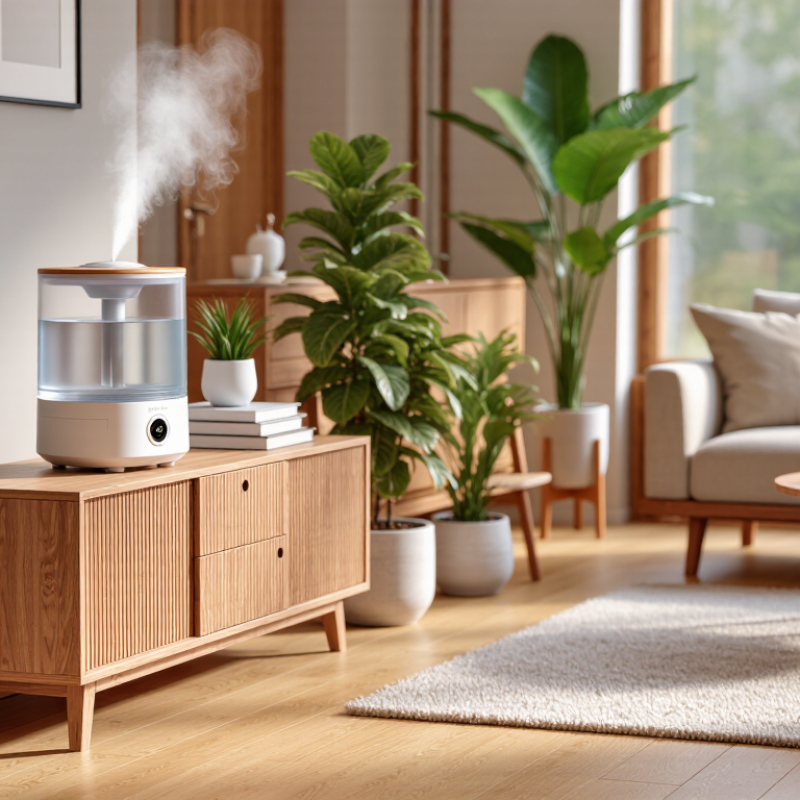
A warm-mist humidifier heats water until it produces vapor, then releases that vapor into the room. Inside, a heating element warms water held in a reservoir or chamber. As the vapor meets cooler room air, it disperses and adds moisture. That is the cycle. The visible plume may look like smoke, but it is water vapor. Warm-mist models can feel pleasant on a chilly evening, though they usually do not heat a whole room. The mechanism is simple; the upkeep is less glamorous.
Room conditions still matter. A hygrometer can help track humidity; many indoor-air recommendations favor roughly 30 to 50 percent. Too much moisture may leave window condensation or encourage mold growth. Not quite what you want. Empty standing water and clean the unit as its instructions specify, since mineral deposits and residue can build up. Keep the appliance on a stable, water-resistant surface, away from children, pets, and bedding. Heated water and vapor can cause burns if the unit tips or is handled carelessly. Also, use additives only if the manual allows them. A warm mist feels gentle, but it is not automatically safer or more effective for every room.
Top 10 Best Warm Humidifiers for Home Use? — Understanding Warm-Mist Humidifiers and How They Work
This chart shows the theoretical heat energy needed to warm 1 liter of water from 20°C to different temperatures. It illustrates the heating step used by warm-mist humidifiers; it is not a product ranking.
Calculation assumes 1 liter of water has a mass of approximately 1 kg, water’s specific heat capacity is 4.186 kJ/kg·°C, and 1 kWh equals 3,600 kJ. Values exclude heat loss and the energy needed to turn water into vapor.
Top 10 Warm-Mist Humidifiers for Different Household Needs
Warm-mist humidifiers suit different rooms and routines, but their hot water needs careful placement. For a compact bedroom, choose a small unit with automatic shutoff. A model with a humidistat can help prevent clammy windows. For a larger living room, look for a higher output and a tank that lasts through the evening. In a small apartment, a timer can reduce unnecessary operation. Keep every unit on a stable surface, away from children, pets, curtains, and walkways.
Other household needs call for different details. A wide tank opening makes cleaning easier. A removable scale tray can simplify upkeep in hard-water areas. For light sleepers, check noise descriptions and controls that dim at night.
A portable design helps when moving the humidifier between rooms, while a longer runtime suits overnight use. Energy use varies, so compare the appliance’s specifications rather than assuming steam is inexpensive to run. Small details matter.
Clean the tank regularly and follow the maker’s care instructions; standing water can develop buildup. A hygrometer offers a clearer reading than guessing from dry skin or fogged glass. Many households aim for indoor humidity around 30–50%, adjusting for comfort and condensation. Warm mist can ease dry-air discomfort, but it does not replace medical care. One trade-off is easy to miss: a larger tank may mean fewer refills, yet it can be awkward to lift when full.
How to Select the Right Model for Your Room and Budget
When comparing the top warm humidifiers, start with your room, not the longest feature list. Measure the space and check each unit’s stated coverage and moisture output. A small bedroom with a closed door needs less capacity than an open living area. That distinction matters. The U.S. Environmental Protection Agency recommends keeping indoor relative humidity between 30% and 50%. A built-in humidistat can help maintain that range, but verify it with a separate hygrometer if readings seem questionable. Humidity varies near windows and heating vents.
For a tighter budget, compare replacement-part costs, tank size, cleaning access, and power use alongside the purchase price. Warm-mist models heat water, so operating costs may differ from those of other humidifier types; check the unit’s specifications rather than guessing. Look for a wide tank opening and smooth surfaces, which make routine cleaning less fiddly. One imperfect but useful rule: if you dread refilling it, you may stop using it. Place the unit on a stable, water-resistant surface, away from children and edges. Heated water and steam can cause burns. Choose only the capacity your room needs.
Top 10 Best Warm Humidifiers for Home Use? – How to Select the Right Model for Your Room and Budget
Comparison of common warm-mist humidifier configurations. Coverage and runtime are approximate and vary with room conditions, settings, and product design. Warm-mist units heat water, so use extra care around children and pets.
| Rank |
Best For |
Typical Tank Capacity |
Approx. Room Size |
Typical Runtime |
Typical Price Range (USD) |
Key Consideration |
| 1 |
Small bedrooms |
0.5–1.0 gal (1.9–3.8 L) |
Up to 200 sq ft (19 m²) |
About 8–12 hours |
$25–$50 |
Compact and affordable; may need refilling during longer use. |
| 2 |
Value-focused everyday use |
1.0–1.5 gal (3.8–5.7 L) |
200–350 sq ft (19–33 m²) |
About 10–18 hours |
$35–$65 |
A practical balance of capacity and cost; check how easy the tank is to clean. |
| 3 |
Medium bedrooms |
1.0–1.5 gal (3.8–5.7 L) |
250–400 sq ft (23–37 m²) |
About 8–15 hours |
$40–$80 |
Look for an adjustable output setting to avoid excess indoor humidity. |
| 4 |
Large bedrooms |
1.5–2.0 gal (5.7–7.6 L) |
350–500 sq ft (33–46 m²) |
About 10–18 hours |
$50–$90 |
A larger tank can reduce refills, but the filled unit may be heavy to move. |
| 5 |
Home offices |
0.5–1.0 gal (1.9–3.8 L) |
Up to 250 sq ft (23 m²) |
About 6–12 hours |
$30–$70 |
Prioritize a stable base and easy-to-reach controls for desk-side placement. |
| 6 |
Longer overnight operation |
1.5–2.0 gal (5.7–7.6 L) |
250–450 sq ft (23–42 m²) |
About 12–24 hours on low |
$55–$100 |
Runtime depends strongly on output level; consider automatic shutoff when empty. |
| 7 |
Easy-clean design |
0.8–1.5 gal (3.0–5.7 L) |
200–350 sq ft (19–33 m²) |
About 8–16 hours |
$45–$85 |
A wide opening and accessible water-contact surfaces make routine cleaning easier. |
| 8 |
Simple controls and operation |
1.0–1.5 gal (3.8–5.7 L) |
200–400 sq ft (19–37 m²) |
About 8–16 hours |
$35–$75 |
Basic controls can be straightforward; confirm that the settings suit your needs. |
| 9 |
Large rooms with frequent use |
1.5–2.5 gal (5.7–9.5 L) |
400–600 sq ft (37–56 m²) |
About 8–18 hours |
$70–$130 |
Check the manufacturer’s room-size guidance and place it on a level, heat-safe surface. |
| 10 |
Best budget pick |
0.5–1.0 gal (1.9–3.8 L) |
Up to 250 sq ft (23 m²) |
About 6–12 hours |
$20–$45 |
Lower upfront cost; check replacement-part availability and cleaning instructions. |
Selection tip: Choose capacity and output for the room rather than relying on tank size alone. A hygrometer can help monitor humidity; many public-health recommendations advise keeping indoor relative humidity below 60% to limit dampness and mold risk. Follow the unit’s cleaning and safety instructions.